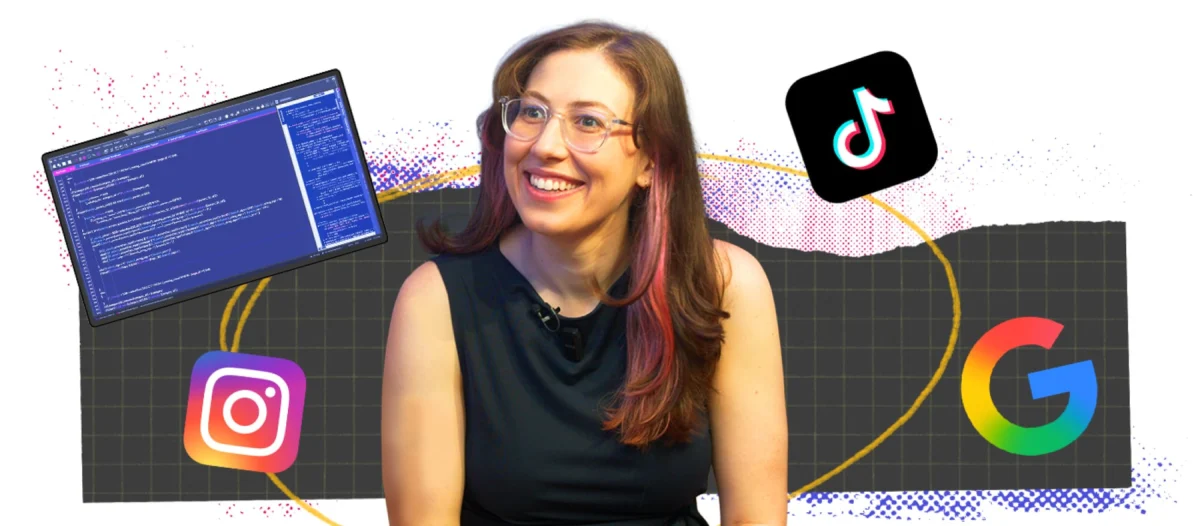
For six and a half years, Alberta Tech lived a double life. By day, she was a software engineer at Google, contributing to the architecture of the world’s most powerful video platform. By night, she stepped into the spotlight, crafting comedy sketches that resonated with a growing audience of developers and tech enthusiasts.
In a landscape where corporate stability and the volatile world of content creation rarely intersect, Alberta Tech has successfully navigated the bridge between the two. Her journey—from an anonymous engineer to a full-time creator—offers a masterclass in leveraging professional expertise to build a personal brand. As she navigates the rapidly evolving world of generative AI and digital media, her story serves as a blueprint for professionals looking to transition into the creator economy.
The Accidental Origin: Boredom as a Catalyst
Alberta Tech’s foray into content creation was not born out of a strategic career pivot or a desire to leave the tech industry. Instead, it began during the height of the global pandemic. Like millions of others, she found herself isolated in a small New York apartment, seeking an outlet for her creative energy.
"I started making content during COVID. I was just bored at home," she recalls. "I wanted to be making jokes on TikTok because everybody I know was scrolling. I started off making really silly jokes about whatever would land—the absurdity of living in a tiny apartment, the monotony of the pandemic—anything I could."
As she experimented with the platform, a pattern emerged. Her content began to skew toward the technical, specifically targeting the anxieties and humor inherent in the software engineering profession. While she was building the infrastructure for YouTube, she was simultaneously learning the rhythm of its algorithm. This dual perspective—understanding the platform from the inside out—eventually became the bedrock of her success.

Chronology of a Career Shift
The transition from a full-time Google engineer to a full-time independent creator was a calculated, gradual process rather than a sudden leap.
- 2020: Alberta begins creating short-form content on TikTok, focusing on life in New York and the peculiarities of tech culture.
- 2021-2023: As her audience grows, she maintains her position at Google. She balances high-level engineering work with content production, treating her creative endeavors as a high-effort "side hustle."
- 2024: She begins to refine her niche, focusing on the intersection of generative AI, industry trends, and satire. Her credibility as a former Google engineer gives her a unique authority in a crowded space.
- 2026 (Early): After six and a half years at Google, Alberta makes the decision to resign. She moves into full-time content creation, citing the need for increased production quality and professional dedication to her craft.
The Secret Weapon: Professional Credibility
In the creator economy, "authority" is the hardest currency to earn. Many creators struggle to build trust with their audience, but Alberta Tech bypassed this hurdle by leveraging her background.
"My audience now is just over half software engineers and developers," she notes. "To speak to that group of people, you need to have some kind of credential behind you. You need to know what you’re talking about."
This credibility allows her to tackle complex topics like generative AI, "vibe coding," and industry shifts without losing her comedic edge. She doesn’t just comment on the news; she provides a meta-commentary that only someone with her pedigree could offer. She admits that for years, she kept her professional identity quiet to avoid friction with her employer, but that background now serves as the backbone of her brand.
The AI Paradox: A Tool for Research, Not Creativity
As an industry insider, Alberta Tech is uniquely positioned to evaluate the impact of artificial intelligence. Her stance is one of "cautious optimism." While she was initially a skeptic—labeling early LLMs as "stochastic parrots" that merely regurgitated plausible but often empty information—she has since integrated the tools into her own workflow.

AI’s Utility in the Creator Workflow
Alberta identifies research as the primary benefit of AI for creators. "I use AI a lot for researching… It can show you which paths to go down. This happens to me all the time where I’m asking AI about a topic I want to cover, and then I’m seeing: ‘I didn’t even know about this backstory, and now I’m going to be able to go down a rabbit hole here.’"
The Creative Ceiling
Despite her embrace of the technology, she remains unconvinced regarding its ability to replace human ingenuity. "Whenever I say, ‘Generate a funny script’—not quite. It’s not quite there yet." For Alberta, the "human touch" remains the differentiator that algorithms cannot replicate. She believes that the strength of an original idea will always outweigh the efficiency of AI-generated content.
Implications for Aspiring Creators
For professionals eyeing the exit from corporate roles to pursue full-time creation, Alberta offers a sobering piece of advice: Do not quit your job until you have identified your value proposition.
"My advice to new creators is that, in a lot of cases, your audience doesn’t really care about you as a person," she explains. "You kind of have to make them care about you. Until you can find that thing that makes them care—the value that you’re providing, the entertainment that really hooks—you have to keep trying."
This philosophy suggests that success in the creator economy is not just about frequency or production quality, but about identifying a specific need or void in the audience’s knowledge or emotional life.

The Evolution of "Vibe Coding"
Alberta also weighs in on the industry buzzword "vibe coding." Once a derogatory term used to mock those who blindly relied on AI to write code, the term has evolved alongside the technology.
"It’s not just blindly trusting that code, but becoming part of basically every programmer and software engineer’s workflow," she says. As the tools have improved, the barrier between "coding" and "directing code" has blurred. She acknowledges that the industry lacks a perfect term for this shift—suggesting "agentic engineering" as a more accurate, albeit less catchy, alternative.
Looking Ahead: The Future of Tech Content
As she looks to the future, Alberta is "uncomfortably excited." She notes that tech topics, which were once the domain of a small, hyper-technical demographic, have now permeated the mainstream. This shift has widened her potential audience, allowing her to bridge the gap between hard tech reporting and accessible entertainment.
Her journey demonstrates that the transition from a traditional tech career to content creation is not about abandoning one’s skills, but about repurposing them. By bringing the discipline, analytical rigor, and deep technical knowledge of a software engineer into the world of short-form video, Alberta Tech has carved out a unique space where laughter serves as the gateway to understanding.
For those watching, the lesson is clear: If you are planning an exit from the corporate world, ensure that your "secret weapon"—your unique professional experience—is the foundation of whatever you build next. As Alberta proves, when you have the technical knowledge to back up the punchline, you don’t just get views; you earn lasting influence.