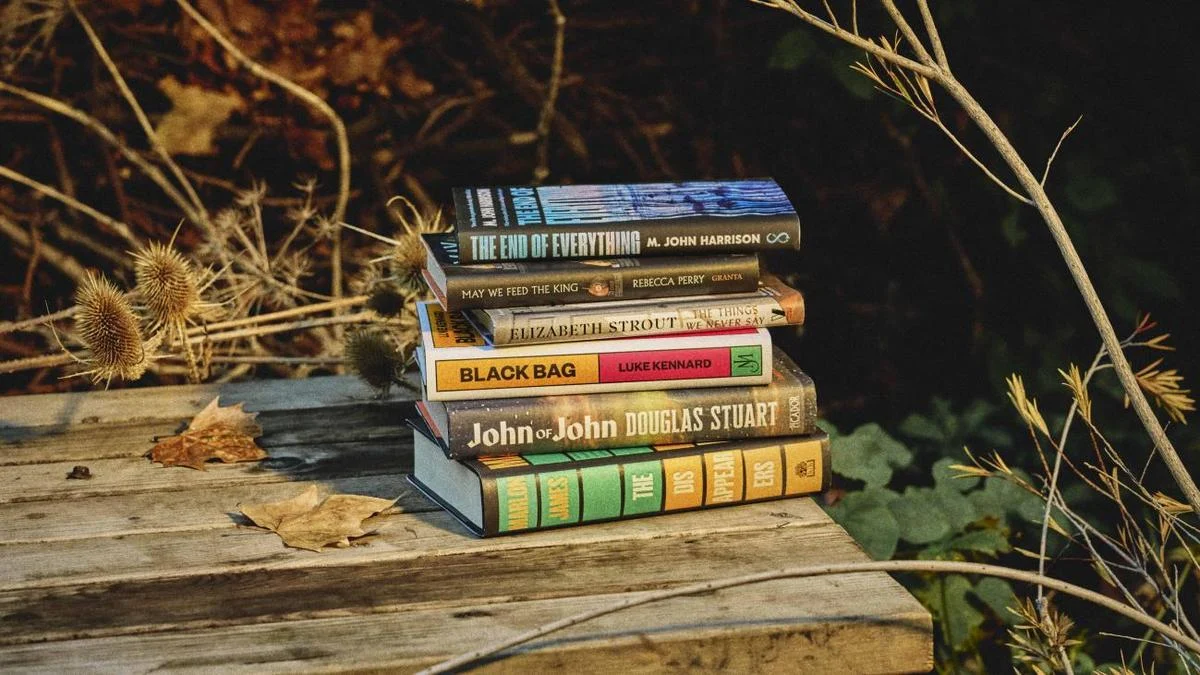
The literary world has turned its collective gaze toward London as the Booker Prize Foundation unveiled its highly anticipated shortlist for the 2026 Booker Prize. Spanning a diverse array of geographies, temporalities, and thematic preoccupations, the six selected novels present a striking intellectual snapshot of contemporary fiction. Perhaps most notable is the recurring investigation into the nuances of masculinity—a theme that has firmly anchored itself in the Booker’s recent trajectory, following last year’s victory by David Szalay for his novel Flesh.
With heavyweights returning to the fold and fresh voices making their mark, the 2026 selection promises to be one of the most intellectually rigorous in the award’s history. The winner, who will walk away with the prestigious £50,000 prize, is scheduled to be announced on November 9, 2026.
The 2026 Shortlist: A Convergence of Titans and New Voices
The shortlist, announced just last week, comprises a curated selection of six works that challenge traditional narrative structures. The presence of two former Booker winners—Marlon James and Douglas Stuart—alongside Pulitzer Prize winner Elizabeth Strout, signals a year defined by high-caliber prose and established storytelling prowess.
1. The Disappearers by Marlon James
Marlon James, who famously secured the Booker in 2015 for A Brief History of Seven Killings, returns with what The New York Times has already lauded as "the novel of the decade, if not the century." At 640 pages, The Disappearers is the most substantial work on the list. Set in the late 1980s in Jamaica, the narrative centers on a harrowing attack against a group of gay men during a theatre rehearsal. James’s unflinching examination of violence and sexuality serves as a cornerstone for the shortlist’s focus on the complexities of male identity.
2. John of John by Douglas Stuart
Douglas Stuart, whose debut Shuggie Bain captured the 2020 Booker Prize, returns with John of John. The novel follows 22-year-old John-Calum Macleod as he returns to the Isle of Harris in Scotland. It is a poignant, introspective exploration of the queer experience across generations, specifically examining the strained, complex dynamics between a father and son.

3. The Things We Never Say by Elizabeth Strout
Elizabeth Strout, a Pulitzer Prize laureate and a previous two-time nominee for the Booker, brings a more intimate, psychological focus to the shortlist. Her novel, The Things We Never Say, chronicles the life of Artie Dam, a lonely high school history teacher in Massachusetts. The narrative hinges on a singular, life-altering secret that threatens to dismantle the carefully constructed reality of his existence.
4. The End of Everything by M. John Harrison
The inclusion of M. John Harrison, a titan of speculative fiction, adds a layer of existential urgency to the list. The End of Everything is a post-apocalyptic narrative that posits a world fundamentally altered by an unknown entity. Harrison explores how the structural integrity of humanity—and the male ego—holds up when the laws of nature are no longer guaranteed.
5. Black Bag by Luke Kennard
Novelist and poet Luke Kennard offers a satirical, darker edge to the shortlist with Black Bag. Drawing inspiration from a bizarre 1960s social experiment conducted by Professor Charles Goetzinger at Oregon State University, the book serves as both a scathing critique of the modern higher education system and a deeply felt investigation into the crisis of masculinity in the 21st century.
6. May We Feed the King by Rebecca Perry
Debut novelist Rebecca Perry rounds out the list with a work of historical and contemporary synthesis. May We Feed the King, already a recipient of the Waterstones Debut Fiction Prize, tracks the life of an overlooked medieval king whose erratic reign threatens his kingdom, while simultaneously following a modern-day curator whose obsession with the monarch’s life leads to a blurring of the lines between her own past and present.
Chronology of the 2026 Selection Process
The path to the 2026 shortlist has been a rigorous one, beginning with the announcement of the "Booker Dozen"—the longlist of 13 books—earlier this summer.

- June 2026: The Booker Prize Foundation received a record number of submissions, reflecting the global surge in post-pandemic literary output.
- July 2026: The judging panel, chaired by a panel of acclaimed critics and authors, began the exhaustive process of evaluating the submissions.
- August 2026: The longlist was narrowed down through extensive deliberation, focusing on stylistic innovation, emotional resonance, and cultural relevance.
- September 2026: The shortlist of six was finalized and presented to the public, setting the stage for the final judging phase.
- November 9, 2026: The final ceremony will occur, where the judges will cast their deciding votes to select the winner.
Supporting Data: The Masculine Motif
The prevalence of the "masculinity" theme is not merely a coincidence; it is a trend that literary critics are viewing as a direct response to the socio-political shifts of the mid-2020s.
Statistical analysis of the themes within the 2026 shortlist reveals that 50% of the books (James, Stuart, and Kennard) explicitly frame their central conflict around the performance, crisis, or evolution of masculinity. This follows the critical success of David Szalay’s Flesh (2025), which set a precedent for literary inquiry into the "male condition."
Furthermore, the geographic spread of the 2026 list—stretching from the rugged Scottish islands to the vibrant, tension-filled streets of 1980s Jamaica—demonstrates that the Booker Prize continues to prioritize narratives that bridge the local and the universal.
Official Responses and Jury Commentary
While the identities of the individual jurors remain shielded from public scrutiny until the final ceremony, preliminary statements released by the Foundation have highlighted the "extraordinary level of vulnerability" displayed by this year’s authors.
"The 2026 shortlist is a testament to the power of the novel to interrogate the self," noted a spokesperson for the Booker Prize Foundation. "Whether through the lens of speculative fiction, historical inquiry, or contemporary realism, these six authors have managed to peel back the layers of the human experience. We are particularly impressed by the willingness of this year’s writers to tackle the often-taboo subjects surrounding the male psyche and the shifting definitions of identity in a globalized world."

The response from the literary community has been largely positive, with critics noting that the inclusion of debut talent like Rebecca Perry alongside established icons like Marlon James creates a healthy tension between tradition and innovation.
Implications: What the Shortlist Says About Our Time
The 2026 Booker Prize shortlist serves as a mirror held up to the anxieties of the decade. The presence of post-apocalyptic narratives alongside intimate character studies suggests that readers are currently seeking both a grand scale to understand the instability of the world and a granular, personal scale to understand their own place within it.
The focus on masculinity—its vulnerabilities, its failures, and its potential for re-definition—is particularly significant. By moving away from archetypal portrayals of "the hero" and toward portraits of flawed, searching men, these authors are reflecting a wider cultural movement toward emotional literacy and accountability.
As we approach the November 9 ceremony, the discourse surrounding the prize will likely intensify. The Booker Prize continues to be the ultimate arbiter of what constitutes "essential" literature. For the six authors shortlisted, the nomination represents not only a validation of their craft but an invitation to participate in a global conversation that will likely influence the trajectory of literature for years to come.
Whether the prize goes to the epic, historical scope of Marlon James or the quiet, psychological depth of Elizabeth Strout, the final decision will inevitably shape the reading habits of a generation. For now, the literary world waits, watching these six distinct voices grapple with the complexities of the human condition.