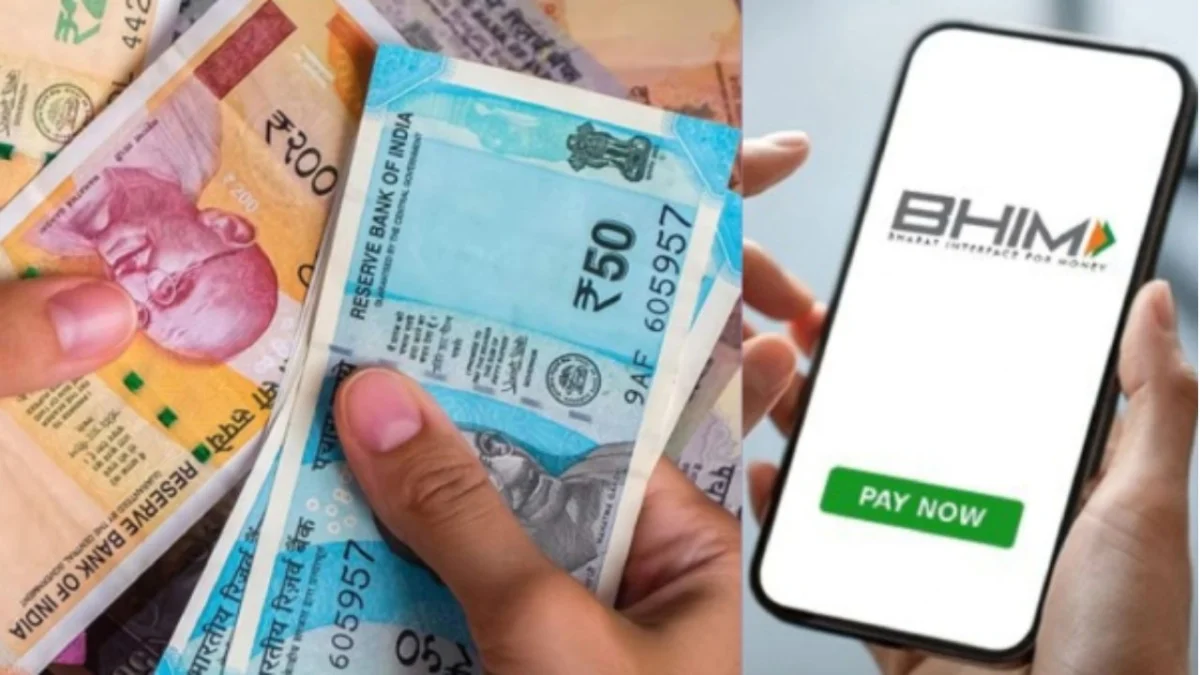
In the rapidly evolving landscape of India’s digital economy, the Unified Payments Interface (UPI) has transitioned from a mere convenience to a fundamental utility. However, as the volume of transactions scales to unprecedented heights, so do the complexities associated with digital literacy, transaction failures, and cyber fraud. To address these systemic challenges, the National Payments Corporation of India (NPCI) has unveiled a landmark update to its flagship "swadeshi" application, BHIM (Bharat Interface for Money). The introduction of "MyUPI," a sophisticated, conversational AI-driven assistant, marks a pivotal shift in how Indian citizens interact with digital finance.
Main Facts: The Dawn of Conversational Fintech
The BHIM app’s latest feature, MyUPI, is not merely a chatbot; it is a comprehensive AI-powered support ecosystem designed to demystify digital payments for the masses. Launched officially at the Global Fintech Fest, the tool is engineered to provide real-time, 24/7 assistance to users across a variety of languages and technical competencies.
Core Capabilities of MyUPI:
- Multilingual Conversational AI: Breaking the language barrier, MyUPI supports five major Indian languages: Hindi, English, Telugu, Bengali, and Tamil. It allows users to ask questions in natural, colloquial language rather than navigating complex menus.
- Transaction Resolution: The AI assistant can track the status of pending or failed payments across all linked bank accounts within the BHIM app, providing immediate clarity on the whereabouts of funds.
- Automated Complaint Management: In a significant departure from traditional customer service, MyUPI can autonomously file and track complaints regarding failed transactions, eliminating the need for users to fill out long forms or wait on hold with bank call centers.
- Pay-Safe Verification: This feature allows users to verify the actual name of a recipient before committing a transaction, cross-checking UPI IDs and QR codes to prevent "erroneous transfers."
- Safety Switch: Perhaps the most critical security feature, the Safety Switch allows a user to instantly freeze their UPI access or block their account in the event of phone theft or suspected fraudulent activity.
Chronology: From Digital Seed to AI Ecosystem
To understand the significance of MyUPI, one must look at the trajectory of digital payments in India over the last decade.
- 2016: The Genesis: Following demonetization, the Government of India and NPCI launched the BHIM app. Named after Dr. B.R. Ambedkar, it was the first app to bring UPI to the masses, emphasizing "Garv Se Swadeshi" (Proudly Indigenous).
- 2017–2021: The Competitive Surge: While BHIM pioneered the space, private players like PhonePe, Google Pay, and Paytm utilized aggressive marketing and cashback incentives to capture the lion’s share of the market. During this period, UPI transactions grew from millions to billions monthly.
- 2022–2023: The Complexity Peak: As UPI became the default payment method for everything from roadside tea stalls to luxury retail, the system faced growing pains. Transaction timeouts, bank server downtimes, and sophisticated phishing scams became a hurdle for further adoption among the "Next Billion" users.
- 2024: The AI Integration: Recognizing that the next phase of growth requires trust and simplicity, NPCI integrated generative AI. The MyUPI feature was developed to act as a bridge, ensuring that the digital divide does not widen as technology advances.
Supporting Data: The Scale of the UPI Challenge
The necessity for a tool like MyUPI is underscored by the staggering data surrounding India’s digital payment ecosystem. According to NPCI data, UPI crossed the 15 billion transaction mark in a single month in late 2024, with the total value of transactions exceeding ₹20 lakh crore.
However, with such volume comes friction:
- Transaction Failures: While the success rate of UPI is exceptionally high (over 99%), the 1% failure rate translates to millions of transactions daily due to technical glitches or bank downtime.
- Cyber Fraud: Reports from the Indian Cyber Crime Coordination Centre (I4C) indicate that digital payment fraud remains a top concern, with thousands of crores lost annually to social engineering and fake QR codes.
- The Literacy Gap: A significant portion of India’s 1.4 billion population remains "tech-hesitant." Surveys indicate that nearly 40% of rural users fear digital payments due to a lack of immediate grievance redressal mechanisms.
MyUPI directly targets these data points by reducing the "time-to-resolution" for failed payments from days to seconds and providing a "human-like" interface that builds confidence among non-technical users.
Deep Dive: Key Features and User Impact
1. The End of the "Customer Care" Nightmare
For the average user, a failed transaction where money is debited but not received is a source of immense anxiety. Previously, this required navigating the bank’s IVR system or visiting a branch. MyUPI changes this dynamic. By saying, "Mera payment fail ho gaya" (My payment failed), the AI identifies the specific transaction, explains the reason (e.g., recipient bank downtime), and provides a tracking ID for the refund.
2. Pay-Safe: The Shield Against Human Error
One of the most common issues in UPI is the "Wrong Transfer." MyUPI’s Pay-Safe feature acts as a pre-transaction audit. When a user scans a QR code, the AI can provide a "trust score" or confirm the verified name of the merchant, ensuring the money goes to the intended recipient.
3. Safety Switch: Instant Digital Lockdown
In a country where mobile snatching is a prevalent crime, the delay between a phone being stolen and the bank account being blocked is the window where most fraud occurs. The "Safety Switch" within MyUPI allows a user to log in from any other device or use voice authentication to instantly disable all UPI services, acting as a digital kill-switch.
4. Subscription and Autopay Management
With the rise of OTT platforms, gym memberships, and utility bills, many users find themselves "trapped" in autopayments they no longer want. MyUPI provides a single dashboard where users can see every active mandate and, with a single command, "Pause" or "Cancel" them without navigating the individual service providers’ apps.
Official Responses and Strategic Vision
The launch of MyUPI has been met with positive reinforcement from both government and regulatory bodies.

NPCI Leadership emphasized that the goal of BHIM has always been digital sovereignty. In a statement during the Global Fintech Fest, officials noted: "We are moving from a ‘transaction-first’ approach to a ‘user-first’ approach. MyUPI is designed to ensure that no Indian is left behind in the digital revolution because they don’t speak a certain language or understand a specific technical term."
The Ministry of Electronics and Information Technology (MeitY) has lauded the move as a step toward "AI for All." Government spokespersons have highlighted that by making BHIM the most secure and easy-to-use app, the state is setting a benchmark for private players to follow, particularly in terms of consumer protection and transparency.
Financial Analysts suggest that this move is also a strategic attempt by NPCI to regain market share for the BHIM app. By offering features that private competitors (who are bound by different profit motives and data policies) may be slower to implement, BHIM is positioning itself as the "Gold Standard" for security-conscious users.
Implications: Changing the Competitive Landscape
The introduction of MyUPI has far-reaching implications for the Indian fintech sector:
1. Competitive Pressure on Private Players
Apps like PhonePe and Google Pay, which currently dominate the market, will now be under pressure to provide similar AI-driven, multilingual support. This "race to the top" in terms of features will ultimately benefit the Indian consumer.
2. Deepening Financial Inclusion
By supporting languages like Telugu, Tamil, and Bengali, MyUPI opens the door for millions of users in South India and West Bengal to use UPI with the same ease as a native English speaker. This is crucial for the "Viksit Bharat" (Developed India) vision, where economic participation must be inclusive of all linguistic demographics.
3. Reducing the Burden on the Banking System
A significant portion of bank branch visits is related to small-value transaction queries. By resolving these through an AI assistant, BHIM is effectively offloading millions of man-hours from the traditional banking sector, allowing banks to focus on core lending and credit activities.
4. Setting Global Standards
As India exports its UPI technology to countries like France, the UAE, Singapore, and Sri Lanka, the "MyUPI" AI layer becomes a sellable component of the "India Stack." It demonstrates that India is not just a consumer of AI but a leader in applying it to solve large-scale societal problems.
Conclusion: The Future of the "Swadeshi" Wallet
The evolution of the BHIM app through the MyUPI feature represents a maturation of the Indian digital ecosystem. It acknowledges that technology is only as good as the trust it inspires. By integrating conversational AI, 24/7 automated redressal, and a robust safety switch, BHIM has transformed from a simple payment tool into a comprehensive financial guardian.
As India moves toward its goal of a $5 trillion economy, the ability of the common citizen to transact with confidence—regardless of their language, age, or technical savvy—will be the true measure of success. MyUPI is not just a feature; it is a testament to the fact that in the digital age, the most powerful tool is one that speaks the user’s language.