
As the digital landscape evolves at a breakneck pace, marketing professionals find themselves at a crossroads. The transition from manual content creation to AI-driven strategy is no longer a futuristic concept—it is the baseline for competitive survival. This week’s developments, ranging from the democratization of image libraries to the launch of sophisticated, action-oriented AI agents, underscore a fundamental shift: AI is moving from being a mere tool to becoming a core partner in the business decision-making process.
The New Creative Frontier: Scaling Product Visuals
One of the most persistent bottlenecks in digital marketing has been the "asset gap"—the frustration of having high-quality product concepts but insufficient visual collateral to support a multi-channel campaign.
Recent industry insights suggest that the solution lies in treating single source images as "seed data." Rather than viewing a single product photo as a one-time asset, modern AI workflows allow marketers to use a single image as a reference point for an entire library of visual content. By feeding a primary photo into generative models, creators can produce alternate angles, varied settings, and nuanced close-ups that maintain strict brand consistency.
The strategic implication here is profound: the "rejected" drafts of the past are now valuable B-roll. Because these images share the same lighting, color palette, and visual DNA as the primary asset, they represent a hidden repository of content. This shift transforms marketing teams from "content creators" into "content curators," leveraging AI to extract maximum utility from every dollar spent on photography.
Chronology of the Week’s Major Tech Releases
The industry saw a flurry of activity this week as major players accelerated the rollout of AI tools designed to integrate directly into the daily workflow of professionals.
- Google’s Desktop Integration (September 2026): Google launched a dedicated Gemini app for Windows 10 and 11, signaling a push to make AI a persistent desktop utility rather than a browser-bound convenience.
- The Voice Revolution (Mid-week): Google introduced the Gemini 3.8 Live models, featuring "Extended Thinking" capabilities for complex, multi-step voice reasoning. Simultaneously, OpenAI responded with the release of GPT-Live-1 for API developers, focusing on full-duplex natural conversation.
- The Rise of Autonomous Agents (Friday): Meta officially unveiled "Muse," a personal AI agent designed not just to converse, but to execute tasks—such as web navigation, form management, and purchasing—on behalf of the user.
Strategic Implications: Getting Your Business Cited by AI
As AI becomes the primary filter through which consumers discover products and services, a new field of search optimization is emerging: "AI-Readiness." Liron Segev, founder of AnswerContentEngine.com, warns that businesses operating under legacy SEO models are at risk of becoming invisible.

The Two-Audience Content Model
Modern content strategy must now satisfy two distinct masters: the human reader and the AI engine. While humans consume content for narrative flow and emotional resonance, AI systems evaluate content for structural logic, technical accessibility, and authoritative depth.
To ensure AI systems cite your business, marketers must audit their existing content assets. Often, businesses possess "dormant" data—technical white papers, internal case studies, or niche expert analysis—that is perfect for training or retrieval by AI systems. The hurdle is often technical; if your website structure blocks AI crawlers, even the most profound insight will remain undiscovered.
The "Authority" Metric
What makes an AI choose your business over a competitor? It is rarely a matter of volume. AI systems prioritize depth of context and cross-referenced reliability. A simple, AI-generated summary of a topic is easily bypassed by search models in favor of proprietary, experience-backed data. To dominate a category, firms must shift from generic content to "demonstrable authority," providing the specific, hard-to-find data points that AI models prioritize as "ground truth."
Supporting Data and Industry Context
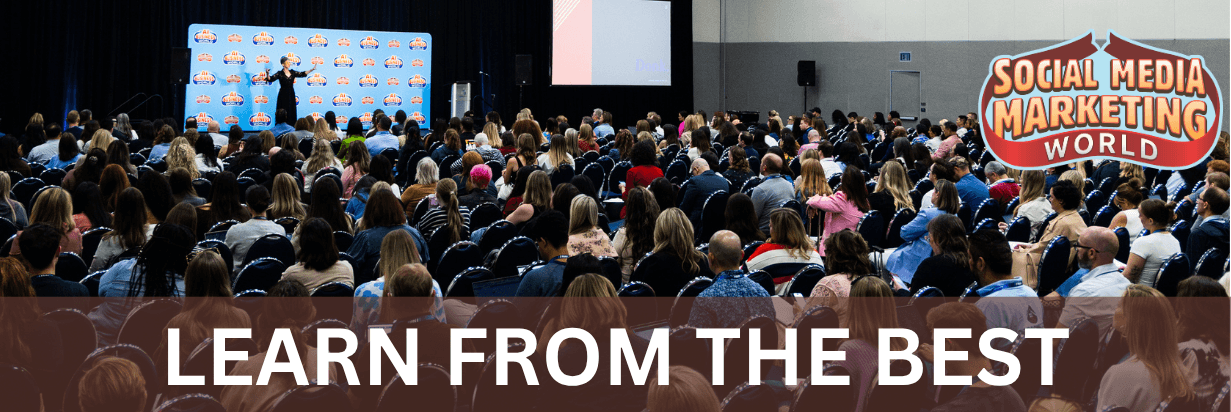
The 2027 Social Media Marketing World conference has already signaled that the industry is moving past the "What is AI?" phase and into "How do we implement AI?" The decision to recruit two dozen practitioners focused on practical application reflects a broader market trend: the end of the AI hype cycle and the beginning of the operational cycle.
Data from recent industry shifts indicates that:
- Efficiency Gains: Firms utilizing AI-led image libraries report a 40% reduction in production time for social media campaigns.
- Voice Interaction: With the introduction of models like Gemini 3.8 Live and GPT-Live-1, the cost-to-performance ratio for AI-driven customer service is hitting a "tipping point," making voice-based AI agents viable for small and medium-sized enterprises.
- Autonomous Capability: Meta’s "Muse" agent marks the first major move toward "Action-as-a-Service," where the AI acts as a digital proxy for the consumer, fundamentally changing how affiliate marketing and lead generation will function.
Official Responses and Strategic Pivot
The tech giants are positioning their latest releases as "privacy-first" and "user-centric." Meta’s introduction of the Muse Secure VM and audit trails is a direct response to enterprise concerns regarding data security and the "black box" nature of AI agents. By providing granular permissions and explicit action approvals, Meta is attempting to build the trust necessary for corporate adoption.

Similarly, Google’s focus on the Windows ecosystem highlights an attempt to capture the "prosumer" market. By integrating Gemini directly into the OS through shortcuts like Alt + Space, Google is effectively competing with the native search and productivity tools that have dominated Windows for decades.
Navigating the Future: A Summary for Professionals
As we head into the next quarter, marketers should consider the following three-pronged approach to stay ahead of the curve:
1. Audit Your Technical Barriers
Perform a "bot-readiness" check on your website. Ensure that your structured data, site maps, and accessibility protocols are optimized for AI crawlers. If the AI cannot ingest your data, you effectively do not exist in the new discovery economy.

2. Embrace the "Seed" Methodology
Stop treating every creative asset as a one-off. Build a repository of base assets that can be iterated upon. Whether it is product photography or core brand messaging, use AI to generate secondary and tertiary assets that maintain the integrity of your brand’s visual and tonal identity.
3. Move Beyond "Chat"
The era of the chatbot is ending; the era of the "Agent" has arrived. Whether it is Meta’s Muse or OpenAI’s GPT-Live-1, the focus is moving from answering questions to completing tasks. Think about the repetitive tasks within your organization—scheduling, procurement, or lead qualification—and begin identifying which workflows are ready for agentic automation.
Final Thoughts
The transition to an AI-augmented workflow is not just about adopting new software; it is about rethinking the fundamental relationship between a brand and its digital footprint. As AI agents begin to take action on behalf of users, the businesses that succeed will be those that have positioned themselves as the most reliable, accessible, and authoritative sources of information within the AI ecosystem.

For those feeling the pressure of this rapid evolution, the best advice remains the same: seek out the specific gaps in your strategy. Whether through expert-led sessions or internal audits, identifying the "missing link" in your AI integration is the most valuable investment you can make before the close of the year.
Stay informed, stay agile, and prepare to show up where your customers are—even if they are now searching through an AI instead of a browser.