
The digital marketing landscape has undergone a seismic shift. For over two decades, the "blue link" was the undisputed king of the internet—the primary gateway through which users discovered information, evaluated products, and engaged with brands. However, the rise of Large Language Models (LLMs) and AI-powered search interfaces like ChatGPT, Google AI Overviews, and Perplexity has fundamentally dismantled that hierarchy.
We have entered the era of Answer Engine Optimization (AEO). For marketing leaders, the shift from "theoretical experiment" to "measurable business strategy" is complete. Brands that fail to adapt their content to this new paradigm risk being sidelined as AI systems increasingly provide the answers directly, leaving traditional SEO rankings as secondary, or even obsolete, touchpoints.
The Evolution of the Search Journey: From Blue Links to Direct Answers
To understand the urgency of AEO, one must look at the chronology of the search evolution.
Phase 1: The Keyword Era. Search engine optimization was born from the need to signal relevance to crawlers through keyword density and backlink profiles. The goal was to dominate the first page of results.
Phase 2: The Intent Era. Search engines evolved to understand semantic meaning, favoring high-quality, comprehensive content that satisfied user intent rather than just matching search queries.
Phase 3: The Answer Engine Era. Today, we are in a phase where users demand immediate, synthesized, and actionable information. AI search tools act as a "research assistant," summarizing data from various sources to provide a definitive answer before the user ever clicks a link.
This transition has created a "zero-click" reality where the brand’s value proposition must be clearly defined within the AI’s training data or real-time retrieval window. The brands that appear in AI citations are effectively being "recommended" by the AI, establishing an immediate level of trust and authority that traditional ranking rarely achieves.
Supporting Data: Why the Shift is Concrete
The statistics emerging from the 2026 marketing landscape validate this pivot. According to recent industry reports, nearly 49% of marketers acknowledge a tangible decline in organic traffic from traditional search—a direct result of AI interfaces capturing queries that previously would have driven clicks.

However, this loss in volume is being offset by a gain in quality. Research indicates that 58% of marketers observe that referral traffic originating from AI-generated sources possesses significantly higher purchase intent than traffic from standard search. This is because users interacting with AI agents are often in the middle of a complex research phase. When your brand is cited as the source of truth for their specific problem, you are no longer just another search result; you are the authoritative expert.
The Six Pillars of AEO: Mapping Benefits to ROI
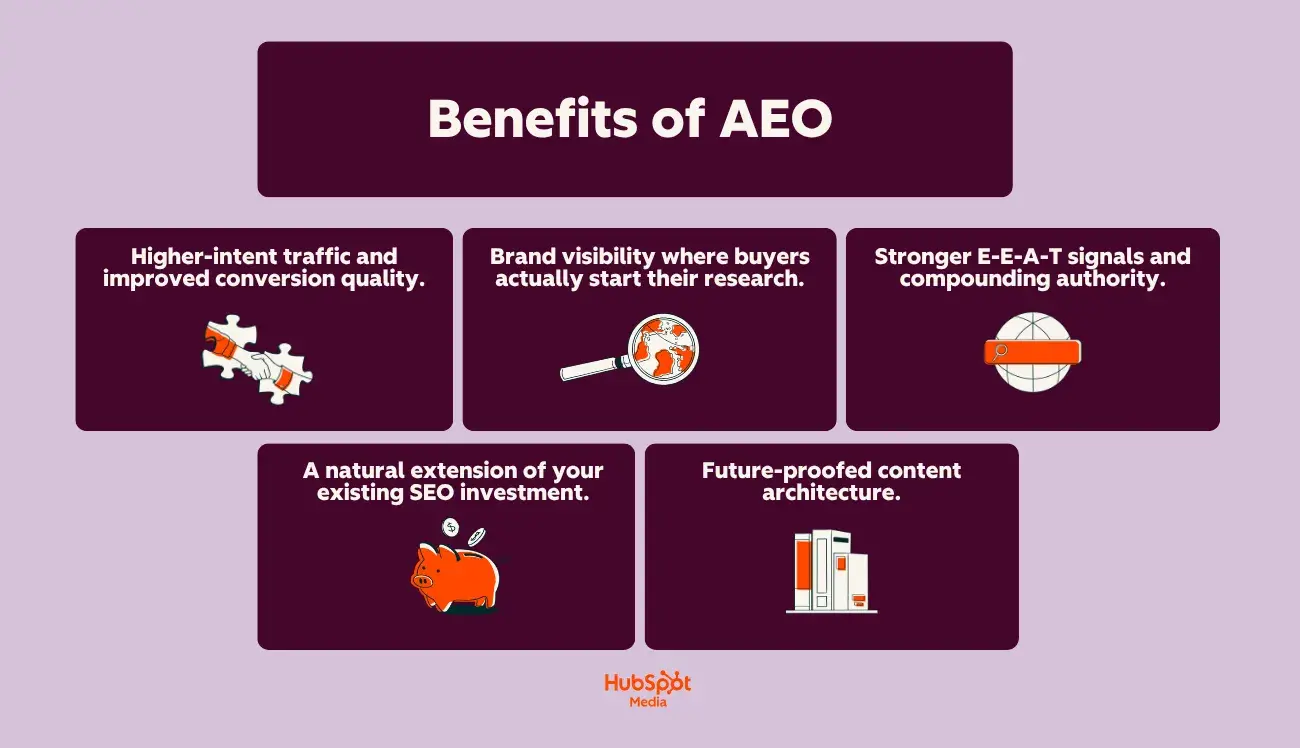
For CMOs and marketing directors, the challenge lies in justifying the investment. AEO is not just about visibility; it is about building a defensible moat around your brand’s digital authority. Here are the six tangible benefits of AEO:
1. High-Intent Traffic and Accelerated Lead Quality
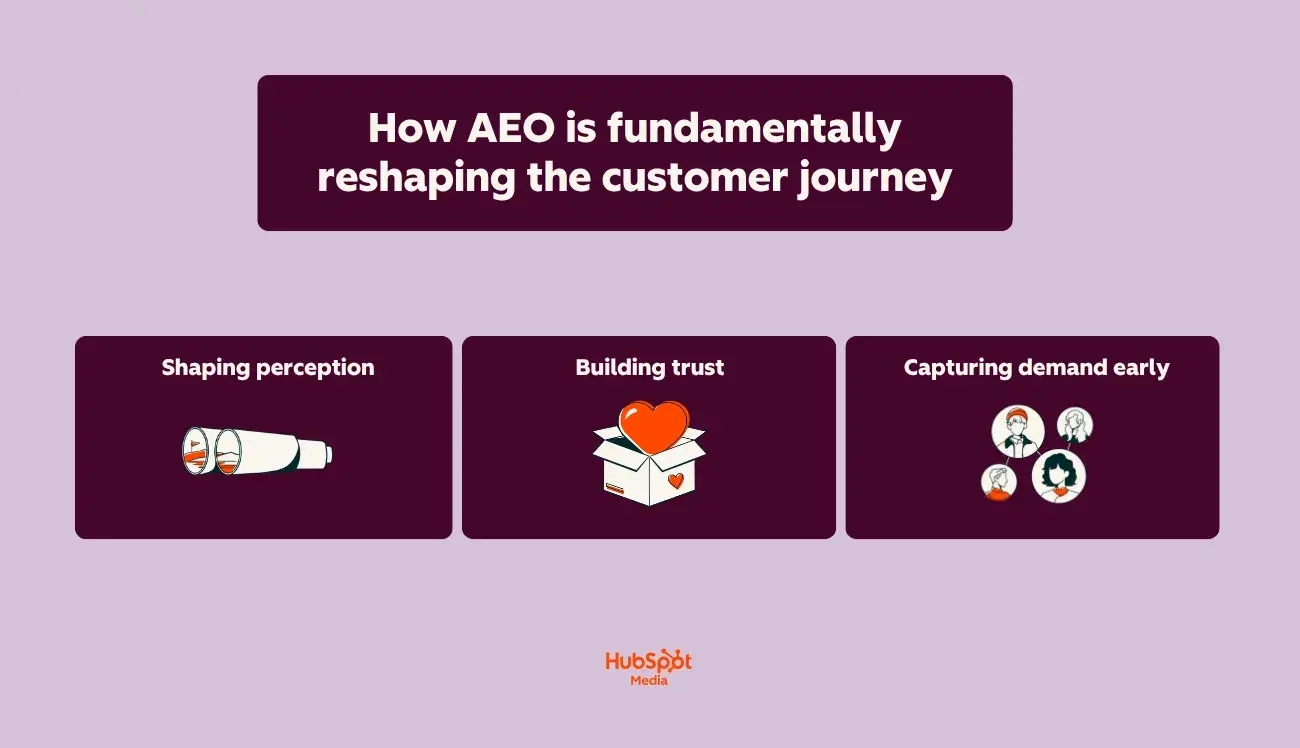
When an AI engine synthesizes an answer and provides a citation, the user has already been primed by the information. They aren’t clicking a link in a vacuum; they are clicking a link because they have been told that this specific brand provides the answer they seek. This drastically shortens the sales cycle and improves conversion rates.
2. Visibility at the Point of Intent
Traditional SEO often captures demand once it has matured. AEO allows brands to intervene earlier in the research process. By appearing in AI-powered responses, brands become the default solution during the initial discovery phase, effectively shaping the user’s perception of the market.
3. Strengthening E-E-A-T (Experience, Expertise, Authoritativeness, Trustworthiness)
AI systems are trained to favor sources that demonstrate high levels of E-E-A-T. By optimizing for AEO—using structured data, clear entity definitions, and verifiable sourcing—you are simultaneously training your brand to be recognized as an expert across both traditional and AI search ecosystems.
4. Measurable Performance with New Tooling
The "black box" nature of AI search is fading. Modern AEO tools allow teams to move beyond intuition. By benchmarking visibility across platforms like Perplexity and Google AI Overviews, marketers can now track the efficacy of their content in real-time, just as they would track keyword rankings.
5. A Natural Extension of Existing SEO
AEO does not require a complete overhaul of your content strategy. Instead, it acts as a refinement layer. The high-authority pages you have built for SEO are the perfect candidates for AEO optimization. By adding structured data and simplifying language for AI parsing, you leverage your past work to secure future visibility.
6. Future-Proofing for Multimodal Search
We are moving toward a world of voice assistants, agent-driven commerce, and zero-click interfaces. All these technologies rely on the same fundamental data structures that AEO prioritizes. Investing in AEO today builds a robust content infrastructure that will remain relevant across every emerging channel, from smart home devices to autonomous AI agents.
Addressing the Blockers: A Strategic Framework
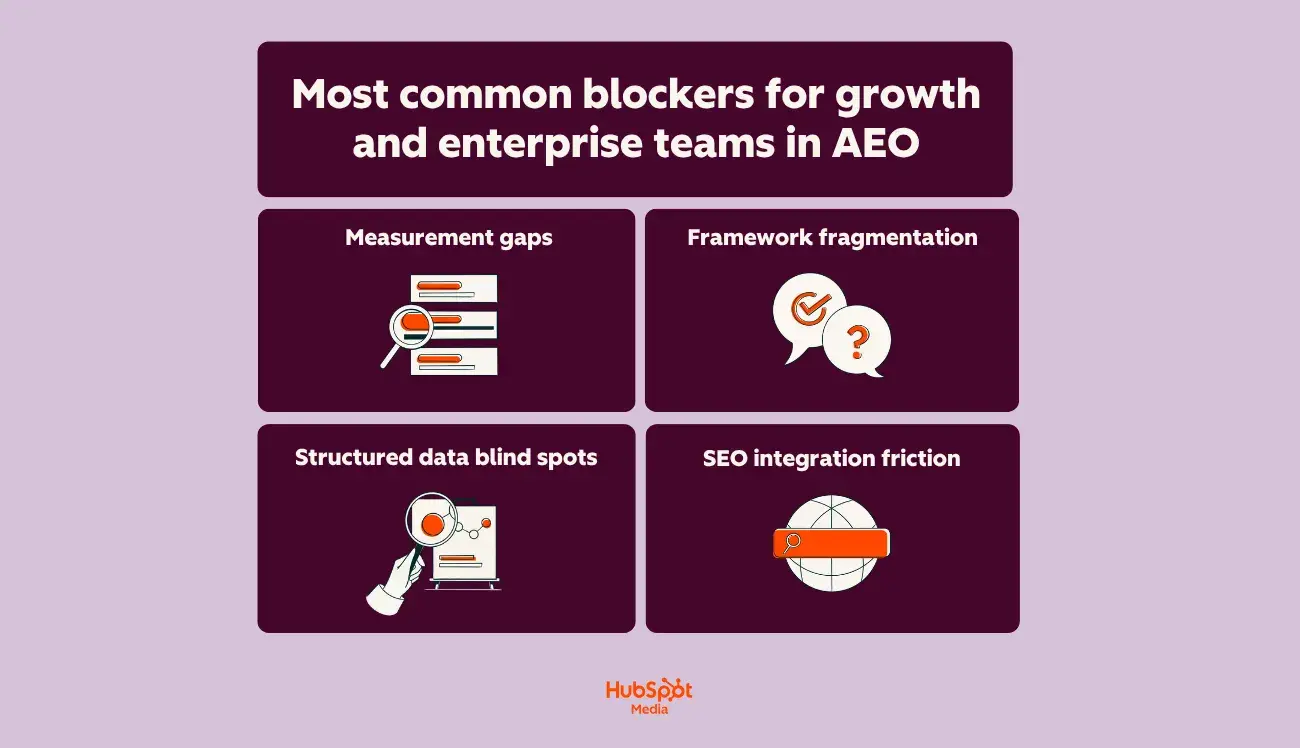
Despite the benefits, many teams face friction in implementation. The most common hurdles involve a lack of standardized frameworks and the perception that AEO is "too technical."
Overcoming the "ROI Mystery"
The primary reason AEO struggles to get budget is the inability to track "citations." Marketing teams must adopt purpose-built tools, such as AEO Graders, to establish a baseline. By measuring how many times a brand appears in AI summaries, teams can correlate content updates with increased visibility, providing the hard data needed for C-suite buy-in.
Standardizing the Workflow
AEO should not be an ad-hoc experiment. It should be an operational capability. This includes:
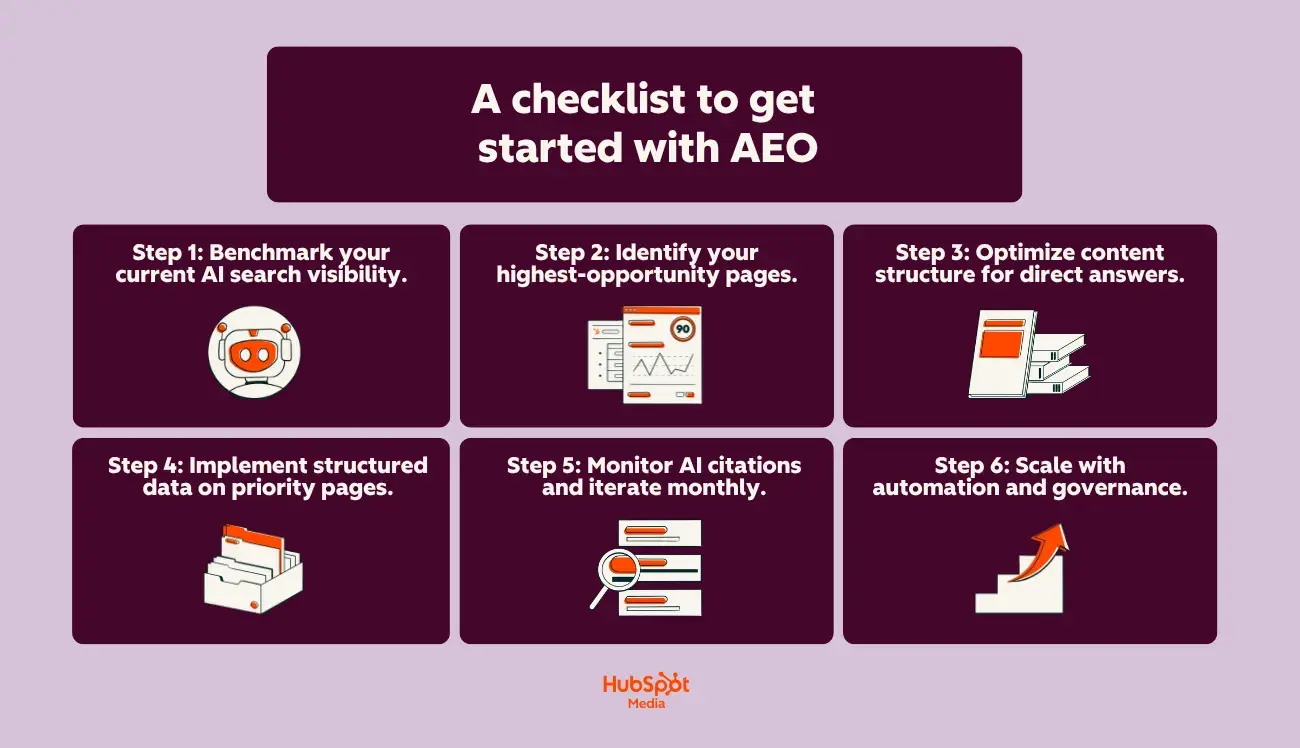
- Audit: Using automated tools to evaluate existing content for "answer-readiness."
- Structure: Implementing schema markup (specifically FAQ, Product, and Organization schema) to provide AI with clear entity relationships.
- Refinement: Rewriting introductory paragraphs to function as concise, standalone answers to common queries.
Implications for the Future: The Cost of Inaction
The competitive landscape is bifurcating. There are the "early adopters"—brands that are actively structuring their content to be the "source of truth" for AI models—and there are the "passive participants" who are waiting for the market to stabilize.
The danger for passive participants is profound. AI models are becoming increasingly efficient at selecting the most authoritative sources. Once a brand is cemented in an LLM’s knowledge base as a primary authority for a specific topic, it becomes significantly harder for new competitors to displace them. In short, the "first-mover advantage" in AEO is not just about rankings; it is about establishing a foundational authority that the AI will continue to reference as it learns and grows.
Final Recommendations for Marketing Leadership
If your team is looking to operationalize AEO, follow this three-step roadmap:
- Benchmark: Run your domain through an AEO visibility tool to understand your current standing. You cannot improve what you do not measure.
- Prioritize: Don’t attempt to optimize your entire site. Identify the top 20% of your pages that drive the most revenue and traffic; these are your highest-value assets for AI citation.
- Integrate: Treat AEO as a layer of your existing SEO strategy. Do not view it as a separate project. The same content that ranks well in Google is, with a few structural tweaks, the content that will be cited by ChatGPT.
As we look toward the future, the role of the search engine will continue to evolve from a directory to an answer machine. Brands that lean into this shift—prioritizing clarity, structured data, and authoritative, answer-focused content—will not only survive this transition; they will define it. The technology is here, the tools are accessible, and the competitive advantage belongs to those who start today.