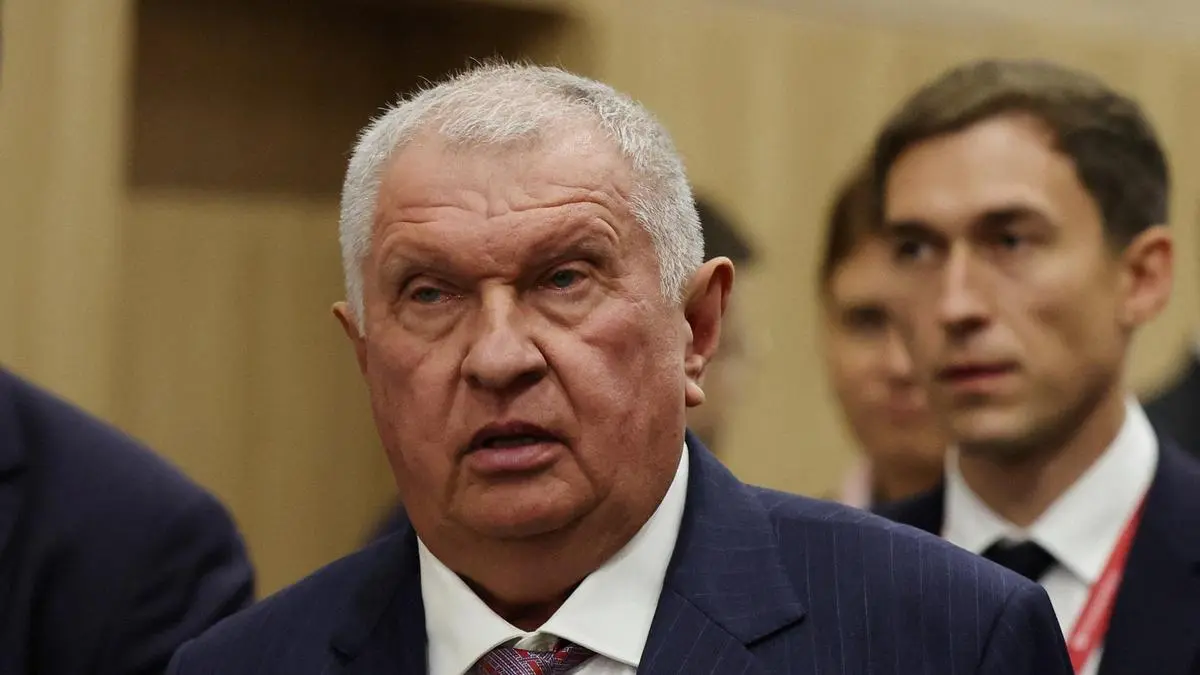
ST. PETERSBURG, RUSSIA – As the global energy landscape undergoes a tectonic shift, India has emerged as the linchpin of future demand, according to Igor Sechin, the powerful Chief Executive of Russian energy giant Rosneft. Speaking at the St. Petersburg International Economic Forum (SPIEF), which concluded on June 6, 2026, Sechin articulated a vision of a multipolar energy market where India’s rapid industrialization and demographic expansion play a decisive role.
The forum, a flagship event for the Russian Federation, served as a backdrop for high-level discussions on energy security, the resilience of supply chains in the face of geopolitical friction, and the strengthening of ties between Moscow and the Global South.
Main Facts: India’s Central Role in Global Energy
During his keynote address, Sechin underscored that India is no longer a peripheral player but the primary driver of global oil consumption. He stated unequivocally that India is expected to account for approximately 50% of the total global increase in oil demand over the coming decade.
Citing data from the International Energy Agency (IEA), Sechin projected that India’s daily oil consumption would surge to nearly eight million barrels per day (bpd) by 2035. This represents a staggering 44% increase from current levels, contrasted sharply against an anticipated global demand growth of only five percent. For energy producers like Russia, this creates a structural alignment of interests: Russia, the world’s third-largest oil producer, is looking toward the East to offset the loss of its traditional European markets.
"India occupies a special place in the global oil market," Sechin noted. "The trajectory of their economic development is intrinsically linked to energy security, and Russia is prepared to be a reliable partner in that journey."
Chronology of Strategic Energy Engagement
The relationship between Russia and India regarding energy supplies has accelerated significantly since the geopolitical realignments of 2022.
- April 2022: Following the onset of the conflict in Ukraine and subsequent Western sanctions on Russian energy, Russia began redirecting massive volumes of crude oil toward Asian markets, specifically India and China.
- 2023–2025: Russia solidified its position as a top-tier oil supplier to India, utilizing discounted pricing models and developing complex logistical frameworks to circumvent Western insurance and shipping restrictions.
- June 3–6, 2026: The St. Petersburg International Economic Forum provided a platform for evaluating the long-term sustainability of these trade routes.
- June 5, 2026: Igor Sechin formally announced that the economic benefits reaped by India and China from Russian energy supplies since 2022 have cumulatively exceeded $40 billion.
- June 6, 2026: Closing of the SPIEF, with a renewed emphasis on "sovereign energy cooperation" between the BRICS+ nations.
Supporting Data: The Economic Calculus
The $40 billion figure cited by Sechin is a cornerstone of his argument that Russia’s pivot to the East is not merely a survival tactic but a mutually beneficial economic strategy. By providing stable, reasonably priced crude, Russia has assisted India in mitigating the inflationary pressures that plagued much of the West during the same period.
Comparative Growth Projections (2026–2035)
| Region/Country | Projected Demand Growth (%) | Drivers |
|---|---|---|
| India | +44% | Industrialization, Urbanization |
| Global Average | +5% | Slowing OECD consumption |
| Southeast Asia | +12% | Emerging manufacturing hubs |
Sechin further noted that the stability of these supplies is vital for the global economy. He argued that the "de-coupling" attempts by Western nations have failed, and that Russia’s integration into the supply chains of India and China has proven resilient, creating a new, reliable trade architecture that is insulated from "sanction-driven instability."

The Fragility of Supply Chains: The Hormuz Warning
While optimistic about India’s demand, Sechin issued a stark warning regarding the fragility of global logistics, particularly the Strait of Hormuz. A critical chokepoint for global oil, any disruption in this region would have catastrophic consequences for energy and food security.
Sechin highlighted a direct correlation between energy costs and the agricultural sector, noting that fertilizer prices had already risen by nearly 60% in the first four months of 2026. He warned that any conflict or closure in the Strait of Hormuz would exacerbate this trend, pushing food prices to levels that would threaten the stability of developing nations.
"India, along with countries in Africa and Southeast Asia, would be the most vulnerable to a food-price shock," Sechin cautioned. "The lack of strategic reserves in these regions makes them susceptible to market volatility. Russia’s role is to ensure that these disruptions do not occur, by keeping the flow of hydrocarbons steady and affordable."
Official Responses and Geopolitical Implications
The SPIEF was not limited to energy economics; it served as a stage for high-level political posturing. Addressing the assembly, Russian President Vladimir Putin made a pointed defense of India’s economic autonomy.
In response to a query regarding the potential for Western sanctions against countries that continue to trade with Russia, Putin stated that any attempt to undermine India’s sovereignty would "boomerang immediately." He explicitly lauded Prime Minister Narendra Modi’s leadership, suggesting that India’s focus on its national interests has shielded it from the worst effects of global geopolitical pressures.
Implications for the Global Order
The events at SPIEF 2026 signal several major shifts in the international order:
- The End of Western Energy Hegemony: The reliance on the U.S. dollar and Western financial infrastructure for energy payments is rapidly being replaced by local currency settlements and bilateral clearing mechanisms between Russia, India, and China.
- India as the "Demand Anchor": With Western Europe aggressively transitioning toward renewables and suffering from high energy costs, the center of gravity for the oil industry has permanently shifted to South Asia.
- Food-Energy Nexus: The explicit link made by Sechin between energy supply chains and global food security serves as a warning to the West. Russia is framing its energy exports as a humanitarian necessity, framing sanctions as a direct threat to the food security of the Global South.
- Sovereignty as a Trade Strategy: By framing the Russia-India trade relationship as a matter of "sovereignty," Moscow is encouraging other nations to prioritize national interest over alignment with Western foreign policy, effectively creating an alternative bloc of economic cooperation.
Conclusion: A New Era of Energy Diplomacy
As the 2026 St. Petersburg International Economic Forum concluded, the takeaway was clear: the global energy map is being redrawn. Rosneft’s assessment that India will drive the next decade of growth is a sentiment shared by most major market analysts, but the inclusion of geopolitical and food security narratives adds a new dimension to the discussion.
For India, the challenge lies in balancing its massive energy needs with its diverse foreign policy interests. For Russia, the challenge is maintaining the logistical and financial systems necessary to keep this energy flowing in the face of continued Western opposition. As of June 2026, the partnership remains robust, anchored by billions of dollars in economic benefits and a shared vision of a multipolar world where energy is the currency of sovereignty.