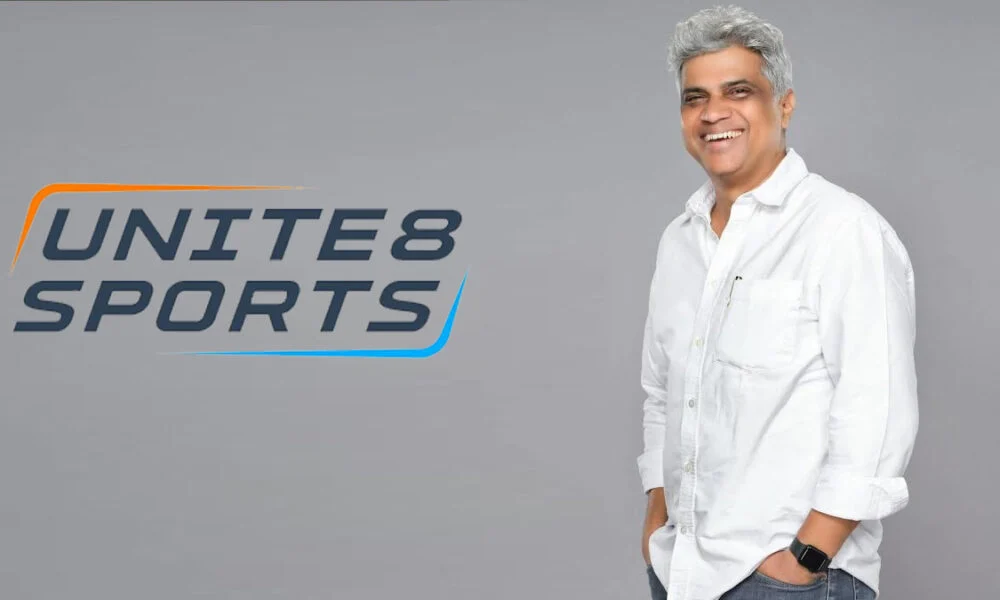
As the clock ticks down to the June 11, 2026, kickoff of the FIFA World Cup, the air in Mumbai’s corporate corridors is thick with anticipation. For Baavesh Janavlekar, the Chief Business Officer of Unite8 Sports, the nerves are notably absent. Instead, there is the calm focus of a strategist who has spent months preparing for the biggest launch in Zee Entertainment’s recent history.
With the launch of Unite8 Sports—a network comprising four distinct channels (Unite8 Sports 1, 1 HD, 2, and 2 HD)—Zee is making a definitive, multi-year play to claim a significant stake in India’s lucrative and fiercely competitive sports broadcasting market. At the heart of this venture is a landmark eight-year, 39-event partnership with FIFA, a deal Janavlekar describes as the cornerstone of "a decade of football relevance in India."
The Strategic Blueprint: Bridging Global and Local
Unite8 Sports is not merely a destination for football; it is a curated ecosystem designed to bridge the gap between global spectacles and homegrown passion. According to Janavlekar, the network’s philosophy is rooted in a deliberate "balance" between international marquee events and indigenous sports.
"Unite8 Sports will be a curated offering, delivering world-class experiences along with sports which are rooted in our culture," Janavlekar explains. "There will be a right balance of international sports that work in India and our homegrown sports like wrestling, kabaddi, and boxing. One of the reasons the sports business is called ‘Unite8’ is because it is going to unite the international and the national."
This dual-track approach is designed to insulate the network from the volatility of international tournament cycles. By investing in Indian sports, the network aims to create a year-round viewership habit, moving away from the "event-only" model that has historically defined sports broadcasting in the region.
The Data-Driven Ambition
The confidence behind this launch is backed by sobering but promising data. During the previous FIFA World Cup, India emerged as a top-ten global market for viewership. With 16 million viewers tuning in across linear and digital platforms and a base of 30 million dedicated football fans, the potential for growth is immense.
"These are all huge numbers," Janavlekar notes. "We intend to leverage that, not only in terms of viewership but in building a football ecosystem alongside FIFA. The FIFA World Cup becomes an anchor IP for us to structure an entire sports offering around."
By utilizing the FIFA World Cup as a "hook," Zee hopes to capture a massive audience that it can then migrate to its other sports offerings, effectively cross-pollinating interest between global football and regional Indian sports.
Navigating the Time-Zone Challenge
Broadcasting a World Cup hosted across the United States, Canada, and Mexico poses a unique geographical hurdle for Indian broadcasters. With the majority of matches scheduled between midnight and 4:30 AM IST, traditional linear viewing faces a structural disadvantage.
However, rather than viewing this as an obstacle, Janavlekar frames it as a "dual consumption" opportunity. The network’s strategy centers on the "catch-up economy." By providing high-quality highlights, in-depth explainers, and social-media-first content, the network intends to capture viewers at all hours of the day.
"The timings are actually working in our favour," Janavlekar argues. "The live coverage as well as the catch-up programming that we are developing unlocks a dual consumption curve." This strategy has already garnered strong interest from advertisers who are eager to place their brands across a variety of formats—from premium live-match slots to snackable, highly shareable digital content.
The "Last Dance" Narrative
Beyond the matches themselves, Unite8 is leaning heavily into the emotional resonance of the 2026 World Cup. The tournament is widely speculated to be the swan song for global icons Lionel Messi, Cristiano Ronaldo, and Neymar.
"Those nuances, the fact that this could be the last World Cup for these iconic players—that is the reason social media has gone into overdrive," says Janavlekar. By crafting editorial narratives that celebrate these legends, the network hopes to drive engagement levels that transcend casual sports viewership, tapping into the deep-seated fan loyalty that these players inspire globally.
Linguistic Expansion and Regional Outreach
Recognizing the linguistic diversity of India, Unite8 Sports is launching with a robust language strategy. While Hindi and English feeds are standard, the network is prioritizing regional penetration by including Malayalam and Bengali commentary for the World Cup.
"Over a period of time, as we keep adding sports IPs and regional IPs to our portfolio, we will definitely be looking at more channels getting launched," Janavlekar adds. This commitment to regionalization is a critical component of Zee’s long-term plan to ensure that their sports coverage feels local and personal to viewers across the country, rather than a monolithic, top-down product.
Technological Integration: A Measured Approach
In an era where Artificial Intelligence is transforming every sector, Janavlekar remains pragmatic. While he acknowledges the potential for AI in content creation and broadcast optimization, he maintains that the soul of sports lies in human performance.
"AI can write a story, make a film, and do a lot of things," he remarks. "But until AI can play sports, you will have sports as a very unique proposition to sustain for many, many more years."
For now, the focus is on "getting the foundations right." The network intends to integrate technology slowly, prioritizing the quality of the broadcast and the curation of properties over flashy, experimental tech that might distract from the core product.
The Long Game: Financial Discipline
Perhaps the most significant differentiator for Unite8 Sports is its stated commitment to fiscal responsibility. In a market often marred by aggressive, loss-making bidding wars for broadcasting rights, Zee appears to be charting a more disciplined course.
"We strongly believe that if we avoid the bidding wars and remain very financially disciplined, as we are committed to all our stakeholders, we intend to play a long game in the sports business," Janavlekar asserts. This philosophy suggests that Zee is prioritizing sustainability and long-term profitability over short-term market share dominance.
The Challenger Mindset: "We Try Harder"
Drawing a parallel to the legendary Hertz car rental campaign, Janavlekar characterizes the network’s entry as an underdog’s journey. "We are going to try very, very hard to build an entirely new sports ecosystem in India," he says.
This ambition extends to the athletes themselves. Janavlekar believes that India possesses "world-class winning sporting heroes" who are currently "underleveraged" by the media landscape. By positioning Unite8 as a network that stands by these athletes, Zee hopes to foster a deeper, more patriotic connection with its audience.
Implications for the Industry
The launch of Unite8 Sports represents a tectonic shift in the Indian media landscape. If Zee succeeds in its goal of integrating the "catch-up economy" with a disciplined, multi-sport portfolio, it could force a re-evaluation of how other major players approach sports broadcasting.
By avoiding the trap of hyper-inflationary rights acquisitions and focusing on high-engagement, curated content that spans both global and local interests, Unite8 is attempting to create a sustainable business model where others have struggled.
As the first ball is kicked in North America this June, the true test for Unite8 Sports will be its ability to translate this ambitious, data-driven strategy into sustained viewer loyalty. For now, the network has set the stage. The players are ready, the cameras are rolling, and, according to Janavlekar, the game is well and truly on.