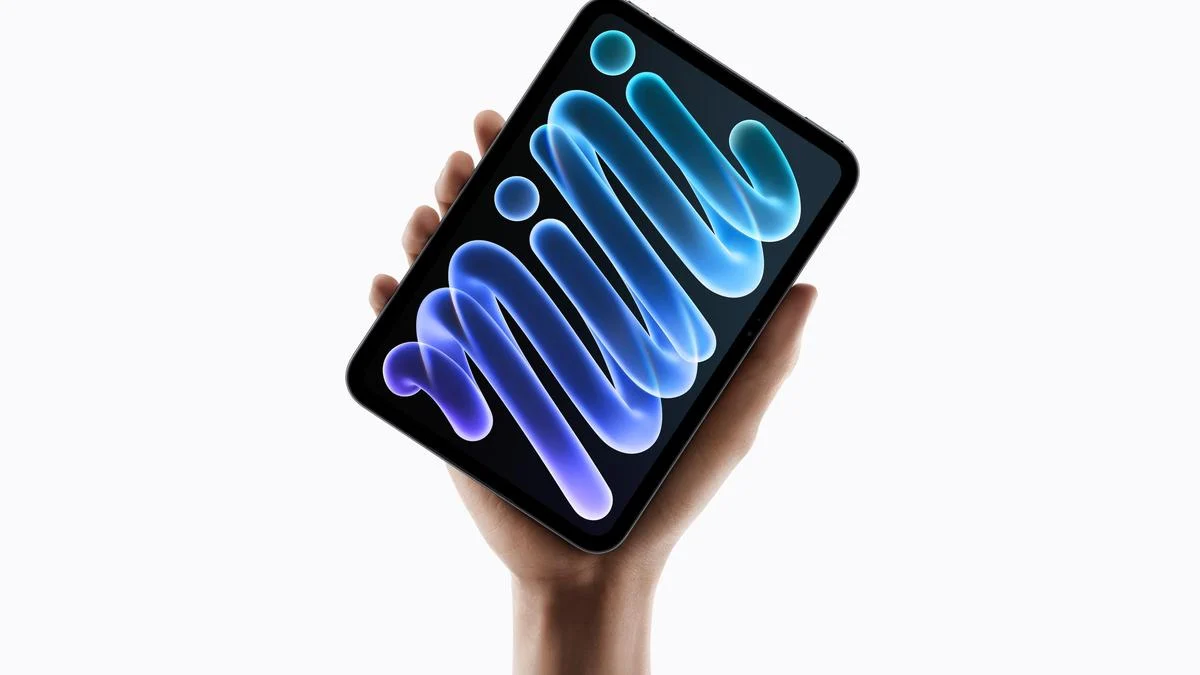
CUPERTINO, CALIFORNIA — In a move that marks the most significant evolution of its compact tablet lineup to date, Apple has officially unveiled the next-generation iPad mini. Positioned as a "Pro" level device in a small form factor, the 2026 iPad mini integrates cutting-edge OLED display technology, the formidable A20 Pro chipset, and a radical chassis redesign that brings its thickness down to a record-breaking 5.4 mm.
The announcement, made on October 27, 2026, signals a strategic pivot for the iPad mini. Long regarded as a niche device for e-book readers and field workers, the new iteration seeks to capture the high-end creative and professional market, offering desktop-class performance within a footprint that remains effortlessly portable.
Main Facts: A Convergence of Power and Portability
The new iPad mini is a departure from its predecessors in almost every technical category. The headline feature is the shift to an 8.5-inch OLED display, replacing the Liquid Retina LCDs of previous generations. This transition allows for a staggering 2,000,000:1 contrast ratio, providing true blacks and vibrant color reproduction that matches the iPad Pro series.
Under the hood, the device is powered by the A20 Pro chip. This silicon is built on a refined 2-nanometer process, featuring a 7-core GPU. Notably, Apple has integrated dedicated "Neural Accelerators" directly into each GPU core to facilitate the massive computational demands of iPadOS 27’s new AI features.
The physical dimensions of the device have also been overhauled. By achieving a thickness of just 5.4 mm, Apple has reclaimed the title of producing the thinnest tablet in its class. Despite this slimming down, the device gains an IP67 rating for water and dust resistance—a first for the iPad mini line—addressing long-standing requests from medical and field-service professionals.
Pricing, however, reflects these premium upgrades. The iPad mini now starts at ₹82,900 for the 128GB Wi-Fi model, a substantial increase from the entry-level pricing of previous years. The Wi-Fi + Cellular variant reaches ₹1,00,900, placing the mini firmly in the premium price bracket.
Chronology: The Road to the 2026 Refresh
The journey to the new iPad mini has been one of anticipation and technical hurdles. For several years, the mini occupied a middle ground in Apple’s lineup, receiving sporadic updates compared to the annual cycles of the iPhone or the biannual refreshes of the iPad Pro.
- 2021–2024: The iPad mini 6 maintained a loyal following but began to show its age as display technology moved toward ProMotion and OLED.
- Early 2025: Rumors began to circulate regarding Apple’s "Ultra-Thin" project, aimed at reducing the Z-height of all portable devices using new battery chemistry and display lamination techniques.
- Mid-2026: Leaks from the supply chain suggested that Apple had successfully integrated Tandem OLED technology (originally debuted in the iPad Pro) into a smaller 8.5-inch panel.
- October 27, 2026: Apple officially breaks the silence, announcing the device via a global press release and digital keynote, highlighting "the biggest update ever" for the mini.
- October 28, 2026: Pre-orders are scheduled to go live globally.
- November 6, 2026: The device will officially hit retail shelves and begin shipping to customers.
Supporting Data: Technical Specifications and Performance Metrics
The 2026 iPad mini is not just a cosmetic update; its internal data suggests a device capable of handling workflows previously reserved for the MacBook Pro or iPad Pro.
Display Architecture
The 8.5-inch OLED panel is the centerpiece of the upgrade. It supports a peak brightness of 1,200 nits for HDR content. For standard dynamic range (SDR), it maintains a robust 600 nits of full-screen brightness.
Perhaps more impressive for mobile readers is the new "Midnight Read" mode, which allows the display to drop to a minimum brightness of just 1 nit. This ultra-low luminance, combined with the lack of a backlight (inherent to OLED), significantly reduces eye strain in total darkness.
The A20 Pro Silicon
The A20 Pro chip represents a milestone in Apple Silicon. The 7-core GPU is designed for "Ray Tracing 2.0," allowing for console-quality gaming on a handheld device. The "Neural Accelerators" are specifically tuned for iPadOS 27’s generative AI tasks, such as real-time video object removal and local Large Language Model (LLM) processing via the new Siri AI.
Optics and Connectivity
Apple has relocated the 12MP Center Stage front camera to the landscape edge. This change acknowledges that even on a small tablet, users are increasingly using landscape orientation for video calls.

- Rear Camera: 12MP Wide sensor with Smart HDR 4 and 4K video recording at 60 fps.
- Flash: An Adaptive True Tone flash that adjusts its intensity based on the ambient light and the distance to the subject, optimized for high-fidelity document scanning.
- Wireless: Support for Wi-Fi 7 and 5G (Advanced), ensuring the device remains relevant in a world of high-speed cloud computing.
Storage and Colorways
The device moves away from the 64GB entry-level tier, now offering:
- 128GB (Base)
- 256GB
- 512GB
The color palette has been simplified to two sophisticated finishes: Midnight and Starlight.
Official Responses: Leadership Insights
Apple’s executive team has positioned this release as a response to the evolving needs of a "highly mobile" professional workforce.
Dave Pakula, Apple’s Vice President of Hardware Engineering, emphasized the engineering feat required to balance power with the new 5.4 mm chassis. "iPad mini is beloved for its fantastic portability, performance, and display by a wide range of users, from creators and small business owners to doctors, field service workers, and gamers," Pakula stated.
He continued, "With a remarkably thinner and lighter design, a stunning new OLED display, the incredibly powerful A20 Pro, and water and dust resistance, the new iPad mini is a huge leap forward for users who love having the full iPad experience in the palm of their hand."
Market analysts suggest that Pakula’s emphasis on "doctors and field service workers" is a direct nod to the enterprise sector, where the iPad mini has historically dominated due to its size. The addition of the IP67 rating is seen as a direct response to feedback from these sectors, where durability in unpredictable environments is paramount.
Implications: A New Market Segment and the "Pro" Premium
The release of the 2026 iPad mini carries several broader implications for the tech industry and Apple’s product strategy.
1. The Death of the "Budget" Mini
With a starting price of ₹82,900, the iPad mini has exited the "affordable" tablet category. Apple is clearly signaling that the "mini" moniker no longer refers to a "miniature price," but rather a "miniature footprint" for flagship technology. This may alienate some casual users but creates a clear distinction between the entry-level iPad (10th/11th Gen) and the premium tiers.
2. The AI-First Ecosystem
The inclusion of the A20 Pro and the beta rollout of Siri AI with iPadOS 27 suggests that Apple is banking heavily on "Apple Intelligence." By putting this much power into its smallest tablet, Apple is ensuring that its AI ecosystem is ubiquitous across all form factors. The "Neural Accelerators" in the GPU cores suggest that future AI tasks will be more graphics-intensive, possibly involving augmented reality (AR) or real-time 3D rendering.
3. Impact on Foldables
As competitors like Samsung and Google continue to refine foldable phones that turn into small tablets, Apple’s response is a rigid, ultra-thin, ultra-powerful dedicated tablet. By keeping the iPad mini at 5.4 mm, Apple is offering a device that is thinner than most folded smartphones, potentially blunting the appeal of foldables for users who prioritize display quality and raw processing power over a folding hinge.
4. Education and Professional Specialized Markets
Despite the price hike, Apple is maintaining an education discount, bringing the starting price down to ₹76,900. This suggests that the company still views the mini as a vital tool for students and researchers. Furthermore, the combination of OLED and the A20 Pro makes the mini a viable "monitor" for professional photographers and filmmakers who need a portable, color-accurate reference screen that can also process high-bitrate video.
Conclusion
The 2026 iPad mini is a bold statement from Apple. It rejects the notion that small devices must compromise on technology. With its OLED screen, A20 Pro silicon, and incredibly thin profile, it is a "Pro" device in everything but name. While the significant price increase will be a hurdle for some, the sheer density of technology packed into the 5.4 mm frame sets a new benchmark for the industry. As pre-orders begin on October 28, the tech world will be watching closely to see if the market is ready for a ultra-premium compact tablet.