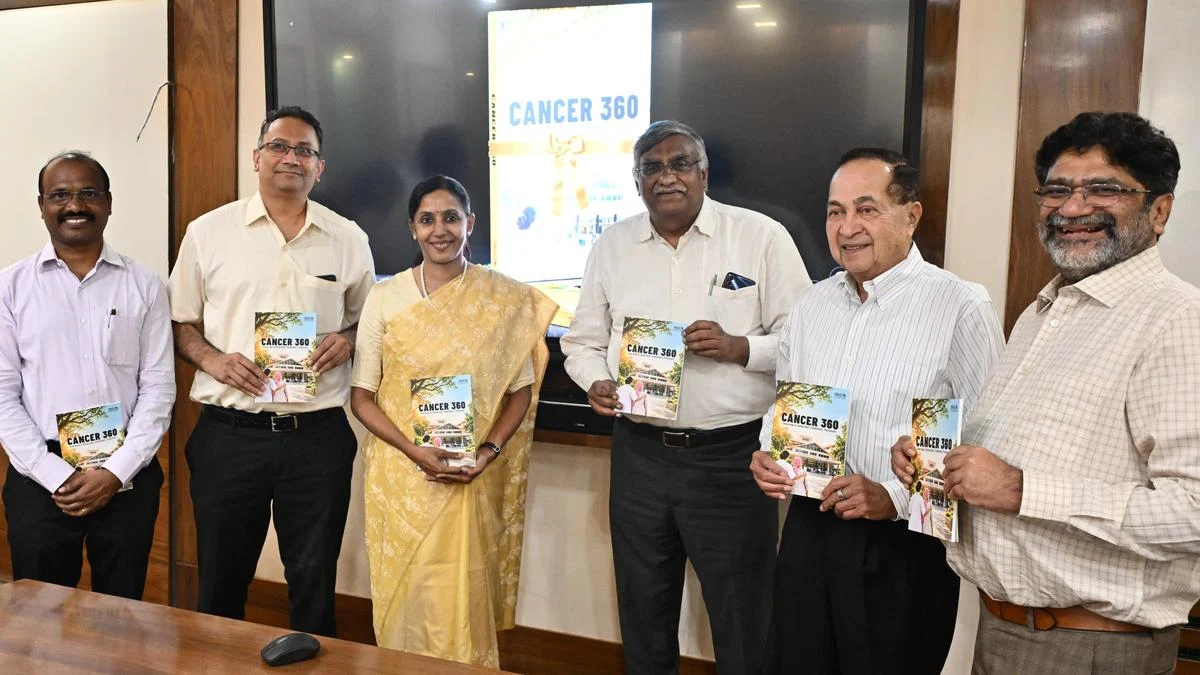
Chennai, October 26, 2026 — In a significant milestone for public health education and medical advocacy, The Hindu Group, in strategic partnership with the renowned Cancer Institute (WIA), Adyar, officially unveiled Cancer 360: Overview of Detection, Treatment, Palliation. This comprehensive volume, launched at The Hindu office in Chennai, serves as a definitive guide to the modern oncology landscape, bridging the gap between cutting-edge clinical research and the lived experiences of patients navigating the complexities of cancer care.
The book launch brought together a distinguished panel of medical experts, policymakers, and media leaders, signaling a collaborative effort to democratize medical knowledge and foster a more informed dialogue regarding cancer management in India.
The Vision Behind ‘Cancer 360’
The event was marked by a formal unveiling by N. Ram, Director of The Hindu Group, and Suresh Nambath, Editor of The Hindu. In a symbolic gesture of the synergy between media and medicine, Mr. Ram presented the first copy of the book to Dr. E. Hemanth Raj, Executive Vice Chairman of the Cancer Institute, Adyar.
The core intent of Cancer 360 is to demystify the multi-dimensional nature of cancer. As the title suggests, the book offers a holistic, 360-degree view of the disease—moving beyond the narrow focus on pathology to address the entire spectrum of the patient journey: from early prevention and precision diagnostics to the critical phases of rehabilitation, psycho-oncology, and palliative care.
Bridging the Gap: Accessibility and Affordability
During his keynote address, N. Ram emphasized the moral imperative of healthcare equity. He argued that the rapid advancements in global cancer research must not remain confined to elite institutions or expensive private clinics.
“The true measure of our medical progress is not found in the sophistication of our technology alone, but in our ability to make that technology accessible and affordable to the most vulnerable sections of society,” Mr. Ram stated. He lauded the Cancer Institute for its long-standing history of providing high-quality care regardless of a patient’s socio-economic status, noting that the dissemination of information through Cancer 360 is an extension of that mission.
Clinical Perspectives: Translating Research into Practice
The launch served as a platform for some of the nation’s leading oncology experts to discuss the practical challenges of implementing advanced care in a diverse, resource-constrained environment.
The Challenge of Localization
Dr. E. Hemanth Raj addressed the often-cited disparity between Western medical advancements and local implementation. He pointed out that while global research provides the foundation, the practical application in India requires a nuanced understanding of regional health disparities.
“Our challenge is to translate these global breakthroughs into practical, scalable interventions that work for our population,” Dr. Raj explained. He highlighted the institute’s reliance on philanthropic support to sustain its charitable programs, which ensure that even patients from the most marginalized backgrounds receive world-class treatment. Looking ahead, he detailed the institute’s strategic roadmap to expand its physical and digital infrastructure, aiming to reach underserved districts that currently lack specialized oncology facilities.
The Necessity of Sustained Innovation
Dr. Arvind Krishnamurthy, Professor of Surgical Oncology, focused on the evolution of cancer care through evidence-based research. He emphasized that the field of oncology is in a state of constant flux. “We cannot afford to remain static. The development of better, less invasive, and more effective treatments is an ongoing pursuit that requires sustained institutional support and a commitment to clinical research,” he said.
Beyond the Scalpel: The Multidisciplinary Approach
One of the most compelling aspects of Cancer 360 is its focus on "supportive care"—a domain often overlooked in traditional medical literature. The contributors to the book underscored that a cancer diagnosis is not merely a biological event, but a life-altering experience that demands a multidisciplinary response.
Individualized Treatment Plans
Dr. Mahalakshmi Rangabashyam Shetty, an ENT surgeon and lecturer at the Cancer Institute, highlighted the paradigm shift toward individualized care. She noted that the days of "one-size-fits-all" treatment protocols are largely behind us.

“Modern oncology relies on multidisciplinary tumor boards where surgeons, oncologists, pathologists, and radiologists collaborate to tailor treatments to the specific molecular profile of a patient’s tumor,” Dr. Shetty remarked. Furthermore, she emphasized the role of supportive care, noting that nutrition and exercise regimens are now considered as critical to patient outcomes as chemotherapy or radiation. The book provides detailed chapters on how to integrate these lifestyle modifications into the standard treatment roadmap.
The Role of Psycho-Oncology
Perhaps the most crucial addition to the discourse was the focus on mental health. Dr. Surendran Veeraiah, Professor and Head of the Department of Psycho-Oncology, articulated the necessity of addressing the psychological trauma associated with cancer.
“We are treating a person, not just a tumor,” Dr. Veeraiah stated. He noted that the psychological impact of cancer—ranging from anxiety and depression to the challenges of survivorship—is often the primary hurdle to long-term recovery. By including a dedicated section on psycho-oncology, Cancer 360 acknowledges that mental health support and hospice services are non-negotiable components of comprehensive cancer care.
Structure and Content: A Comprehensive Resource
Cancer 360 is meticulously organized to serve as a handbook for patients, caregivers, and medical students alike. The chapters are curated by experts across various disciplines, ensuring that the information is both technically rigorous and accessible.
Key areas covered in the book include:
- Precision Diagnostics: Exploring the role of genomics and advanced pathology in modern oncology.
- Multidisciplinary Tumor Boards: How collaborative medicine improves decision-making.
- Rehabilitation Services: Insights into speech and swallowing rehabilitation, particularly for head and neck cancers.
- Onco-Physiotherapy and Nutrition: The role of physical and metabolic health in boosting treatment tolerance.
- Healthcare Quality and Policy: A look at how institutions can maintain standards of excellence in high-volume settings.
- The Future of Research: A forward-looking summary of emerging therapies.
Implications for Public Health and Digital Access
The partnership between The Hindu Group and the Cancer Institute aims to leverage digital platforms to ensure the book reaches a wide audience. Recognizing that information is a powerful tool in the fight against cancer, the publishers have made the book available free of cost to all The Hindu subscribers via the digital portal.
Impact on Patient Literacy
Medical literacy is a significant factor in patient compliance and early detection. By providing a reliable, jargon-free resource, the authors hope to combat the "infodemic" of misinformation that often plagues cancer patients in the digital age. When patients are well-informed, they are better equipped to navigate their treatment options, engage in shared decision-making with their doctors, and manage their health post-treatment.
A Model for Institutional Collaboration
The success of this project serves as a template for future collaborations between media organizations and medical institutions. By combining the editorial reach of The Hindu with the clinical expertise of the Cancer Institute, the launch demonstrates that public awareness campaigns can be highly effective when rooted in institutional credibility.
Looking Forward
As the event concluded, the consensus among the speakers was clear: while the battle against cancer is long and arduous, the integration of technology, empathy, and education provides a roadmap for success.
The launch of Cancer 360 is more than just the release of a book; it is a call to action. It invites the medical community to continue pushing the boundaries of research, encourages policymakers to prioritize healthcare funding, and empowers patients to take an active role in their healing journey.
In a world where cancer continues to be a leading cause of mortality, initiatives like this provide a glimmer of hope. By arming the public with knowledge and fostering a spirit of multidisciplinary cooperation, we move one step closer to a future where cancer is not only a treatable condition but a manageable one, where every patient—regardless of their circumstances—has access to the care they deserve.
Readers interested in accessing the full text of "Cancer 360: Overview of Detection, Treatment, Palliation" can find the digital edition at https://www.thehindu.com/premium/ebook/.