By Digital News Desk
In an era where the boundaries between professional-grade audio equipment and consumer electronics continue to blur, OPPO has once again signaled its intent to dominate the high-end hearables market. The global technology giant has officially unveiled its latest flagship True Wireless Stereo (TWS) earbuds, the OPPO Enco X4. Positioned as a direct successor to the critically acclaimed Enco X2, the X4 arrives with a suite of "industry-first" features, most notably the integration of 2.3Mbps LHDC Lossless audio support and a sophisticated dual-driver acoustic system engineered in collaboration with the legendary Danish audiophile brand, Dynaudio.
The launch, which coincided with the introduction of the OPPO Find X10 series smartphones, marks a significant milestone in OPPO’s audio journey. By pricing the Enco X4 at a competitive ₹19,999, the company is directly challenging established incumbents like Sony, Bose, and Apple in the premium "audiophile-grade" TWS segment.
I. Main Facts: A New Benchmark for Wireless Fidelity
The OPPO Enco X4 is not merely an incremental update; it is a complete re-engineering of the portable audio experience. The core value proposition of the Enco X4 lies in its ability to transmit high-resolution audio without the typical compression losses associated with Bluetooth technology.
Key Specifications at a Glance:
- Audio Codec: LHDC 5.0 Lossless (supporting up to 2.3Mbps bitrate).
- Driver Configuration: Dual-driver system (11mm bass driver + 6mm micro-diaphragm tweeter).
- Noise Cancellation: Ultra-wideband Adaptive ANC (up to 50dB).
- Battery Life: Up to 53 hours of total playback with the charging case.
- Fast Charging: 10 minutes of charge provides 14 hours of music playback.
- Connectivity: Bluetooth 6.1 (Latest generation for low-latency and stability).
- Durability: IP55 dust and water resistance.
- MSRP: ₹19,999 (with introductory bank offers reducing the effective price).
The Enco X4 stands out by addressing the "bottleneck" of wireless audio: the transmission speed. While standard Bluetooth codecs like SBC or even Apple’s AAC operate at relatively low bitrates, the Enco X4’s LHDC support allows for a data transfer rate that rivals wired connections, ensuring that every nuance of a high-resolution studio master is preserved.
II. Chronology: The Evolution of the Enco X Series
To understand the significance of the Enco X4, one must look at the lineage of OPPO’s audio development. OPPO’s roots are deeply embedded in high-end audio; before the company became a household name for smartphones, it was world-renowned for its high-fidelity Blu-ray players and planar magnetic headphones.
- The Enco X (2020): This marked the first collaboration with Dynaudio. It introduced the concept of the coaxial dual-driver design to the TWS world, proving that small earbuds could produce a wide soundstage.
- The Enco X2 (2022): This iteration perfected the balance between noise cancellation and sound quality. It was widely regarded by tech critics as the "giant killer," offering sound quality that surpassed competitors twice its price.
- The Strategic Gap (2023): OPPO took a hiatus from the flagship audio space in 2023, focusing instead on the mid-range Enco Air series. This gap allowed the engineering team to wait for the maturation of LHDC 5.0 and the next generation of Bluetooth chips.
- The Arrival of Enco X4 (2024): Launching alongside the Find X10 Pro Max, the X4 is designed to be the ultimate companion for the modern digital nomad and the discerning music lover.
III. Supporting Data: The Engineering Behind the Sound
The Enco X4’s "Premium Audio" claim is backed by rigorous hardware engineering and software optimization.
Dual-Driver Acoustic System
Unlike standard earbuds that use a single full-range driver, the Enco X4 utilizes a Coaxial Dual-Driver setup.
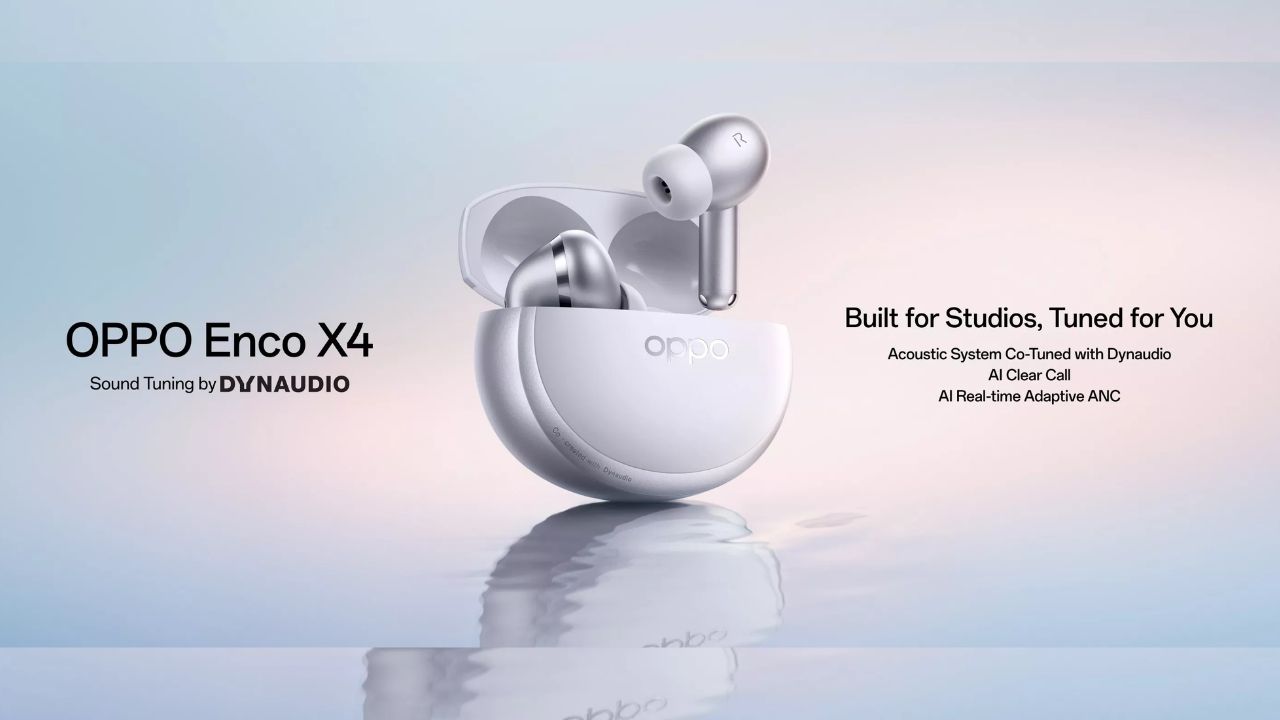
- The 11mm Woofer: Dedicated to low and mid-range frequencies, this driver uses a lightweight diaphragm to produce deep, punchy bass without distorting the vocals.
- The 6mm Tweeter: This micro-diaphragm driver handles high frequencies. By separating the highs from the lows, OPPO achieves a level of clarity and "airiness" usually reserved for multi-driver over-ear headphones.
The 2.3Mbps LHDC Breakthrough
The most significant technical data point is the 2.3Mbps transmission rate. Most TWS earbuds operate at 320kbps to 900kbps (LDAC). By pushing the ceiling to 2.3Mbps, the Enco X4 can handle 24-bit/192kHz audio files with minimal compression. This is particularly relevant given the rise of lossless tiers on streaming services like Apple Music, Tidal, and Amazon Music.
Adaptive ANC and Spatial Audio
The Enco X4 features a triple-microphone system per earbud. These mics work in tandem with a custom DSP (Digital Signal Processor) to provide Adaptive Active Noise Cancellation. The system samples ambient noise 1,000 times per second, automatically adjusting the cancellation strength based on the environment—whether it’s the low-frequency drone of an airplane engine or the high-frequency chatter in a coffee shop.
Furthermore, the integration of Spatial Audio with head tracking provides a cinema-like experience, creating a 360-degree sound field that stays centered even as the wearer moves their head.
IV. Official Responses and Collaborative Insights
While official press releases often focus on marketing jargon, the collaboration with Dynaudio provides a more technical insight into the product’s DNA.
A spokesperson for the Dynaudio engineering team noted during the launch event:
"With the Enco X4, our goal was to bring the ‘Dynaudio Signature Sound’—which is characterized by neutrality and transparency—to a truly mobile format. We worked closely with OPPO to implement a 10-band sliding EQ, allowing users to customize their listening experience while maintaining the structural integrity of the audio signal."
OPPO’s internal audio division also emphasized the importance of the Bluetooth 6.1 implementation. By adopting the latest connectivity standard, they have reduced latency to record lows, making the Enco X4 a viable option for competitive mobile gaming—a segment where wireless earbuds traditionally struggled due to "audio lag."
In response to consumer demand for longevity, OPPO has also introduced a high-density battery cell that supports ultra-fast charging. The official claim of 10 minutes for 14 hours of playback is among the highest in the industry, specifically designed for users who often forget to charge their devices before a commute.

V. Implications: Impact on the TWS Market and the Audiophile Community
The launch of the OPPO Enco X4 carries several broader implications for the technology industry and consumer behavior.
1. The Democratization of Hi-Res Audio
For years, "Lossless Audio" was a niche term reserved for people with expensive wired setups and external DACs (Digital-to-Analog Converters). By putting high-bitrate LHDC technology into a TWS form factor for under ₹20,000, OPPO is effectively democratizing high-fidelity audio. This puts pressure on competitors like Apple, whose AirPods Pro still lack a true lossless codec for music streaming.
2. Strategic Ecosystem Locking
By launching the Enco X4 alongside the Find X10 Pro Max, OPPO is strengthening its ecosystem. While the earbuds will work with any Bluetooth device, features like LHDC 5.0 and ultra-low latency gaming mode are optimized for OPPO’s own ColorOS devices. This "better together" strategy is a page taken from Apple’s playbook, aimed at increasing brand loyalty.
3. Sustainability and Longevity
The IP55 rating and the robust battery life suggest a shift toward "durable tech." As consumers become more conscious of electronic waste, providing a pair of earbuds that can survive sweat, rain, and years of battery cycles becomes a significant competitive advantage.
4. Pricing Pressure on Legacy Audio Brands
Traditional audio brands like Sennheiser and Sony have long commanded premium prices (often exceeding ₹25,000) for their flagship TWS models. OPPO’s aggressive pricing of ₹19,999, combined with launch offers like a ₹1,000 bank discount and no-cost EMI options, forces these legacy brands to justify their higher price points in the face of comparable, or even superior, technical specs from "smartphone-first" companies.
Conclusion
The OPPO Enco X4 represents a sophisticated marriage of hardware prowess and software intelligence. With its dual-driver system, record-breaking transmission bitrates, and the prestigious Dynaudio tuning, it stands as a formidable contender for the title of "Best TWS of 2024."
As the product rolls out across global markets, it will likely serve as a wake-up call to the industry: the modern consumer no longer views earbuds as a mere accessory for phone calls, but as a primary gateway to high-fidelity entertainment. For OPPO, the Enco X4 is not just a product; it is a statement of intent—a signal that they are no longer just following the leaders in audio technology; they are beginning to lap them.