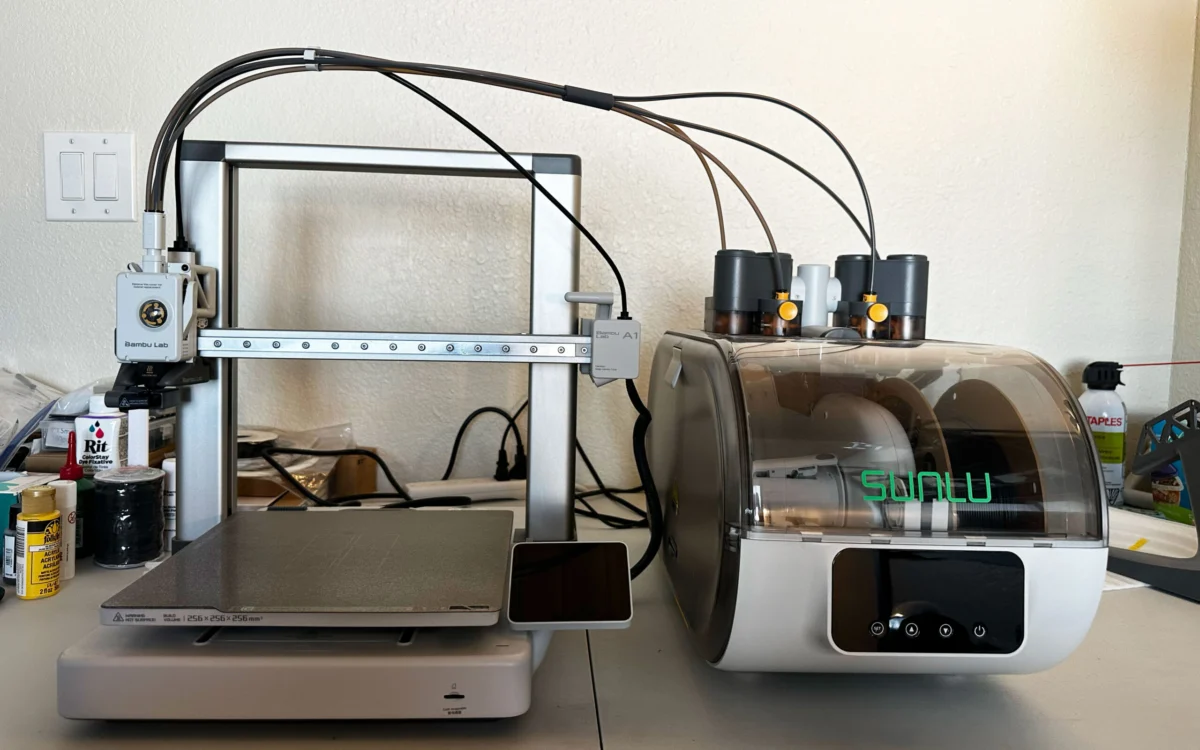
For 3D printing enthusiasts, moisture is the silent enemy. Whether it is the subtle popping sound of steam escaping a nozzle or the unsightly surface defects on a finished print, humidity is a persistent challenge—particularly for those using hygroscopic materials like Nylon, PETG, or TPU. While standalone filament dryers have been a staple of the maker workshop for years, Sunlu has introduced a clever, integrated solution designed specifically for the Bambu Lab ecosystem: the Sunlu AMS Lite Heater.
Retailing at $130, this add-on aims to transform the open-air design of the Bambu Lab AMS Lite into a climate-controlled environment. But does this modification live up to the promise of "print-and-dry" convenience? We put the unit to the test to find out.
Main Facts and Specifications
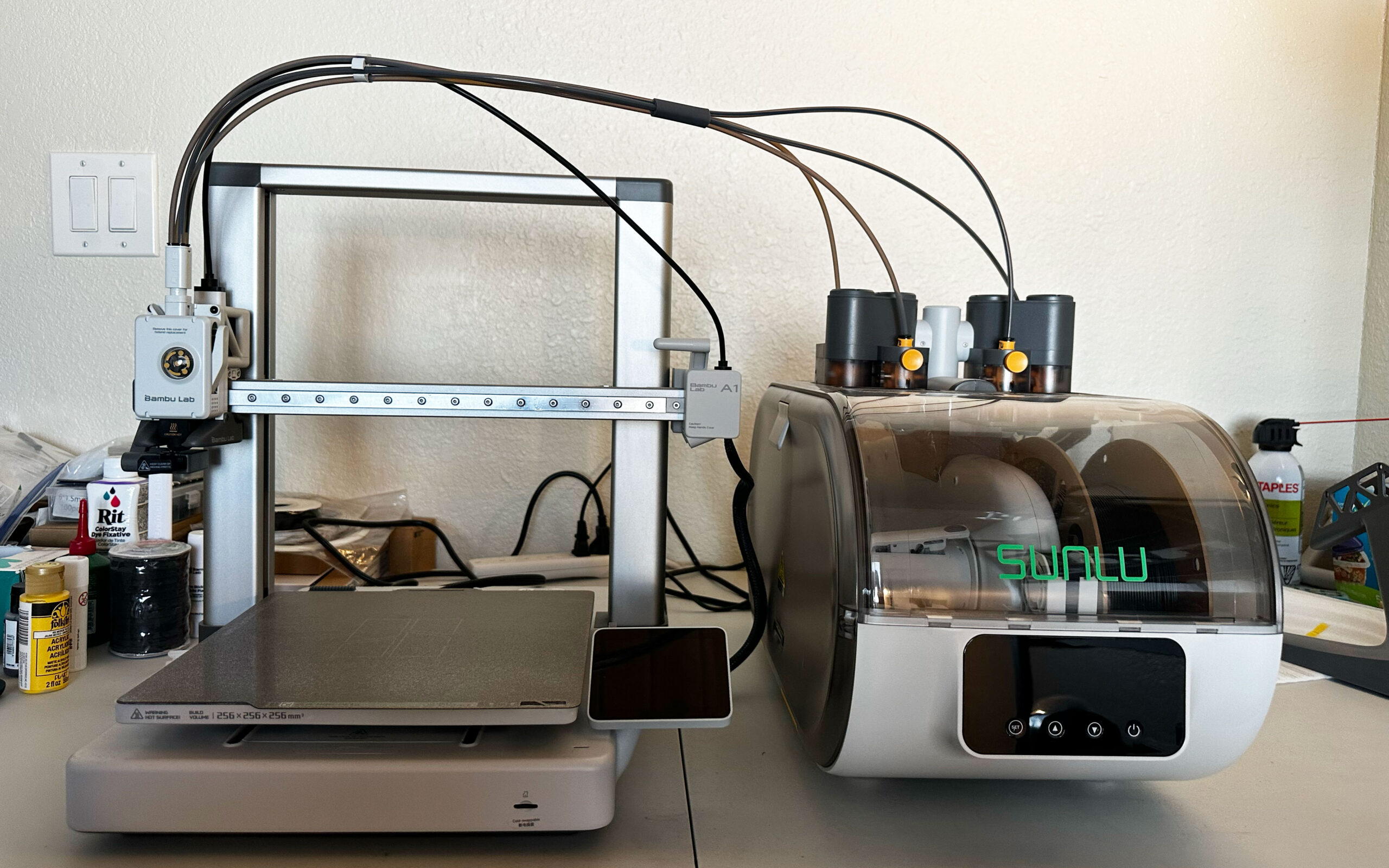
The Sunlu AMS Lite Heater is not a standalone dryer; it is a hardware modification kit that attaches directly to the existing Bambu Lab AMS Lite. By effectively "sandwiching" a heating element between the components of the AMS, Sunlu creates an enclosed, active drying system.
- Manufacturer: Sunlu
- Compatibility: Exclusive to Bambu Lab AMS Lite
- Retail Price: $130
- Operating Temperature Range: 35°C to 70°C
- Humidity Control: 25% to 50%
- Presets: Six modes optimized for PLA, PETG, TPU, ABS, PA (Nylon), and PC (Polycarbonate)
- Power Integration: Powered via the printer’s native infrastructure
Unlike traditional dry boxes that require you to move spools from a dryer to the printer—risking moisture re-absorption during the transition—the Sunlu unit keeps your filament actively dehydrated while it is being fed into the extruder.
The Chronology of Installation: From "Daunting" to "Elegant"
When I first unboxed the Sunlu AMS Lite Heater, the initial impression was one of apprehension. The prospect of taking apart a functioning piece of manufacturer hardware can be intimidating for any user. However, the process is more modular than it appears.
Phase 1: Disassembly
The installation requires the user to partially dismantle the AMS Lite. Initially, it feels as though you are performing open-heart surgery on your equipment. You must remove specific structural screws to insert the Sunlu heating unit into the core of the AMS.
Phase 2: Integration
The "daunting" feeling quickly dissipates once the mechanical swap begins. The process is primarily a matter of replacing factory screws and routing two internal power cables. While there were minor points of friction—specifically a few screw holes that required careful alignment and a plastic cover that proved slightly stubborn to re-seat—the overall integration is surprisingly refined.
Phase 3: Powering Up
One of the most impressive aspects of the installation is how the device leverages the printer’s existing power supply. Because the unit is wired into the AMS system, it can function independently of the printer’s operation. This means you can keep your filaments bone-dry even when the printer is idle, ensuring that when you hit "print," your materials are primed for success.
Supporting Data and Performance Metrics
The unit’s interface is designed for simplicity, providing users with six pre-configured drying profiles tailored to common printing materials. These presets automatically manage the temperature and humidity thresholds required for specific polymers.
Environmental Control
During testing, I found the manual override feature particularly useful. Users can fine-tune temperatures between 35°C and 70°C and set humidity targets between 25% and 50%. The default cycle is set to six hours of active heating, after which the unit shifts to a maintenance mode. In this mode, the heater engages periodically to keep humidity within the user-defined range.

Thermal Efficiency
A primary concern with any heating element added to a plastic chassis is safety and heat leakage. Throughout a week of continuous use, the unit remained warm to the touch but never reached a temperature that posed a burn risk. Furthermore, the insulation is remarkably effective; there was no noticeable heat transfer to the surrounding environment, making it safe for use in an office or home workspace. Noise levels were also negligible, barely audible over the hum of the cooling fans on the Bambu Lab A1.
Real-World Implications and Considerations
While the Sunlu AMS Lite Heater is a well-engineered piece of hardware, it introduces several operational considerations that users must navigate.
The "All-in-One" Temperature Conflict
The most significant limitation of this system is the shared environment. Because all four spools in the AMS Lite are housed within the same heated enclosure, you cannot set different temperatures for different filaments. If you are a power user who keeps a variety of materials loaded simultaneously—for example, a low-temperature PLA alongside a high-temperature Nylon—you face a dilemma.
Heating the chamber to the ideal temperature for the Nylon (which requires high heat) will likely cause the PLA to soften or fuse on the spool. Consequently, this device is best suited for users who tend to print with a consistent "family" of materials or who are willing to manage their load-out carefully.
Ergonomic Challenges
The physical footprint of the unit is remarkably similar to the original AMS Lite, which is a major win for desk-space efficiency. However, the addition of the heater doors necessitates a change in how you interact with the spools. The doors must fold down to access the filament, and due to the relatively short length of the stock Bambu PTFE tubing, access can become cramped. In my setup, I found myself frequently rotating the entire unit to reach the doors closest to the printer, a minor but recurring inconvenience.

Performance in Different Climates
As a resident of the San Francisco Bay Area, where humidity is generally moderate, I did not observe a radical transformation in print quality. However, the real value proposition of this device is "preventative maintenance." For users in humid environments—such as the Southeast United States or coastal regions—the difference will be night and day. By eliminating the environmental humidity that causes layer adhesion issues and stringing, the Sunlu heater provides a critical insurance policy for your filament collection.
Official Perspective and Community Response
Sunlu has positioned this product as an "upgrade" rather than a replacement, acknowledging that for many, the AMS Lite is the primary bottleneck in achieving high-fidelity prints. The community response on platforms like the Makezine Discord has been largely positive, focusing on the "hackability" of the device.
Because the heater is a discrete, plug-and-play modification, it has opened the door for community-driven firmware tweaks and custom 3D-printed brackets to improve the door-swing clearance. The manufacturer’s willingness to create an ecosystem-specific add-on highlights a growing trend in the 3D printing industry: companies are no longer just selling printers; they are selling comprehensive workflow solutions.
Conclusion: Is the Upgrade Worth It?
The Sunlu AMS Lite Heater is an elegant, well-executed solution for those who struggle with moisture-sensitive filaments. It solves the "dry-then-print" workflow hurdle by keeping your materials in a constant state of readiness.
For the casual hobbyist, it may be an unnecessary expense. However, for those who frequently work with engineering-grade materials or live in high-humidity climates, the $130 investment provides a level of consistency that is difficult to replicate with manual dry boxes.

While you must be mindful of the "mixed material" temperature limitation, the sheer convenience of having a "set it and forget it" drying system attached to your Bambu Lab printer makes this a standout product in the current 3D printing landscape. As the industry continues to move toward more user-friendly, automated workflows, devices like the Sunlu AMS Lite Heater are likely to become standard equipment for the serious maker.