In a world increasingly obsessed with the rigid classification of identity and intellect, the Swedish Academy’s decision to award the 2026 Nobel Prize for Literature to the Canadian poet, essayist, and dramatist Anne Carson stands as a defiant celebration of the unclassifiable. By honoring an oeuvre that consistently refuses to sit still, the Academy has signaled a shift in the global literary consciousness, moving away from traditional narrative structures toward a more fluid, interdisciplinary mode of creative expression.
The Architect of the Unbound
Anne Carson, a polymath whose work bridges the chasm between ancient Greek tragedy and the fragmented sensibilities of the 21st century, has spent her career "sending words afloat." Her writing is characterized by a restless movement across geography, history, and academic discipline. The Nobel Committee, in its official citation, praised her "bold and inventive oeuvre that, in playful dialogue with the classical tradition, has created new forms for contemporary literature."
To read Carson is to engage in what critic Uma Mahadevan Dasgupta describes as an "intellectual delight"—a journey into territories that a world of borders and definitions would rather deny us. Her work does not merely exist within literature; it interrogates the very boundaries of the page, the verse, and the essay. Whether she is dissecting the nature of desire through the lens of Sapphic fragments or re-imagining mythical monsters through a contemporary queer lens, Carson remains a master of the interstitial space—the place where meaning resides just beyond the reach of conventional reason.
A Chronology of Subversion
Carson’s ascent to the pinnacle of literary prestige is not a story of linear progression, but one of constant evolution. Her career path is as eccentric as the texts she produces.
- 1992: The Disappearing Drawing. Perhaps the most telling anecdote of her artistic philosophy is the origin of Short Talks. Carson did not set out to be a poet; she was a visual artist. Her debut collection began as a series of drawings. As she added titles to these images, the textual weight grew until the drawings themselves were eventually erased, leaving only the words—a metaphor for her entire career of stripping away the unnecessary to reveal the raw, often uncomfortable, core of human experience.
- 1998: The Mythic Re-invention. With the publication of Autobiography of Red, Carson solidified her reputation. By reimagining the ancient Greek myth of Geryon and Heracles as a tender, queer coming-of-age narrative, she demonstrated her unique ability to infuse archaic structures with modern vulnerability. Through the use of fragmented verse and "abrupt silences," she granted her protagonist an interior life that was fundamentally absent from the original myth.
- 2001: The Geometry of Loss. In The Beauty of the Husband, she tackled the dissolution of a marriage. Borrowing imagery from the tango and framing sections with the romantic longing of John Keats, Carson turned a semi-autobiographical heartbreak into a structural masterpiece of narrative verse.
- Early Academic Roots: Even her doctoral thesis, which eventually morphed into Eros the Bittersweet, showcased her refusal to adhere to the dry, sterile requirements of academia. By recasting a traditional thesis on Sappho as a blend of philosophy, criticism, and poetry, she established the template for her future work: the idea that lived life is far too messy for the silos of genre.
Supporting Data: The Anatomy of Desire
The core of Carson’s scholarship and art is the exploration of distance and longing. In Eros the Bittersweet, she argued that love is not a state of being, but a state of yearning defined by the distance between two points.
This thematic obsession with distance is mirrored in her technical execution. By intentionally leaving gaps in her narratives, she forces the reader to become an active participant in the creation of meaning. Unlike writers who provide a complete, polished vessel of thought, Carson offers shards. As Mahadevan Dasgupta notes, her writing "pushes beyond reason, beyond language, beyond translation, towards mysteries that remain resistant to explanation." This is not an evasion of clarity; it is an admission that some human truths are fundamentally opaque.
Official Responses and Global Implications
The literary establishment has reacted to the Nobel win with a mixture of celebration and relief. For years, the Nobel Prize in Literature has faced criticism for either being too Eurocentric or too tethered to traditionalist definitions of the "Great Novel." By selecting Carson—a writer who occupies the space between the academy and the avant-garde—the Swedish Academy has validated the experimental form.
Critics and editors at The Hindu have highlighted that Carson’s work is a vital antidote to our modern "yearning for meaning and certainty." In an era where algorithms define our reading habits and social media demands binary opinions, Carson’s insistence on ambiguity acts as a necessary disruption. She reminds us that the "lived life" is inherently messy, contradictory, and resistant to the categories we try to force upon it.

Beyond the Nobel: A Curated Literary Landscape
The current literary landscape, as evidenced by the recent wave of significant publications, remains as diverse and demanding as the work of the Nobel laureate herself. While Carson dominates the discourse, other vital voices continue to challenge our understanding of history, nature, and the self.
Wildlife and the Ethics of Observation
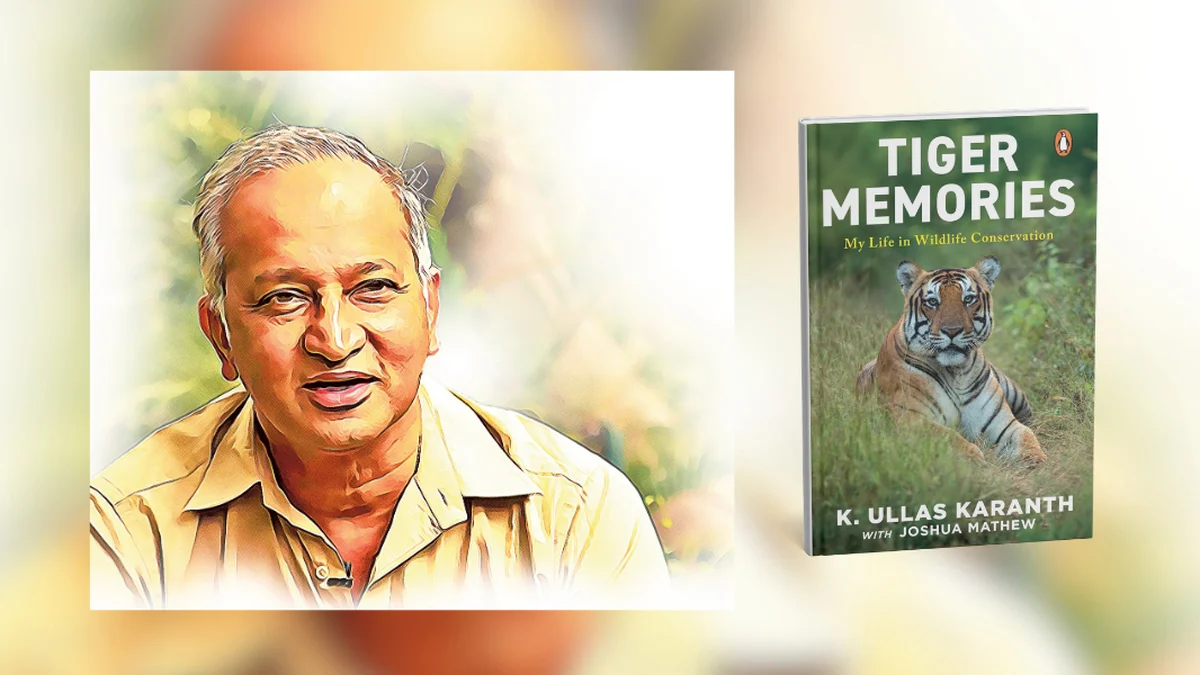
In Tiger Memories: My Life in Wildlife Conservation, K. Ullas Karanth, co-authored by Joshua Mathew, offers a stark, necessary look at the intersection of ecology and policy. Karanth, a veteran expert, presents a critical view of wildlife tourism. He argues that while tourism is often touted as a conservation tool, its actual impact on expanding habitats has been negligible. Instead, he proposes that the true potential of wildlife tourism lies in its ability to uplift rural economies, thereby creating a symbiotic relationship between protected areas and the people who live on their periphery.
The Institutional Memory of the Book
Kanupriya Dhingra’s The Sunday Book Bazaar serves as a poignant reminder that literature is not just found in the ivory towers of the Nobel committee, but in the chaotic, dust-laden stalls of city markets. Reviewing the book, Uma Mahadevan-Dasgupta notes how Dhingra chronicles the Daryaganj book market’s transformation from a motley collection of vinyl records and second-hand paperbacks into a genuine cultural institution. It is a story of survival against the encroaching forces of eviction and legal struggle, mirroring the resilience of the written word itself.
Confinement and the Creative Spark
Aditya Mani Jha’s recent tribute to "prison writers" underscores the transformative power of restricted space. By exploring the works of figures like Jean Genet, Miguel de Cervantes, and Louis Althusser, Jha reminds readers that confinement has historically been a catalyst for profound literary output. When the body is contained, the mind often expands to fill the void, turning incarceration into a crucible for creative breakthrough.
The Science of Sensuality
Finally, Nik Sharma’s Fundamentals of Flavour bridges the gap between the molecular and the emotional. A molecular biologist turned chef, Sharma’s work is a testament to the idea that science and soul are not mutually exclusive. As Nidhi Adlakha observes in her review, Sharma refuses to choose between the chemical explanation of flavor and the cultural memory of taste. He insists that both forms of knowledge must coexist—a sentiment that echoes Anne Carson’s own refusal to choose between the analytical and the poetic.
Conclusion: The Persistence of the Question
As we navigate a world that is increasingly segmented, Anne Carson’s Nobel win is a reminder that the most profound insights often come from the borders, the gaps, and the spaces between things. Whether it is the hunger of a tiger, the bustling stalls of an old city market, or the chemical reaction of a recipe, the act of reading remains a radical, transformative pursuit.
For those looking to engage further with these themes, the current literary season offers a wealth of options—from the complex, multi-layered stories in Sucheta Dasgupta’s Ladies’ Night to the rigorous research found in the latest wildlife monographs. We are reminded that literature is not a fixed object to be consumed, but an ongoing conversation to be joined. As we continue to seek meaning in a fractured age, perhaps the greatest lesson is that provided by Carson: the answer is rarely as interesting as the question, and the best books are those that leave us with more questions than we started with.