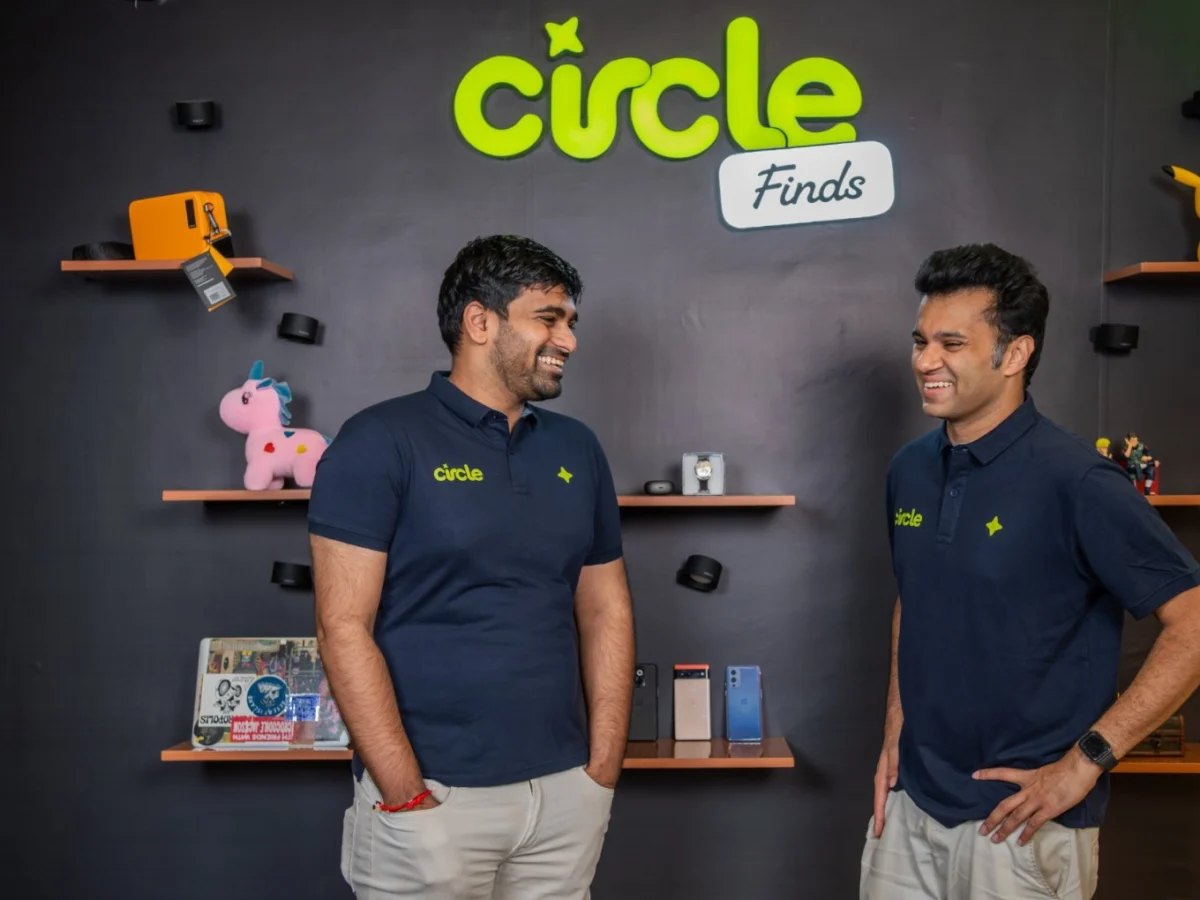
In a significant move that underscores the burgeoning potential of India’s “recommerce” sector, Bengaluru-based startup Circle has successfully closed a ₹25 Cr (approximately $2.6 Mn) seed funding round. Led by the prominent venture capital firm Nexus Venture Partners, the round saw continued support from existing investors Titan Capital and Myntra co-founder Raveen Sastry. Notably, the round also attracted high-profile angel investment from Ajith Pai, the Chief Operating Officer of logistics giant Delhivery, signaling institutional confidence in the startup’s unique operational model.
The fresh infusion of capital arrives at a critical juncture for Circle, which has spent the last year refining a business model that promises to solve the "trust deficit" prevalent in the secondhand market. By managing the end-to-end journey of a product—from verification and payments to logistics—without the capital-intensive burden of owning inventory, Circle is attempting to professionalize the fragmented world of peer-to-peer (P2P) resale.
The Core Proposition: Bridging the Trust Gap in Recommerce
Founded in 2023 by industry veterans Chirag Kataruka and Ankit Misra, Circle was born out of a simple observation: while the demand for pre-owned goods is skyrocketing, the experience of buying and selling used items remains riddled with friction. Traditional classifieds platforms, while effective at connecting buyers and sellers, often leave the onus of safety, logistics, and authentication entirely on the users.
Circle disrupts this status quo by acting as a "managed marketplace." Its platform facilitates transactions across a diverse array of categories, including high-value electronics like smartphones, gaming consoles, and cameras, as well as lifestyle goods such as premium watches, designer handbags, sneakers, and furniture.
The startup’s methodology is a hybrid of high-tech and high-touch. It leverages AI-powered tools to ensure competitive, real-time pricing and optimized product discovery. However, the true "secret sauce" lies in its physical infrastructure: the "Trust Hubs." These facilities serve as the heartbeat of the operation, where products are rigorously inspected by human experts before being dispatched to the buyer. This ensures that the item delivered matches the description provided, effectively eliminating the risks of fraud or misrepresentation that have long plagued online marketplaces.
Chronology of Growth: From Pre-Seed to Market Contender
The journey of Circle has been characterized by rapid execution. The startup’s trajectory serves as a masterclass in focused, city-centric growth.
- November 2023: Circle secures its initial foothold in the ecosystem with a ₹3.4 Cr pre-seed round. Led by Titan Capital, the round saw early backing from Raveen Sastry, validating the founders’ vision to create a more structured resale environment.
- January 2024 – December 2024: The company focuses exclusively on the Bengaluru market. During this "incubation" phase, it builds the foundational logistics network and establishes the first series of Trust Hubs. The goal was to prove the unit economics before scaling.
- January 2025: Circle reports significant milestones: facilitating ₹25 Cr in total transaction value (GMV) within the city, attracting over 1 million unique visitors, and hosting over 100,000 listings.
- February 2025: The company officially announces its ₹25 Cr seed round led by Nexus Venture Partners, marking its intent to transition from a single-city operator to a national player.
Data and Market Dynamics: The Recommerce Opportunity
The decision by Nexus Venture Partners to lead this round is backed by a compelling macro narrative. According to industry analysis by ResearchAndMarkets, the Indian recommerce market is on a blistering growth trajectory. Projected to hit $5.91 billion by 2026, the sector is expected to expand to $8.61 billion by 2030, growing at a robust CAGR of 9.8%.
Circle’s performance metrics within Bengaluru further substantiate this demand. The startup claims that sellers on its platform typically find a buyer within three days—a drastic improvement over the weeks or even months required on traditional classifieds platforms. This velocity is a key differentiator. By providing a managed logistics layer, Circle removes the "logistics anxiety" that often prevents individuals from selling their dormant assets.
The platform’s user base reflects a demographic that is increasingly environmentally conscious and price-sensitive. As inflation impacts the cost of new premium goods, the appetite for high-quality, pre-owned items has moved from a necessity-driven niche to a lifestyle choice, particularly among Gen Z and millennial consumers.
Competitive Landscape: Navigating a Crowded Market
Circle enters a market that is far from vacant. It competes against a spectrum of platforms, each with its own niche:
- Classifieds Giants (OLX India, Quikr): These platforms have the largest user base but lack the managed infrastructure that Circle provides. They are effectively digital bulletin boards rather than service-oriented marketplaces.
- Specialized Players (Cashify): While Cashify has dominated the electronics-focused resale market, Circle’s multi-category approach—extending to furniture and luxury fashion—positions it as a broader lifestyle marketplace.
- Community Resale (FreeUp): These platforms often focus on the social aspect of reselling. Circle, by contrast, focuses on the "transactional integrity" aspect, positioning itself as a utility rather than a community network.
Circle’s unique value proposition is that it does not attempt to be everything to everyone. Instead, it positions itself as the "trust layer" for the secondary market. By not holding inventory, the company avoids the heavy overheads and depreciation risks associated with traditional retail, allowing it to maintain a leaner balance sheet while focusing its capital on verification technology and logistics partnerships.
Implications of the Funding: The Path Ahead
The infusion of ₹25 Cr provides Circle with the "war chest" required for three specific strategic pivots:
1. Geographic Expansion
Having mastered the Bengaluru market, Circle is now preparing for a phased rollout into other Tier-1 cities. This will require the company to replicate its Trust Hub model in new geographies—a move that will test its ability to maintain quality control while managing a distributed workforce.
2. Deepening Tech Capabilities
A significant portion of the funds will be directed toward strengthening the company’s AI-powered pricing engine. As the marketplace grows, the ability to predict the value of a pre-owned item accurately is essential. The AI tool will analyze market trends, brand depreciation curves, and condition-based pricing to ensure that both buyers and sellers feel they are getting a fair deal.
3. Logistical Sophistication
With the involvement of Delhivery’s Ajith Pai, it is clear that Circle views logistics as a competitive moat. The company plans to refine its pickup-to-payout cycle. By automating the verification and payment process, Circle aims to reduce the "time-to-liquidate" for sellers, creating a flywheel effect where more sellers lead to more inventory, which in turn attracts more buyers.
The Verdict: Can the "Asset-Light" Model Scale?
The ultimate challenge for Circle will be proving that its managed, non-inventory model can scale across the complexities of the Indian subcontinent. Scaling an operation that involves physical inspections and human touchpoints is notoriously difficult compared to pure-play software businesses.
However, the team behind Circle seems aware of these hurdles. By focusing on high-value, high-trust categories, they are targeting segments where the consumer is willing to pay a premium for the guarantee of authenticity. If Circle can maintain its current pace of growth while keeping the "Trust Hub" verification process efficient, it could well become the standard-bearer for the next generation of Indian e-commerce.
In an era where "sustainability" and "smart spending" are becoming mainstream, Circle is not just selling used goods; it is selling the confidence to participate in the circular economy. For investors like Nexus Venture Partners, the bet is clear: the future of retail in India is not just about new products—it’s about the efficient, trustworthy recirculation of the old.