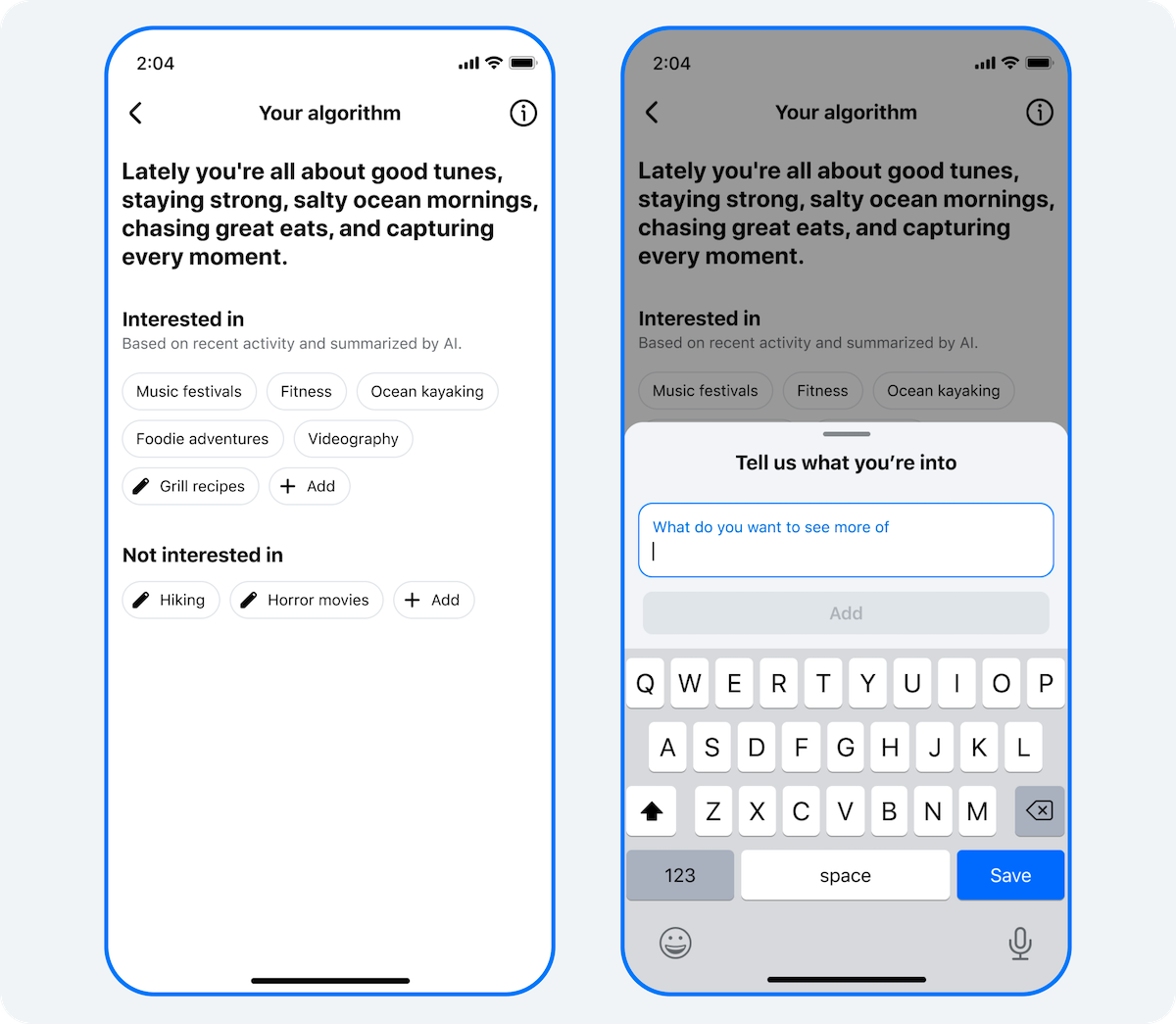
In a significant move toward transparency and user agency, Meta has officially launched its AI-powered "Your Algorithm" feature on Facebook. This rollout represents the latest phase in the company’s broader strategy to demystify the "black box" of social media feeds, allowing users to move beyond passive consumption and into active participation in the curation of their digital experiences. By enabling users to communicate their content preferences through natural language, Meta is attempting to pivot away from the rigid, opaque recommendation engines that have defined the social media landscape for the past decade.
The Evolution of the Digital Feed: Main Facts
The core functionality of "Your Algorithm" is centered on user-driven input. Unlike traditional recommendation systems, which infer user interest solely through behavioral data—such as watch time, likes, and shares—the new feature allows users to explicitly state what they want to see.
When users access the feature, they are prompted to describe their content preferences in plain language. If a user feels their feed is saturated with, for example, "too many political opinion pieces" or "not enough DIY home renovation videos," they can articulate these desires directly to the system. The AI, powered by Meta’s large language models, interprets these prompts and adjusts the ranking signals for that user’s Feed and Reels in real time.
This update is not limited to a standalone settings menu. Meta has integrated these controls directly into the user experience via the platform’s three-dot menu. By selecting a post, users can tap "Interested" or "Not interested," which often triggers a follow-up interaction. In these instances, the AI may ask clarifying questions, such as, "Are you interested in this topic generally, or do you prefer this specific creator?" This iterative feedback loop is designed to create a hyper-personalized ecosystem that evolves alongside the user’s changing interests.
A Timeline of Customization: From Threads to Facebook
The introduction of "Your Algorithm" on Facebook is the culmination of a strategic, multi-platform rollout that has been unfolding throughout 2025 and 2026. Meta has been methodically testing the limits of user-controlled discovery to combat "feed fatigue" and improve engagement retention.
- December 2025: Meta begins internal testing of algorithmic customization for Reels, recognizing that short-form video content requires more granular control than traditional image-based feeds.
- February 2026: Threads, Meta’s text-based platform, launches "Dear Algo." This feature served as a critical proof-of-concept, allowing users to influence the discovery of text-heavy content and providing Meta with the data necessary to refine its natural language processing for broader applications.
- June 2026: Following the success of the Threads initiative, Instagram officially integrates "Your Algorithm" across both the main Feed and the Explore tab, marking the first time the feature was deployed on a massive, visual-first platform.
- October 13, 2026: Meta completes the rollout, bringing "Your Algorithm" to the flagship Facebook application, thereby standardizing the user experience across its entire product family.
This chronology underscores a clear trend: Meta is moving away from a "one-size-fits-all" recommendation model in favor of a hybrid approach that balances algorithmic efficiency with human-led steering.
Supporting Data and the Shift in Recommendation Science
The impetus for this shift lies in shifting user demographics and increased competition. Data from recent industry reports suggests that "algorithmic anxiety"—the feeling that social platforms are manipulating or polarizing users—has become a significant driver of churn. By providing tools that mimic the personalization engines of streaming giants like Netflix or Spotify, Meta is attempting to reclaim user trust.
According to internal insights shared by Meta, early adopters of the "Your Algorithm" features on Instagram showed a 15% increase in "meaningful social interactions" (MSIs). This metric tracks not just passive scrolling, but active engagement, such as commenting, sharing, and messaging. By allowing users to curate their feeds, Meta has found that users feel more "at home" on the platform, leading to longer session durations and a decrease in the rapid-scrolling behavior often associated with mindless content consumption.
Furthermore, the implementation of "Your Algorithm" reduces the reliance on "proxy signals." In older systems, if a user hovered over a video, the system might interpret that as interest. However, if that hover was due to curiosity or even annoyance, the system would incorrectly flood the feed with similar content. Natural language input eliminates this guesswork, allowing the AI to prioritize quality over raw interaction metrics.
Official Responses and Strategic Philosophy
Meta’s official stance on this rollout is one of "co-creation." In its announcement, the company emphasized that the goal is not to eliminate automation, but to refine it through partnership with the end user.

"Our goal is to ensure that the content you see is as relevant to you as possible," a Meta spokesperson stated during the launch. "By moving toward a system where you can describe your preferences in your own words, we are creating a more transparent and collaborative relationship between the user and the platform’s recommendation systems. This isn’t just about showing you what you like; it’s about giving you the steering wheel to explore what you want to discover."
Industry analysts have interpreted this as a defensive but necessary evolution. As regulators worldwide continue to scrutinize the impact of social media algorithms on mental health and societal discourse, providing users with the ability to "edit" their algorithmic bias serves as a powerful form of self-regulation. By handing control to the user, Meta is effectively shifting the responsibility for content curation, which provides a layer of legal and ethical insulation for the company.
The Broader Implications: What This Means for Users and Creators
The transition to user-controlled discovery has profound implications for the digital ecosystem.
For the Casual User
The primary benefit is the reduction of "content noise." For years, users have complained about being trapped in "echo chambers" or being served content that is entirely irrelevant to their daily lives. "Your Algorithm" offers a "reset" button of sorts. If a user’s interests shift—for example, if they start a new hobby or change their political leanings—they no longer have to wait for the algorithm to "learn" through weeks of data; they can simply tell the system to adjust.
For Creators and Businesses
This is perhaps the most significant disruption. Traditionally, creators had to "hack" the algorithm—using specific hashtags, audio trends, or pacing—to gain visibility. With "Your Algorithm," visibility will become increasingly tied to direct user intent. Creators who produce high-quality, niche-specific content may find it easier to reach their target audience, as the system will now be explicitly listening for those topics from users. Conversely, creators who rely on broad, algorithm-gaming tactics may see a dip in reach as users choose to filter out "viral-bait" content.
For the Industry
Meta’s move signals that the "attention economy" is reaching a maturation point. The race to keep users on the app through addictive, surprise-based content is being replaced by a race for utility. If a platform can act as a useful, personalized tool that respects the user’s intelligence and time, it becomes more indispensable.
Looking Ahead: Is Total Control Possible?
While "Your Algorithm" is a significant step forward, it is not a complete abdication of power by the platform. Meta still maintains the final say on community standards, safety filters, and the "discovery" components of the feed. The AI still interprets the user’s natural language, meaning the company retains a layer of control over how those prompts are translated into backend signals.
However, the direction of travel is clear. We are entering an era of "Algorithmic Sovereignty," where the user is no longer just a subject of the machine, but a participant in its development. As AI models become more sophisticated, we can expect these interfaces to become even more conversational. It is not inconceivable that in the coming years, users will have a persistent "AI Agent" that manages their digital diet, negotiating between the user’s stated desires and the platform’s engagement goals.
For now, the launch of "Your Algorithm" on Facebook provides a much-needed bridge between the opaque, automated past of social media and a more transparent, user-centered future. It remains to be seen how effectively the average user will utilize these tools, but the door is officially open. The algorithm is no longer a silent master; it is now, at least in part, a conversation.