In the high-stakes environment of global commerce, email marketing has evolved from a simple broadcast medium into a mission-critical infrastructure. For enterprise organizations managing millions of contacts across disparate regions, brands, and product lines, the challenge is no longer just about "hitting send." It is about governance, data integrity, and the ability to prove a direct, traceable impact on the bottom line.
A weak email marketing platform forces teams to manually bridge the gap between their CRM and their messaging tools, leading to fragmented data and compliance risks. Conversely, a robust enterprise platform acts as a force multiplier, absorbing the complexity of multi-team governance and revenue attribution. This guide explores the strategic landscape of enterprise email marketing, identifying the key capabilities required to scale effectively in 2025 and beyond.

The Core Mandate: What Enterprise Software Must Do
For an enterprise, email marketing is a complex orchestration of data and compliance. When a campaign fails, the fallout can include everything from lost revenue to catastrophic regulatory fines. For instance, in late 2024, two UK-based firms were collectively fined £150,000 for dispatching 7.5 million unsolicited messages—a disaster rooted in a third-party supplier’s failure to verify consent.
To avoid such pitfalls, enterprise-grade software must provide six non-negotiable capabilities:

1. Hardened Governance and Security
Enterprise teams cannot afford "loose" data practices. The software must serve as a system of record for consent, tracking exactly where, when, and how a user opted in. This is essential when data moves across international borders, as GDPR, CCPA, and other regional mandates require strict adherence to data residency and deletion protocols.
2. CRM-Native Revenue Attribution
If email metrics exist in a vacuum, separated from the CRM, they are merely vanity numbers. High-performing platforms keep engagement, lifecycle stages, deal progress, and revenue on a single, connected record. This allows marketing leaders to look at a CEO and demonstrate exactly how a nurture campaign contributed to a specific deal being closed.

3. Multi-Brand and ABM Orchestration
Account-Based Marketing (ABM) requires recognizing that while you email individuals, you are selling to companies. The platform must connect these two levels, alerting sales teams when multiple stakeholders from a single company engage with content, and automatically pausing marketing emails during active sales negotiations. Furthermore, for conglomerates, the ability to manage separate domains and sender reputations under one master account is vital.
4. AI-Powered Workflow Efficiency
Personalization at scale is impossible without AI. Modern enterprise platforms leverage AI to handle high-friction tasks: audience segmentation, data classification, and send-time optimization. By automating the "grunt work" of workflow design and campaign QA, teams can pivot from technical setup to high-level strategy.

5. Advanced Deliverability Infrastructure
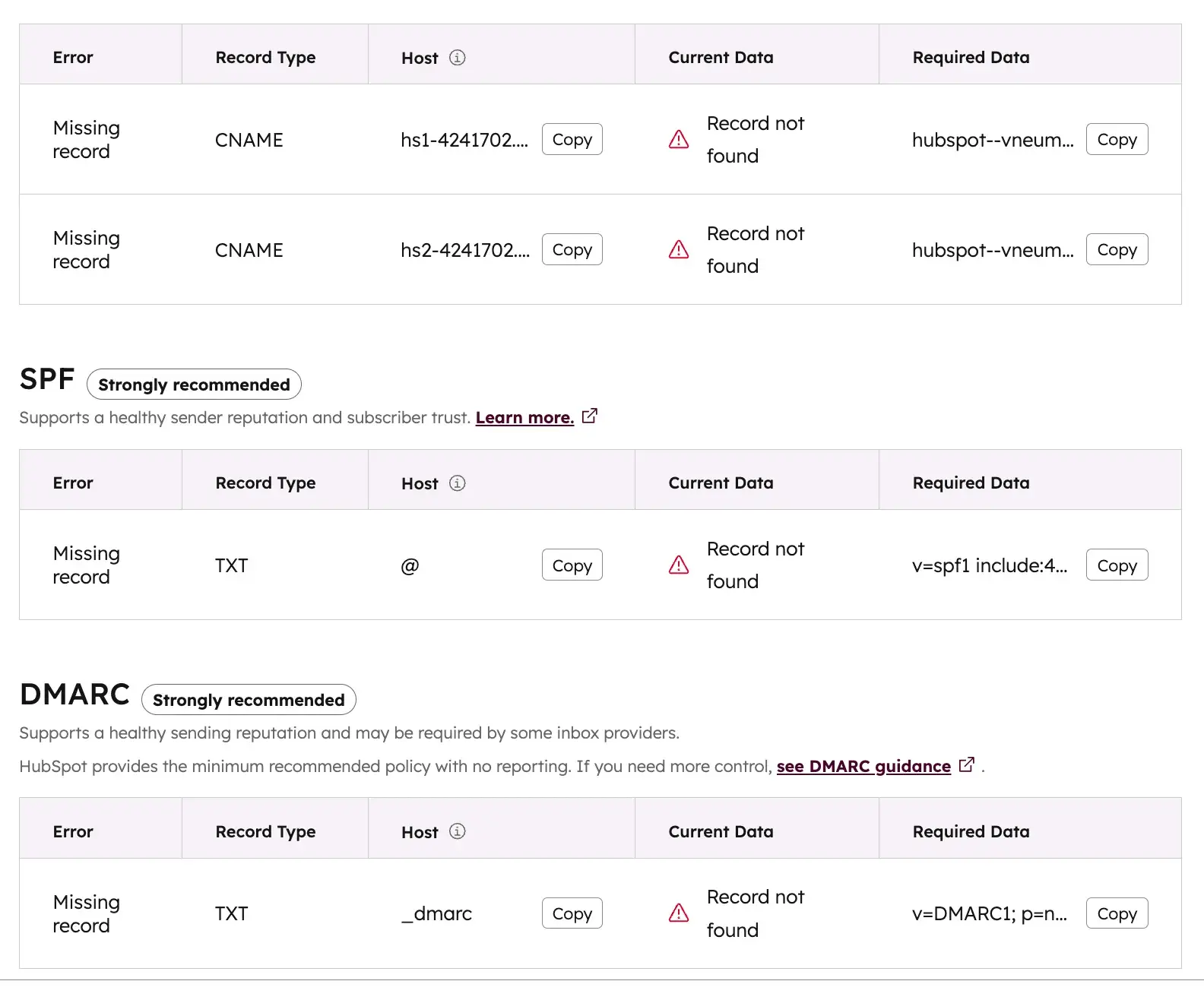
Deliverability is the bedrock of enterprise email. With major providers like Yahoo and Google tightening requirements for bulk senders—specifically regarding SPF, DKIM, and DMARC—enterprises need software that supports dedicated IPs and automated, phased warm-up periods. A 40-day warm-up is the gold standard for protecting sender reputation when migrating to new infrastructure.
6. Architectural Flexibility
A platform is only as good as its integrations. The software must pull data seamlessly from data warehouses, ecommerce stacks, and customer success tools without creating duplicates or losing critical fields.

The Landscape: Top Enterprise Solutions
No single platform dominates every niche. The following five solutions represent the current industry leaders, each tailored to specific operational philosophies.
1. HubSpot Marketing Hub Enterprise
Best for: B2B organizations seeking a "single source of truth."
HubSpot’s strength lies in its Smart CRM integration. Because every marketing action is tied to the CRM record, attribution is native and immediate. Its ability to handle multi-account management makes it a favorite for organizations that need to share assets across regions while keeping data siloed by brand.

2. Salesforce Marketing Cloud Engagement
Best for: Large organizations already deeply invested in the Salesforce ecosystem.
If your enterprise runs on Salesforce, the "Data 360" approach of Marketing Cloud is unmatched. It allows for highly complex customer journeys triggered by behavioral data. Its recent addition of Agentforce AI further cements its position as a powerhouse for those with the internal expertise to manage it.
3. Adobe Journey Optimizer
Best for: Global B2C brands with massive scale and complex content requirements.
Adobe is the choice for enterprises that prioritize creative control and sophisticated "offer decisioning." It is designed to sit atop the Adobe Experience Platform, making it ideal for brands that need to orchestrate experiences across email, web, and mobile in real-time.

4. Braze
Best for: Mobile-first, high-volume consumer brands.
Braze excels at real-time reactivity. If a customer abandons a cart or triggers a specific product event, Braze is built to respond instantly. It is particularly effective for companies that want to move beyond traditional email into interactive and multichannel messaging.
5. Klaviyo
Best for: Ecommerce and retail giants.
Klaviyo is arguably the most efficient tool for turning purchase data into revenue. Its predictive analytics allow retailers to segment audiences based on lifetime value and purchase history with a "plug-and-play" ease that traditional enterprise tools often lack.

Migration and Change Management: A Five-Stage Approach
Migrating to a new enterprise platform is a high-risk event. To minimize disruption, follow this controlled, five-stage chronology:
- The Audit (Weeks 1-4): Do not "lift and shift" junk data. Archive inactive records to save on costs and improve segmentation accuracy.
- The Foundation (Weeks 5-8): Configure your CRM structure. Ensure properties, lifecycle stages, and object associations are mapped before a single contact is imported.
- Consent Migration (Weeks 9-10): Move your opt-out lists and consent timestamps first. This ensures you never accidentally message a user who has already requested to be suppressed.
- Infrastructure Setup (Weeks 11-12): Authenticate your sending domains. If using a dedicated IP, initiate the warm-up process before moving your full send volume.
- Phased Cut-Over (Weeks 13+): Start with low-stakes, engaged audiences. Only after validating attribution and deliverability metrics should you shut down your legacy platform.
Implications: The Future of Email Marketing
The shift toward "data-native" email marketing signifies a maturation of the industry. Enterprises are moving away from treating email as an isolated marketing channel and toward treating it as a core component of the business intelligence stack.

Official Perspectives: Industry analysts suggest that the next two years will be defined by "Identity Resolution." As third-party cookies vanish, the enterprise email platform will become the primary mechanism for collecting first-party data. Those who choose platforms that prioritize CRM-integration and AI-driven automation will likely see a 20–30% improvement in campaign ROI, while those who rely on disconnected "legacy" tools will find themselves increasingly unable to compete in the race for customer attention.
Conclusion:
When choosing your next enterprise email solution, do not be swayed by a polished demo. Test the platform against your "real-world" pain points: the messy data, the complex approval chains, and the strict regional compliance requirements. The right software is not just an email sender—it is the connective tissue between your customer data and your company’s revenue growth. For B2B firms, the integration of Marketing Hub with a robust CRM remains the gold standard, while consumer-facing giants may find greater utility in the real-time behavioral triggers offered by Braze or Adobe. The choice you make today will define your operational efficiency for the next decade.