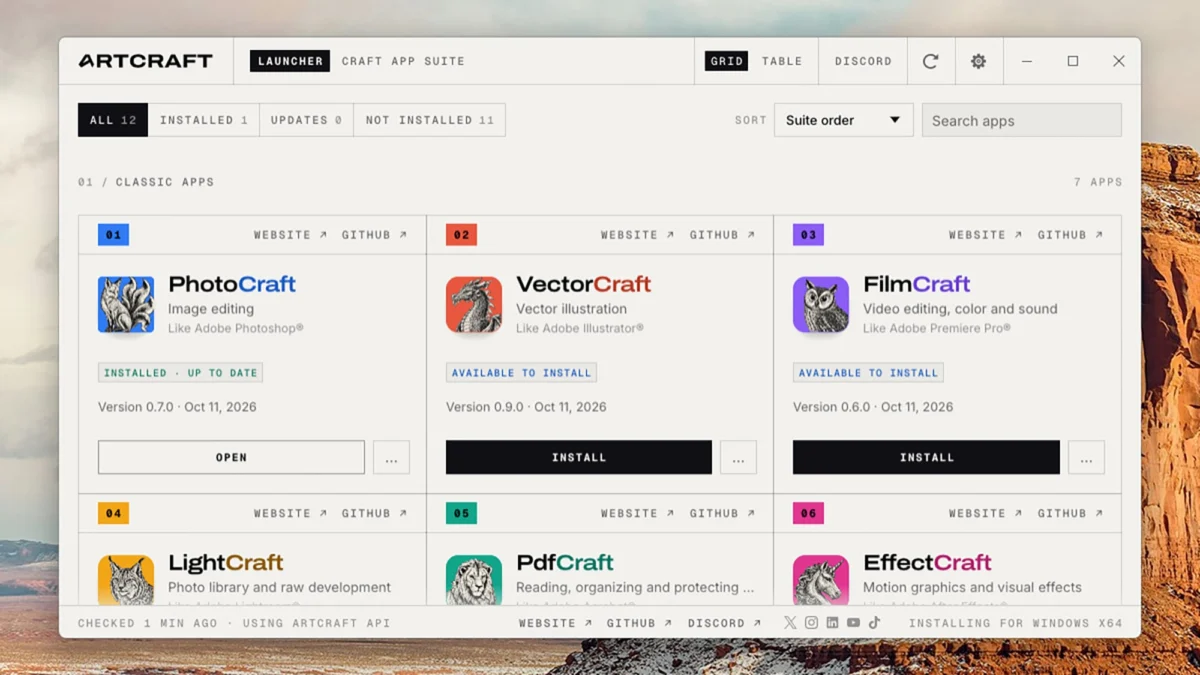
The landscape of professional software is undergoing a seismic shift, one driven not by human engineering teams laboring for years in corporate offices, but by sophisticated AI models capable of reverse-engineering complex applications in a fraction of the time. This technological disruption has arrived in the form of "ArtCraft," an open-source suite of tools that aims to provide free, AI-generated alternatives to industry-standard software—most notably, Adobe’s Creative Cloud.
As of October 2026, the project has gained significant traction, with "PhotoCraft"—a direct clone of Adobe Photoshop—serving as the flagship offering. While the debate regarding the ethics and legality of these tools intensifies, the existence of functional, "clean-room" clones of expensive enterprise software suggests that the era of subscription-locked, proprietary dominance may be facing its most significant existential threat to date.
The Genesis of the Craft: Why "Software is Over"
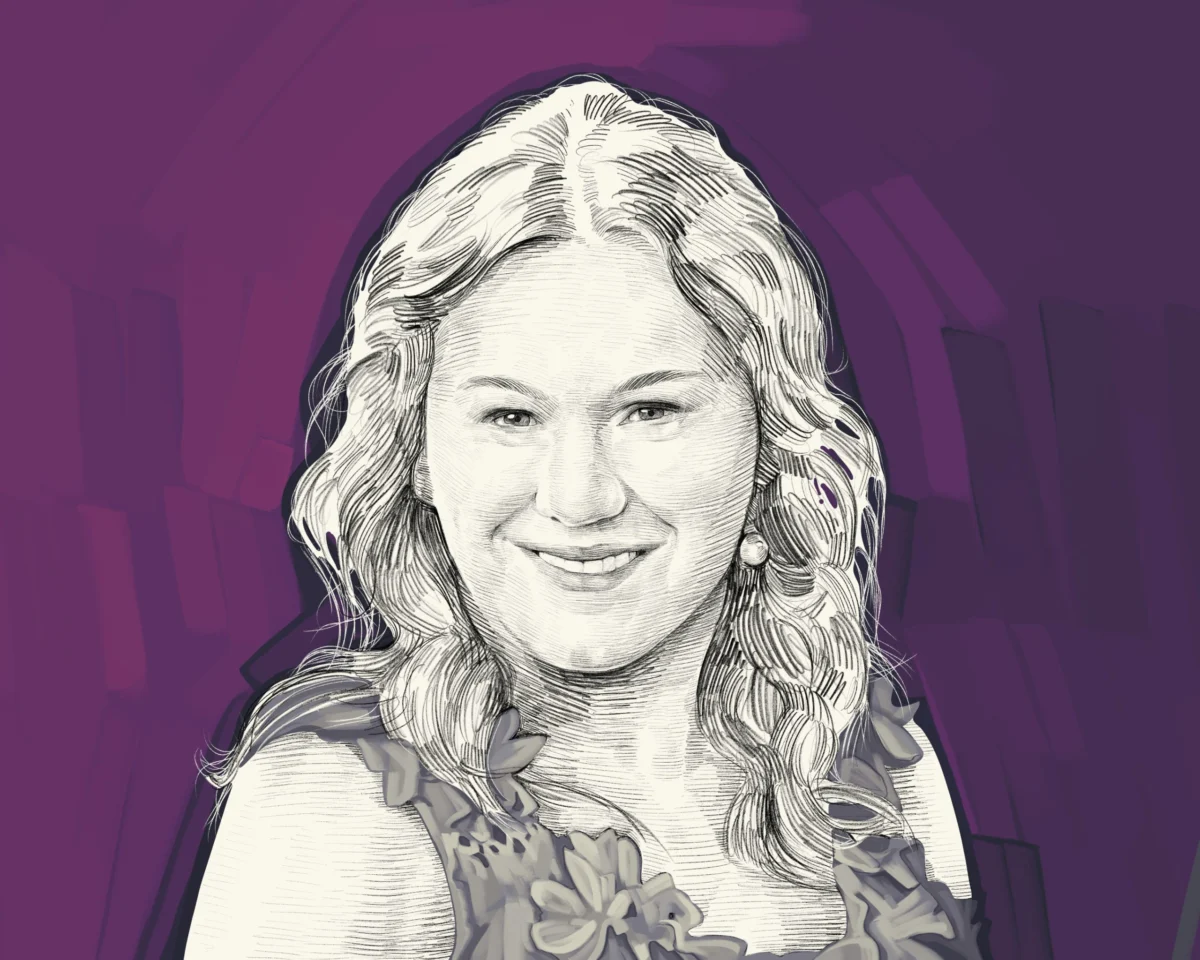
The movement behind ArtCraft is spearheaded by Brandon Thomas, a software engineer who has publicly declared that his motivation stems from frustration with modern corporate "dark patterns"—specifically, the aggressive cancellation fees and subscription models that have become the hallmark of giants like Adobe and Microsoft.

Thomas utilizes Claude Opus 5.5, a high-end AI model, to architect these clones in the Rust programming language. His stated goal is to provide a "pre-shitty" era experience: software that is performant, cross-platform, and free of the bloatware and monetization schemes that define current industry leaders. Beyond Photoshop, the project is actively expanding to include clones of Illustrator (ArtCraft), Premiere (FilmCraft), and eventually, the entire Microsoft Office suite.
Thomas’s philosophy is provocative: he suggests that the traditional model of software development—hiring thousands of engineers to maintain legacy code—is obsolete. By using "vibe coding"—a process where developers describe the desired functionality and visual behavior to an AI, which then generates the underlying structure—Thomas claims he can create 1:1 functional equivalents that render traditional development timelines irrelevant.
Chronology of an AI-Driven Disruption
- Mid-2026: Initial experiments in using LLMs (Large Language Models) to generate functional GUIs (Graphical User Interfaces) begin to surface in niche developer communities.
- Late Summer 2026: Thomas begins building the "Craft" ecosystem, leveraging the speed of AI to iterate on core image-editing features.
- October 2026: The first alpha versions of PhotoCraft are released to the public. The software garners immediate attention on platforms like Hacker News and X (formerly Twitter).
- October 12, 2026: Industry analysts and tech journalists begin formal testing of the software, noting the uncanny resemblance to Adobe Photoshop’s layout, shortcuts, and menu structures.
- Present Day: The project is in an "early alpha" state, with the developer promising 99% feature parity with Adobe’s flagship products within a matter of months.
Supporting Data: Examining the "Clone" Phenomenon
To understand the impact of PhotoCraft, one must look at the user experience. Upon launching the application, users are greeted with an interface that is nearly indistinguishable from Adobe Photoshop. The color palette, the placement of the layers panel, the toolbar layout, and even the keyboard shortcuts are designed to mimic the professional standard.

Performance Metrics
- Latency: Because the app is written in Rust, it is significantly lighter than the bloated Electron or C++ frameworks used in many modern desktop applications. Users report faster load times and snappier responsiveness.
- Feature Parity: As of October 2026, core image-editing functions—cropping, color correction, layer management, and stamp tools—are fully functional. However, advanced features such as third-party plugin support, complex AI-generative fills, and cloud-synced assets remain in development.
- Scalability: Thomas maintains that because the code is AI-generated, "bug fixes" are not manually patched but rather re-generated by the AI, theoretically allowing the software to evolve at a speed that would be impossible for a human team to sustain.
The Legal and Ethical Quagmire
The central question looming over the ArtCraft project is: Is this legal?
Legal experts point to the concept of "clean-room engineering." Historically, reverse engineering is permitted to ensure interoperability. However, if a developer uses an AI to "watch" and replicate the specific look, feel, and proprietary workflow of a competitor’s software, they may be crossing a line into copyright and trade dress infringement.
Furthermore, there is the issue of the training data. The AI models used to write this code were trained on massive repositories of human-written code—including, potentially, open-source libraries and, arguably, the intellectual property of the very companies being cloned. Adobe has yet to issue a formal cease-and-desist, but industry observers suggest that the company is likely monitoring the situation closely. If Adobe determines that PhotoCraft is not just "inspired by" but a direct derivative of their UI/UX architecture, a legal battle is inevitable.

Official Responses and Industry Implications
The tech industry is currently divided on the implications of this development. Some see it as the democratization of creative tools, a way to break the stranglehold of "rent-seeking" corporations. Others see it as a dangerous precedent that could lead to a "race to the bottom," where human engineers are replaced by unverified, AI-generated code that may contain security vulnerabilities.
The Developer’s Stance
Brandon Thomas remains defiant, arguing that supporting open-source alternatives like GIMP or LibreOffice is a "sunk cost" because those projects are often hampered by legacy code and design stagnation. "There is no reason to save broken software," he states. His roadmap is clear: if an application has a subscription fee, he plans to create a "Craft" version of it.
The Corporate Perspective
While Adobe has remained quiet, their potential response could include:

- UI Copyright Litigation: Asserting that the visual layout of their tools is protected intellectual property.
- Security Warnings: Highlighting the risks of using software that is "AI-generated" and therefore lacks a clear, human-audited supply chain.
- Technical Countermeasures: Updating their software to include obfuscation or DRM that makes it harder for AI-based tools to "scrape" their workflow patterns.
Implications for the Future of Work
The rise of PhotoCraft is a microcosm of a larger trend: the "commoditization of expertise." For decades, professional software was defined by a steep learning curve and a high price point, which acted as a barrier to entry. If an AI can perfectly replicate the workflow of a professional tool, the "moat" around these software giants begins to dry up.
For the average user, this is an exciting time. The prospect of having Photoshop-level power for free is undeniably attractive. However, for professionals whose livelihoods depend on the stability, security, and long-term support of their tools, the risk of adopting an "alpha" product coded by an AI is substantial.
As we look toward 2027, the question is not whether AI can clone software—it clearly can. The question is whether the digital infrastructure of our world can rely on code that was written in a "vibe" without a human hand to guide its long-term evolution. For now, the "Craft" apps remain a fascinating, albeit volatile, experiment in the future of human-machine collaboration. Whether they become the new standard or a footnote in the history of copyright litigation remains to be seen.

One thing is certain: the era where companies could rely on subscription fatigue to maintain their market dominance is coming to an end. The barrier to entry for building world-class software has been lowered to the speed of a prompt.