By Pradershika Sharma
October 9, 2026
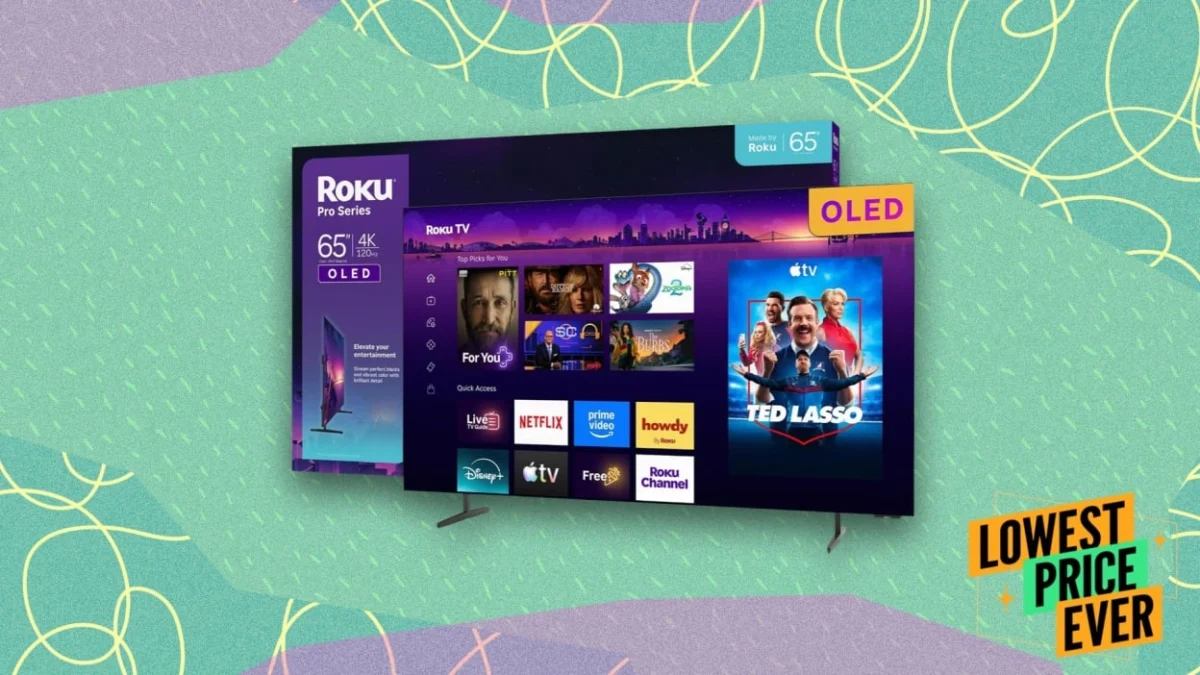
In the ever-evolving landscape of home entertainment, finding a premium OLED experience without the "premium" price tag has long been the holy grail for budget-conscious cinephiles and gamers. As of October 9, 2026, Amazon has significantly disrupted the market by dropping the 65-inch Roku Pro Series OLED TV to a record-low price of $799—a substantial $400 reduction from its original $1,199 MSRP.
For those who have been waiting for the perfect entry point into the OLED market, this deal represents a significant pivot in value proposition. However, as with any major tech purchase, the question remains: does the performance match the aggressive price point, and is it the right choice for your specific living space?
Main Facts: A New Benchmark for Value
The Roku Pro Series OLED has positioned itself as a "middle-ground" champion. By leveraging the company’s long-standing dominance in the streaming OS market and pairing it with high-end OLED display technology, Roku is attempting to capture the demographic that wants deep, infinite contrast ratios without the four-figure investment typically required by competitors like LG or Sony.
Key Technical Specifications:
- Display: 65-inch 4K OLED Panel.
- Refresh Rate: 120Hz native.
- Gaming Features: VRR (Variable Refresh Rate), AMD FreeSync Premium.
- HDR Support: Dolby Vision, HDR10, HDR10+, and HLG.
- Connectivity: 4 HDMI ports, Wi-Fi 5, ATSC 1.0 tuner.
- Input Lag: Measured at 4.8ms (1080p/120Hz) and 8.8ms (4K/60Hz).
While the display offers the signature "perfect blacks" that define OLED technology, it is not without its limitations. Testing indicates a peak brightness of approximately 496 nits. In practical terms, this makes the screen somewhat dim compared to top-tier QLED or WOLED models, meaning that while it is an absolute powerhouse for a dedicated, light-controlled home theater or a basement gaming den, it may struggle with glare in rooms flooded with afternoon sunlight.
Chronology: From Launch to Market Disruption
The journey of the Roku Pro Series has been a calculated play in the competitive smart TV market.
- Early 2026: Roku officially unveiled the Pro Series, signaling a move from being a "streaming box" provider to a full-stack hardware manufacturer. Analysts initially viewed the pricing as competitive, yet aggressive.
- Mid-2026: Throughout the spring and summer, the TV maintained a steady price point, garnering positive reviews for its user-friendly interface and gaming responsiveness, though reviewers noted the brightness limitations early on.
- October 2026: As part of the lead-up to the holiday shopping season, major retailers began testing price floors. The current $799 price point marks the first time the unit has dipped below the psychological barrier of $800, setting a new record for the model.
This price reduction aligns with a broader industry trend where manufacturers are aggressively clearing inventory to make room for newer models, or conversely, using loss-leader pricing to secure market share in the smart TV operating system space—a critical revenue stream for companies like Roku.
Supporting Data: Why Gamers are Taking Notice
The most compelling argument for the Roku Pro Series OLED lies in its performance metrics, specifically regarding latency. In the world of competitive gaming, where a millisecond can be the difference between a win and a loss, the Roku Pro Series punches well above its weight class.

According to PCMag, the unit earned a prestigious "Lab Award" for its exceptionally low input lag. At 4.8 milliseconds for 1080p at 120Hz, the display is optimized for high-frame-rate titles. Whether you are navigating the high-speed tracks of a racing simulator or engaging in the twitch-reaction demands of a competitive shooter, the visual fluidity provided by the 120Hz refresh rate combined with AMD FreeSync Premium creates a seamless experience.
Furthermore, the integration of four HDMI ports provides ample room for a modern gaming setup—accommodating a PlayStation 5, an Xbox Series X, a gaming PC, and a soundbar simultaneously. While the lack of Nvidia G-Sync support may be a minor drawback for some PC enthusiasts, the inclusion of broad HDR support (Dolby Vision, HDR10+) ensures that modern console games look vibrant and accurately color-graded.
The User Experience: Interface and Utility
Outside of raw gaming performance, the TV’s utility is defined by the Roku OS. In an era where many smart TV platforms are becoming cluttered with invasive advertisements, bloated interfaces, and confusing menu hierarchies, Roku remains a bastion of simplicity.
The interface prioritizes accessibility, putting your most-used streaming applications—Netflix, Disney+, Hulu, Max, and others—front and center. The navigation is snappy, and the lack of aggressive, unrequested recommendations makes for a cleaner daily viewing experience.
However, the "budget-friendly" nature of the device does mean some compromises were made in the hardware department. The absence of hands-free voice control means that users are tethered to the physical remote for voice commands—a minor inconvenience, but a notable one in a market where many competitors offer integrated far-field microphones. Additionally, the reliance on Wi-Fi 5, rather than the newer Wi-Fi 6 or 6E, may result in slightly slower streaming start-up times in households with heavy network traffic, though this is rarely an issue for stable, high-bandwidth connections.
Implications: Is This the Right Purchase for You?
The decision to invest in this deal depends heavily on your specific use case.
Buy this TV if:
- You are a dedicated gamer: If your primary goal is to upgrade your console gaming setup, the 120Hz refresh rate and class-leading input lag make this one of the most cost-effective ways to get "pro" performance.
- You have a controlled lighting environment: If this TV is destined for a bedroom, a basement, or a living room with blackout curtains, the brightness limitations become a non-factor, and the deep, inky blacks of the OLED panel will shine.
- You prioritize a simple interface: If you prefer a "no-fuss" TV that lets you jump straight into your favorite apps without navigating complex sub-menus, the Roku OS is arguably the best in the business.
Look elsewhere if:
- Your room is bright and sunlit: If your TV is the centerpiece of a room with large windows and lots of natural light, the 496-nit brightness may result in a "washed out" image during the day. Consider a high-end QLED or Mini-LED model instead.
- You are a hardcore PC gamer requiring G-Sync: While AMD FreeSync is supported, those who specifically rely on Nvidia G-Sync for their high-end gaming PCs might find the lack of native support frustrating.
- You want the latest connectivity standards: If you are building a future-proof media center that requires the absolute latest in wireless networking or automated smart-home voice integration, you may find the lack of Wi-Fi 6 and hands-free voice control limiting.
Conclusion
The $799 price point for the 65-inch Roku Pro Series OLED is, by any objective measure, a high-value offer. It represents a rare opportunity to acquire professional-grade gaming latency and cinematic contrast ratios at a price that was unthinkable just two years ago.
While it lacks the sheer, eye-searing brightness of flagship panels costing thousands more, it hits the "sweet spot" for the vast majority of households. By focusing on what matters—picture quality, responsiveness, and an intuitive user experience—Roku has delivered a product that isn’t just a "budget" alternative; it is a legitimate competitor in the premium TV space. As we move into the final quarter of 2026, this deal serves as a reminder that the cost of entry for premium technology is in a constant state of flux, and for the savvy buyer, the wait for the right price has finally paid off.
Disclaimer: Pradershika Sharma is a tech deals writer for Lifehacker. We may earn a commission from links on this page. Deal pricing and availability are subject to change after the time of publication.