Main Facts: The Shift from Financial Accumulation to Lifestyle Architecture
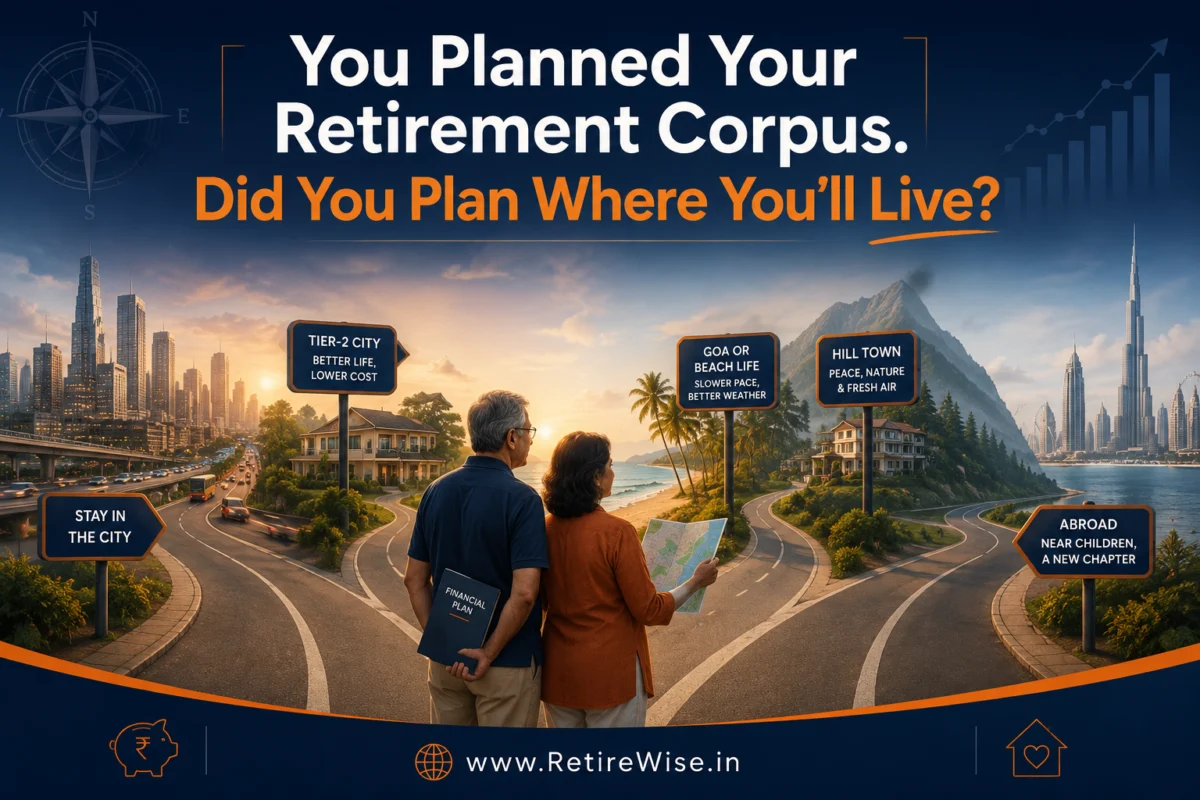
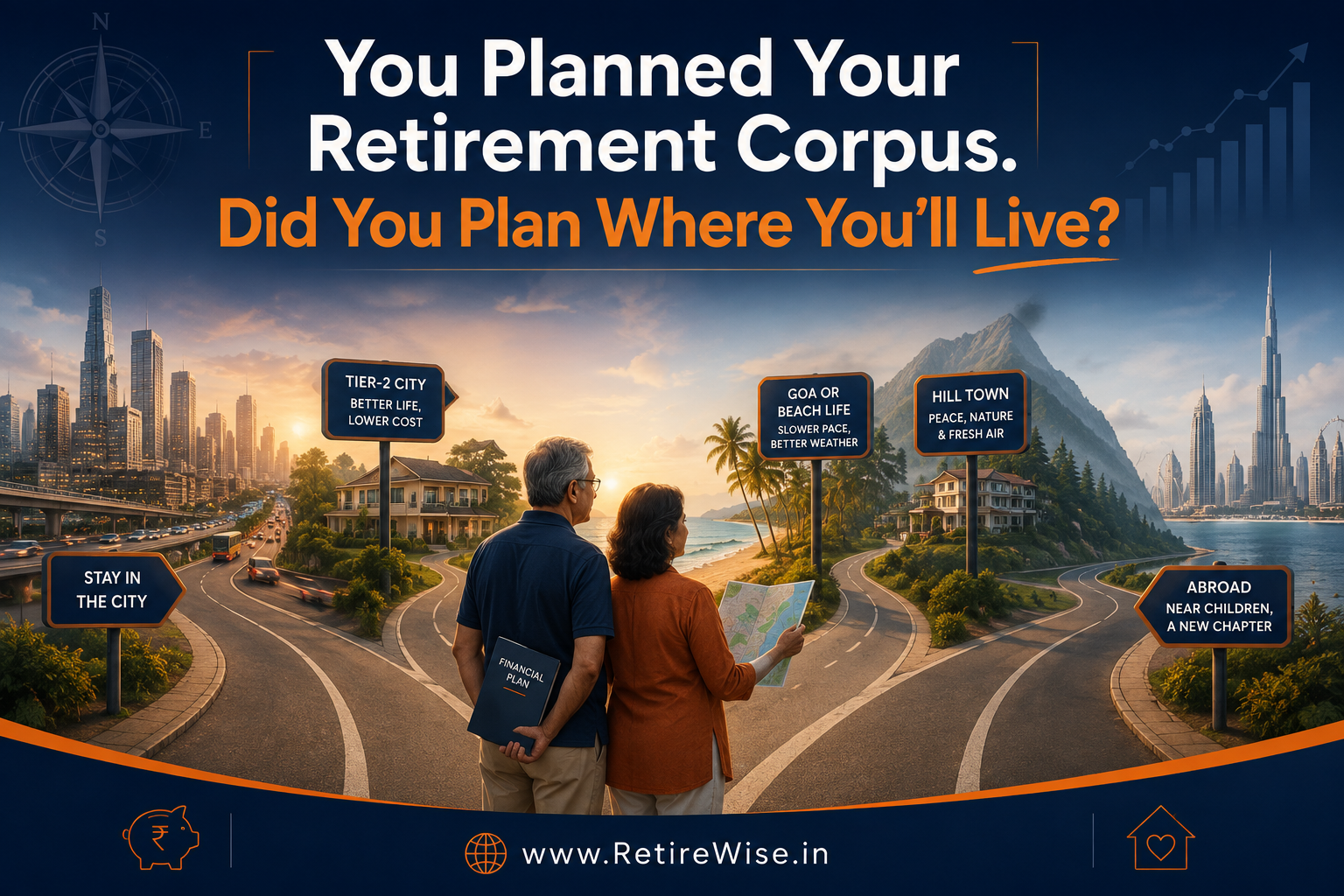
For decades, the discourse surrounding retirement planning has been dominated by a single, quantitative metric: the "corpus." Financial advisors and retirees alike have focused almost exclusively on the magic number—the total sum of savings required to sustain a lifestyle without a monthly paycheck. However, a significant paradigm shift is occurring. Experts are now arguing that while the amount of money is the engine of retirement, the location is the destination.
The choice of where to live in one’s post-professional years is no longer viewed as a secondary detail dictated by inertia or where one’s last job happened to be. Instead, it is being recognized as a strategic decision that influences healthcare outcomes, social connectivity, psychological well-being, and the actual purchasing power of the retirement fund.
Data suggests that many retirees who focus solely on the financial "number" find themselves "rich in paper but poor in life," living in environments that exacerbate loneliness or lack the necessary medical infrastructure. This article explores the critical necessity of planning the "where" with the same rigor as the "how much," analyzing the real-world success and failure of various retirement models.
Chronology of the Retirement Location Decision
The process of choosing a retirement destination typically follows a predictable chronological arc, often starting years before the actual cessation of work.
1. The Inertia Phase (The Default)
In this initial stage, most individuals assume they will simply stay where they are. This is rarely a conscious choice; it is the result of decades of habit. The home is paid off, the neighborhood is familiar, and the logistical hurdle of moving seems insurmountable. However, as the "working" identity fades, the flaws of the current location—such as high urban pollution, traffic, or the lack of a peer group—begin to surface.
2. The Escapism Phase (The Romantic Ideal)
As the retirement date approaches, many enter a phase of "geographic romanticism." This is characterized by a desire to escape the stresses of city life for idyllic settings—hill stations, coastal towns, or quiet farmhouses. It is during this phase that many make impulsive real estate purchases, driven by the desire for peace and quiet, often overlooking the practicalities of daily living.
3. The Reality Check (The Trial Period)
This is the most critical stage. It involves the realization that a vacation spot is not necessarily a living spot. Retirees who "test-drive" their chosen location—by renting for six months or spending extended periods there—often discover the "people gap." They find that while the scenery is beautiful, the absence of a social circle or the distance from specialized medical care creates a sense of isolation.
4. The Strategic Adjustment (The Final Landing)
Based on the reality check, retirees either return to their original cities (re-integrating with family) or create a "hybrid model" that balances the desire for a new environment with the necessity of social and medical infrastructure.
Supporting Data: The Four Pillars of Location Viability
To evaluate whether a location is suitable for a thirty-year retirement horizon, experts point to four quantifiable and qualitative pillars.
I. Healthcare Infrastructure
The "stunning view" loses its value the moment a medical emergency occurs. Proximity to tertiary care—hospitals equipped with advanced cardiac, neurological, and geriatric departments—is the most significant factor in long-term retirement success.
- The 20-Minute Rule: Financial planners now suggest that a retirement home should be within 20 to 30 minutes of a major hospital.
- Specialist Access: As one ages, the frequency of visits to specialists (ophthalmologists, cardiologists, orthopedics) increases. A location that requires a five-hour drive to see a specialist is fundamentally unsustainable.
II. Social Capital and Community
Loneliness is increasingly recognized by health organizations as a risk factor as lethal as smoking 15 cigarettes a day.
- The Peer Group Factor: Moving to a remote farmhouse might seem peaceful, but without a community of peers, cognitive decline and depression can accelerate.
- Built-in Communities: This has led to the rise of senior living projects where social interaction is "architected" into the daily schedule.
III. Proximity to Family
While the "nuclear family" model is dominant, proximity to children and grandchildren remains a primary driver of happiness.
- The Failed Move Phenomenon: A significant percentage of retirees who move to "paradise" return to their home cities within three years. The primary reason cited is not the climate or the cost, but the "people gap"—the realization that being near family outweighs the benefits of a cleaner environment.
IV. Economic Sustainability (Geographic Arbitrage)
The location determines the "burn rate" of the corpus.
- Purchasing Power: A corpus that feels tight in a Tier-1 city like Mumbai or Bangalore can provide a luxurious lifestyle in a Tier-2 city like Nashik, Mysore, or Coimbatore.
- The Rent-and-Move Strategy: Some retirees choose to rent out their expensive urban properties and use that income to live in a more affordable, high-quality-of-life location, effectively increasing their monthly cash flow without touching the principal.
Official Responses and Expert Perspectives
Industry experts, including financial planners and geriatric consultants, emphasize that the "one-size-fits-all" retirement destination is a myth.
Hemant Beniwal, a prominent financial planner, argues that the decision must be "deliberate rather than accidental." According to Beniwal, "The place only works if the people and the essentials come with it. Family, community, and access to good healthcare decide far more retirements than cost or scenery ever do." He advocates for a "try before you commit" approach, suggesting that retirees should rent in their dream location for at least a year before selling their primary residence.
Real Estate Analysts note a surge in "Senior Living" developments. Unlike traditional old-age homes, these are high-end townships that offer "independent living" with medical support on standby. The "official response" from the market has been a move toward "Assisted Living" and "Continuing Care Retirement Communities" (CCRCs), which allow residents to transition from independent living to full-time care within the same campus as they age.
Case Studies: Real-World Applications
The "Failed Escape": The Mumbai-Nashik-Mumbai Arc
A classic example involves a professional from Mumbai who sought to escape the city’s relentless pace. He moved to Nashik, attracted by the climate and the slower lifestyle. While the city met every environmental expectation, the move failed because his family remained in Mumbai. The lack of social "friction"—the spontaneous interactions with loved ones—rendered the beautiful environment hollow. He eventually returned, proving that a location cannot compensate for the absence of a support network.
The "Strategic Community" Model
Recognizing the trap of isolation, some retirees are taking a proactive approach to community building. One model involves groups of friends purchasing land or apartments in the same vicinity. By moving as a "unit," they bring their social capital with them. This "intentional community" ensures that they have the privacy of their own homes but the immediate proximity of a trusted social circle, all while ensuring they remain within reach of urban medical facilities.
The "Hybrid/Snowbird" Approach
In a more modern evolution, some retirees refuse to choose a single location. A client from Bangalore, for instance, splits the year between the city and a family home in Kerala. By renting out their larger city home and moving to a smaller apartment for the months they are in Bangalore, they reduce costs while maintaining the benefits of both urban healthcare and rural peace.
Implications: The Future of Aging
The shift in how we view retirement locations has profound implications for urban planning, healthcare, and the economy.
- The Rise of Tier-2 Cities: As Tier-1 cities become increasingly unlivable for seniors due to pollution and cost, Tier-2 cities with established medical colleges and hospitals (like Chandigarh, Pune, or Coimbatore) will become the new "Retirement Hubs."
- Psychological Well-being as a Metric: Success in retirement will no longer be measured just by the bank balance, but by "Social Wealth"—the number of meaningful interactions a retiree has in a week.
- Real Estate Flexibility: The trend of "renting in retirement" will likely grow. Retirees are realizing that owning a home in a location they might outgrow (physically or socially) is a liability. Renting provides the flexibility to move closer to a hospital or a child as needs change.
Conclusion: Planning the Morning, Not Just the Money
The ultimate takeaway for those approaching retirement is that the "corpus" is merely the tool, not the goal. You can calculate the inflation-adjusted requirement to the last decimal point, but if you wake up in a place where you are lonely, bored, or far from a doctor, the number becomes irrelevant.
A retirement destination is not a postcard; it is a daily reality. It requires a "lifestyle audit" that looks at the next thirty years of mornings. The most successful retirees are those who choose their place as deliberately as they chose their investments—balancing the beauty of the view with the proximity of the heart and the hospital.