In the rapidly evolving landscape of digital advertising, the barrier between entertainment and point-of-purchase is dissolving. As streaming television becomes the primary medium for modern audiences, Amazon is positioning itself as the central architect of this transformation. By synthesizing trillions of consumer data points with sophisticated artificial intelligence, the retail giant is turning its advertising ecosystem into a "one-stop shop" that promises to bridge the gap between brand awareness and immediate conversion.
This shift represents a significant evolution in retail media. Where TV advertising was once a passive, upper-funnel exercise in broad reach, Amazon’s recent innovations—specifically its Dynamic TV Creative capabilities—are transforming streaming platforms into high-performance, lower-funnel engines.
The Technological Pivot: Dynamic TV Creative
At its annual upfront presentation in May, Amazon unveiled a suite of tools designed to remove the friction from the consumer journey. Central to this is "Dynamic TV Creative," a capability that leverages AI to personalize Interactive Video Ads in real-time.
Unlike static commercials that broadcast the same message to every viewer, Dynamic TV Creative uses machine learning to tailor elements of the ad—such as the headline, call-to-action (CTA), and visual format—based on the individual viewer’s shopping history and current position in the purchase funnel. If a viewer has recently searched for a specific product category, the ad served to them during a streaming session will reflect that intent, effectively compressing the time between seeing a product and buying it.
Chronology of a Campaign: The Revlon Case Study
To understand the tangible impact of these tools, one must look at the recent collaboration between Amazon Ads and global beauty powerhouse Revlon. In June, Revlon deployed a campaign that served as a stress test for Amazon’s interactive video infrastructure.
The objective was clear: shorten the distance between the emotional storytelling of a 15-second spot and the transactional reality of the checkout process. By integrating interactive overlays into their video creative, Revlon allowed viewers to engage with products without ever leaving the streaming content.
The results were statistically significant. According to internal data shared by Amazon, the campaign achieved:
- A 9.8-times higher click-through rate (CTR) compared to standard, non-interactive ads.
- A two-times increase in branded search rates, indicating that the ads successfully piqued consumer curiosity.
- A 2.6-times higher return on ad spend (ROAS) relative to category benchmarks.
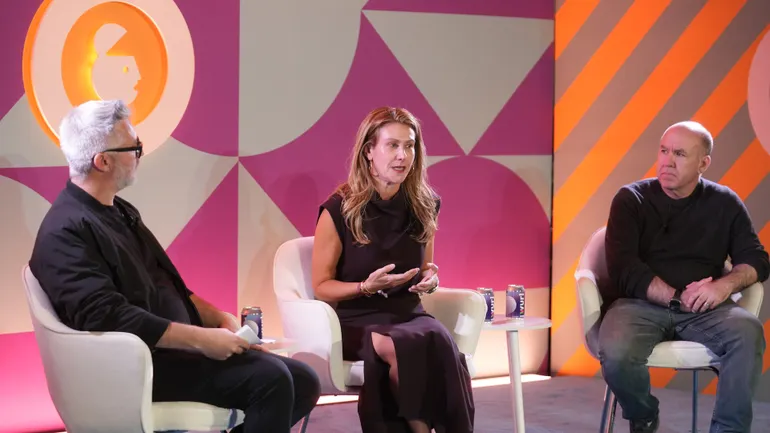
This success prompted a broader discussion at Advertising Week New York on October 7, where Kelly Solomon, chief digital marketing officer at Revlon, and Sean Donahoe, director of engineering for retail ad services at Amazon Ads, dissected the mechanics behind these results.
Bridging the Funnel: Expert Insights
The dialogue between Solomon and Donahoe underscored a shift in marketing philosophy: the abandonment of the "channel-specific" mindset in favor of a "consumer-first" approach.
The Brand Perspective
"TV is extremely important to Revlon and the cosmetics industry," Solomon noted during the panel. "We love a good 15-second ad. It’s an emotional category, so we love the formats that video allows. But we have to be everywhere all at once."
Solomon highlighted that consumers do not think in terms of "channels." They do not distinguish between watching a football game on a streaming app and browsing for products on a retail site. The challenge for legacy brands is to maintain a long-form storytelling presence while simultaneously providing an immediate path to purchase. Interactive ads allow Revlon to accomplish both: the brand gets the emotional resonance of the video, while the consumer gets the convenience of a frictionless interaction.
The Engineering Perspective
From the backend, Sean Donahoe emphasized that Amazon’s goal is to simplify the complexity of data-driven advertising. "It can be quite overwhelming to think about the complexity of having to make those kinds of decisions across millions and millions of consumers," Donahoe explained.
To combat this, Amazon has turned the complex machine-learning backend into a simple user-facing feature. "It’s a one-click activation today," Donahoe said. "You upload your asset, and then we have a checkbox to optimize for interactivity. That allows us to dynamically change that experience for the consumer based on what we know about their journey."
Implications for the Future of Advertising
The integration of these technologies has profound implications for the industry at large. As brands look to the future, the focus is moving beyond simple audience targeting toward the era of AI-readiness.
The Rise of Generative AI and Search Intent
One of the most compelling insights from the panel involved the intersection of marketing and Large Language Models (LLMs). Solomon pointed out that the next frontier for Revlon is not just creating content for humans, but ensuring that content is "ingestible" for machines.
"We have to make sure that we are creating ingestible and friendly content on our product detail pages for consumers, of course, but also for machines," Solomon said. She illustrated this with a specific, complex consumer prompt: "What’s the right lipstick shade for me if my lips are dry, I’m 50 years old, and I’m going to a black-tie wedding?"
To win in an AI-driven search environment, brands must ensure their product data is structured and detailed enough to satisfy these hyper-specific, long-tail queries. This requires a fundamental shift in content strategy, where SKU-level data becomes as important as high-production-value video assets.
Beyond the CPG Category
While Revlon’s success is a benchmark for consumer packaged goods (CPG), the adoption of interactive advertising is spreading to other sectors. Donahoe noted that hotel and travel brands are beginning to experiment with what can be sent directly to a viewer’s mobile device during a streaming ad experience.
The "second screen" experience—where a user picks up their phone while watching TV—is no longer a distraction for advertisers; it is the primary target for conversion. By sending interactive prompts or deep-links directly to a consumer’s device, advertisers can effectively turn a passive living room experience into a highly personalized retail interaction.
Conclusion: The Flywheel of Engagement
The partnership between Amazon and brands like Revlon serves as a blueprint for the "full-funnel" strategy. By leveraging Amazon’s dual identity as a top-tier media destination and a dominant e-commerce marketplace, advertisers can create a continuous loop of data and engagement.
As the industry moves forward, the "flywheel" effect—where better creative drives better data, which in turn informs better AI optimization—will likely become the standard for successful brands. The days of siloed TV buys are numbered. In their place is a unified, intelligent ecosystem where the time between "I want" and "I bought" is compressed into a seamless, 15-second experience.
For brands, the mandate is clear: adapt to the machine-readable, interactive reality of the modern streaming landscape, or risk losing relevance in an era where the content itself is the storefront.