
As the artificial intelligence landscape accelerates, marketers are no longer just observing the evolution of digital tools—they are being forced to rethink their entire operational playbook. From the way brands generate visual assets to how they appear in the increasingly private, AI-driven search ecosystem, the rules of engagement are shifting.
This week’s industry insights, curated by Michael Stelzner, highlight a fundamental pivot: AI is no longer just a productivity booster; it is becoming the gatekeeper of brand visibility.
The Visual Revolution: Building Infinite Image Libraries
One of the most persistent pain points for creative teams is the “single-asset trap.” You have one high-quality product photo, but you need a campaign’s worth of visual collateral. Traditionally, this would require an expensive, time-consuming reshoot.
Repurposing the "Seed" Image
Modern AI image models have evolved to treat a single source image as a definitive "seed" or reference point. By feeding a high-quality product photo into these tools, creators can generate a suite of consistent, on-brand variations—ranging from macro close-ups and lifestyle settings to alternate angles—that maintain the original’s lighting and color palette.
Strategic Asset Management
The true value lies in the "rejected drafts." In a legacy creative workflow, unused images are discarded. However, when generated via a consistent AI reference, these "extras" become part of a growing, searchable library. A close-up shot that didn’t fit a primary campaign today may provide the perfect B-roll for a social media story three months from now. By treating one image as a foundational asset, businesses can build a library that compounds in value over time, turning a single-use expense into a long-term resource.
Chronology: A Week of AI Infrastructure Breakthroughs
The industry witnessed a flurry of major product launches this week, signaling a shift from generative novelty to integrated, action-oriented AI agents.

- Google’s Desktop Integration (Early Week): Google launched a dedicated Gemini app for Windows 10 and 11. By integrating with the OS through shortcuts, it aims to become a native workspace assistant, capable of pulling from Gmail and Drive.
- The Rise of "Live" Reasoning: Mid-week, Google introduced the Gemini 3.8 Live models, specifically designed for real-time voice agents. These models, including the "Extended Thinking" variant, allow for complex, multi-step problem solving during live spoken conversations.
- The Agentic Shift: Meta introduced "Muse," a personal AI agent that goes beyond chat. Designed to take action—making purchases, filing forms, and managing schedules—Muse represents the transition toward autonomous agents that handle "long-term" goals.
- Conversational Dynamics: OpenAI rolled out GPT-Live-1 for API developers, focusing on the nuances of human interaction—handling background noise, interruptions, and natural pauses—setting a new benchmark for voice-based customer service applications.
Supporting Data: The "Second Audience" Paradigm
AI strategist Liron Segev, founder of AnswerContentEngine.com, argues that the most critical error marketers are currently making is writing exclusively for humans.
The Content Dichotomy
In the past, SEO meant writing for human readers while peppering in keywords for search engines. Today, your content must serve two distinct audiences:
- The Human Reader: Seeking engagement, storytelling, and emotional connection.
- The AI System: Seeking structured data, clear authority, and verifiable facts.
AI does not consume content linearly. It evaluates site architecture, technical accessibility, and the "authority" of the information provided. If your technical setup contains barriers—such as improper schema markup or robots.txt files that block crawlers—your content will effectively cease to exist for AI systems, regardless of how well it performs with human audiences.
What AI Values
Research into AI citation patterns indicates that AI systems prioritize content that demonstrates clear expertise and "verifiable authority." Simply using AI to generate content is insufficient; in fact, generic, AI-generated fluff is often deprioritized by newer models. To be cited by an AI, a business must offer unique insights, proprietary data, or expert-level analysis that the model cannot synthesize from its general training data.
Official Responses and Industry Outlook
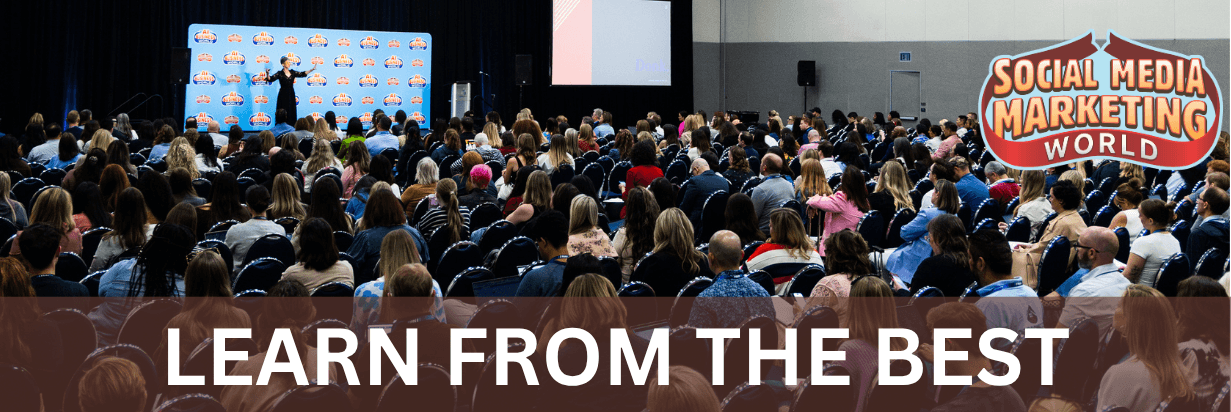
The industry is responding to these shifts with a focus on implementation. The upcoming Social Media Marketing World 2027 conference has already begun announcing its speaker lineup, emphasizing a "pitch-free" environment dedicated to the practical application of these technologies.
"The AI sessions are built for implementation—not ‘what is AI,’ but how to put it to work in your marketing this week," noted Michael Stelzner. This sentiment reflects the broader market consensus: the era of speculative AI hype is ending, replaced by an era of technical integration.

The Role of Privacy and Control
As Meta’s "Muse" and other agents begin to handle personal data, the conversation has pivoted toward security. Meta is addressing this by emphasizing "Muse Secure VMs," granular permission settings, and clear audit trails. This represents a strategic attempt to gain user trust, which is the primary hurdle for the widespread adoption of "agentic" AI.
Implications: Preparing for an AI-First Future
What do these developments mean for the average business owner or marketer?
1. Visibility is Now a Technical Hurdle
If your business isn’t being recommended by AI, you are losing market share to those that are. To appear in AI results, companies must audit their technical infrastructure to ensure AI can "read" their value proposition. This means moving beyond standard SEO and into "Answer Engine Optimization."

2. The End of "Single-Use" Assets
Creative teams must adopt an "asset-first" mentality. Every project should be treated as an opportunity to build a dataset for future AI generation. By creating brand-consistent reference sheets, businesses can ensure that all future visuals, whether created next week or next year, adhere to a unified aesthetic.
3. The Shift to Actionable Agents
We are moving from a world of "Chatbots" (which answer questions) to "Agents" (which complete tasks). Businesses should begin identifying which of their operational processes—such as lead qualification, scheduling, or basic customer support—can be offloaded to these new agentic models.
4. Continuous Learning
The rate of change—exemplified by the launch of four major AI models in a single week—means that traditional professional development is insufficient. Tools like AI-focused "Quick Start Guides" and diagnostic quizzes are becoming essential for identifying where an organization’s knowledge gaps lie.

Final Thoughts
As we close out the week, the takeaway is clear: The divide between those who use AI to amplify their brand and those who ignore it is widening. Whether it is through the creation of a proprietary image library or optimizing content for AI-driven search, the goal remains the same: to build a brand that is technically visible, aesthetically consistent, and operationally prepared for an era where AI acts as the primary intermediary between the business and the consumer.