The recent release of the National Family Health Survey (NFHS-6) factsheets by the Ministry of Health and Family Welfare has sparked a wave of scrutiny among public health experts, sociologists, and policy researchers. While the survey represents a massive logistical undertaking—covering 679,238 households, 716,397 women, and 100,977 men across the country—a significant portion of the granular data collected during the fieldwork remains conspicuously absent from the final public disclosures.
Most notably, while the survey instrument explicitly included seven targeted questions regarding the COVID-19 pandemic, these findings were omitted from the official summaries. This omission has reignited debates regarding the transparency of India’s pandemic-era mortality and economic impact assessments.
The Scope and Chronology of the Survey
The NFHS-6 was conducted in two intensive phases, reflecting a monumental effort to capture the post-pandemic demographic landscape of India. The first phase commenced on May 28, 2023, and concluded on February 26, 2024, followed by a second phase that ran from February 7, 2024, to December 31, 2024.
The fieldwork was executed by 27 specialized Field Agencies (FAs) operating under the oversight of the International Institute for Population Sciences (IIPS). According to experts involved in the process, the survey was designed to be more comprehensive than its predecessors, incorporating modern indicators such as digital literacy and migration status. However, the disconnect between the extensive fieldwork and the restricted nature of the published factsheets has left the scientific community questioning the rationale behind the data filtering process.
The COVID-19 Black Box
Among the most significant "missing" data points are the responses to seven specific questions designed to gauge the footprint of the COVID-19 pandemic. These questions were not mere inquiries; they were structured to provide a definitive account of the virus’s reach. They included:
- "Whether any member of your household tested positive for COVID-19, including any deceased person?"
- "Whether any member of the household was hospitalized for treatment of COVID-19 infection?"
Furthermore, the survey collected sensitive data regarding the "out-of-pocket" (OOP) expenses incurred by households for the treatment of survivors and the funeral/associated costs for the deceased. It even tracked the source of funding for these expenditures—a critical metric for understanding the economic devastation caused by the pandemic.

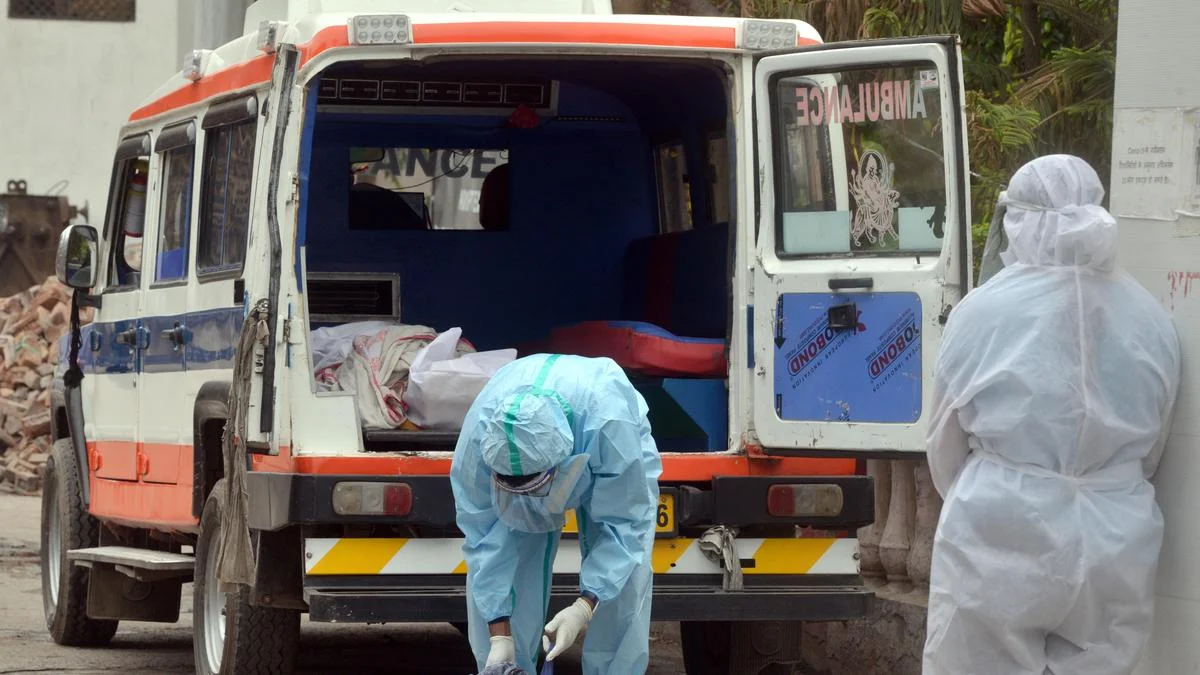
Researchers point out that this data could have provided an independent, ground-level verification of the pandemic’s toll. Currently, there is a wide chasm between the official government death count of 533,849 and estimates from international agencies, some of which suggest the actual toll may be at least four times higher. By withholding this NFHS-6 data, the government has missed an opportunity to settle or at least inform this contentious debate.
Shifting Parameters: What Changed in NFHS-6?
The NFHS-6 landscape differs significantly from the NFHS-5, which included 131 parameters. The current iteration has been slimmed down to 101 parameters. While some modifications are standard in long-term longitudinal studies, the nature of these omissions is striking.
The Disappearance of Mortality Rates
Perhaps the most alarming departure from previous rounds is the exclusion of critical mortality indicators. The NFHS-6 factsheets do not provide details on the Neonatal Mortality Rate (NMR), Infant Mortality Rate (IMR), and Under-Five Mortality Rate—metrics that were standard features in NFHS-5. For public health planners, these are the "gold standard" indicators for evaluating the efficacy of maternal and child health interventions. Their absence hampers the ability of independent researchers to track the progress of government flagship programs.
Sanitation and Infrastructure Data
The survey also failed to publish data on sanitation, despite having collected information through three distinct questions, including inquiries into toilet facility access. Similarly, data regarding the primary fuel source for cooking—a key indicator for assessing the reach and success of the Pradhan Mantri Ujjwala Yojana (PMUY)—was collected but remains buried. Adult literacy rates, which serve as a foundational metric for socioeconomic development, were also excluded from the final factsheets.
According to U. V. Somayajulu, CEO and executive director of Sigma, an organization that conducted fieldwork in Andhra Pradesh, Telangana, and the Andaman and Nicobar Islands, the survey did break new ground in other areas. "Some new questions were added, such as migration status, knowledge on anemia and hepatitis B/C, and digital literacy," he noted. However, he also confirmed that other long-standing markers were dropped, including direct questions on HIV/AIDS (now asked separately and differently) and the removal of anemia testing from the biomarker list.
Official Stance and the Missing Accountability
In the foreword to the report, Union Health Minister J.P. Nadda emphasized that the NFHS-6 estimates are intended to "track the performance of various flagship programmes launched by the Government of India in recent years." This statement frames the survey primarily as a tool for administrative review rather than an objective repository of public health reality.

When The Hindu contacted the IIPS regarding the change in data sharing policies and the rationale behind omitting the COVID-19 and mortality datasets, the inquiry did not elicit a response. This silence has fueled speculation among the scientific community that the government is exercising "data hygiene" to avoid embarrassing metrics or to control the narrative surrounding pandemic-era governance.
Implications for Public Policy and Research
The implications of withholding this data are profound. Policy-making in a democracy relies on the availability of high-quality, verifiable data. When information regarding the economic burden of disease or the mortality rates of children is collected at taxpayer expense but hidden from public view, it undermines the credibility of the entire public health surveillance system.
- Epidemiological Blindness: Without the household-level COVID-19 data, researchers cannot map the geographic or socioeconomic spread of the virus with the precision that the survey’s massive sample size would have allowed.
- Evaluating Flagship Programs: If the government intends to use the NFHS-6 to validate the success of schemes like PMUY (cooking fuel) or sanitation missions, the absence of this data makes it impossible for external observers to verify those claims.
- Loss of Trust: The selective release of data erodes the relationship between the state and the research community. When institutions like the IIPS, which have historically been viewed as independent and rigorous, appear to withhold data, it damages the long-term utility of the NFHS as a longitudinal study.
Conclusion: A Call for Transparency
The NFHS-6 represents a vast reservoir of information that could illuminate the health of the Indian nation during one of its most challenging periods in modern history. However, a survey is only as useful as the data it shares. By omitting critical indicators related to the COVID-19 pandemic, infant mortality, and household infrastructure, the ministry has rendered a significant portion of its own effort opaque.
For the scientific community, the path forward is clear: the raw data—or at least the processed findings for the omitted questions—must be made accessible to researchers. Transparency is not merely a bureaucratic requirement; it is a clinical necessity for understanding the past and preparing for the future. As the country moves forward, the "missing" numbers of the NFHS-6 will remain a haunting reminder of the disconnect between the data we gather and the truths we choose to tell.