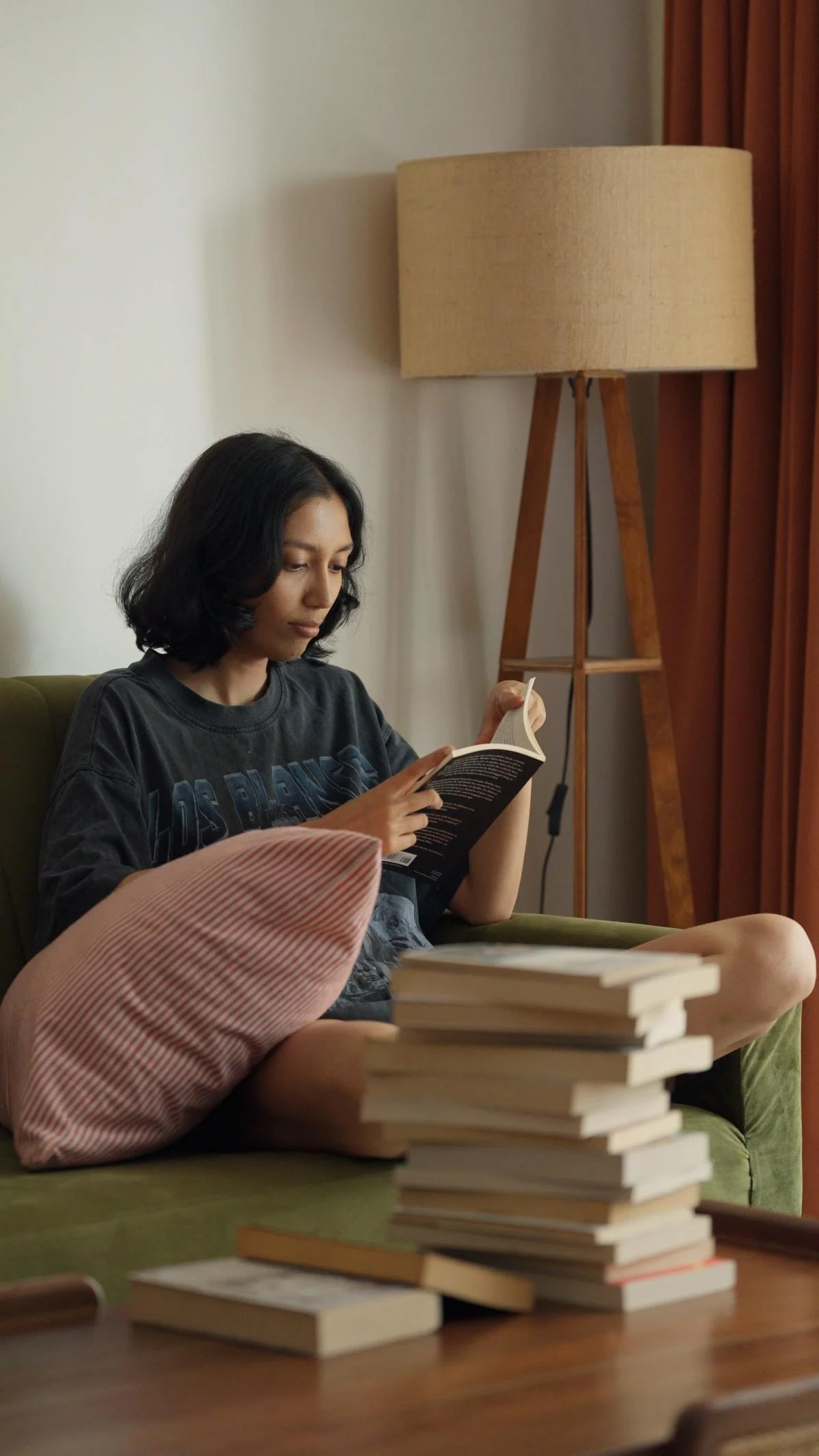
In the bustling urban landscape of Bengaluru, where the rapid pace of technology often dictates the rhythm of daily life, a quiet, tactile revolution is unfolding. Tucked away in a residential space, the "Open House Library" stands as a testament to the enduring power of physical books and the communal spirit of sharing. Founded by an educator known simply as Mather—a Teach For India fellow dedicated to bridging the educational divide—this grassroots initiative is transforming how readers engage with literature, turning the solitary act of reading into a collective, accessible experience.
The Genesis of a Vision: From Kochi to Bengaluru
The origins of the Open House Library are rooted in the nostalgia of a childhood spent in the coastal town of Kochi. For Mather, books were not merely objects of entertainment but coveted treasures that were often difficult to procure. "Our parents thought it was a waste of money," she recalls, reflecting on a upbringing where access to a personal library was a privilege rather than a standard expectation.
This scarcity, however, became the catalyst for innovation. As a schoolgirl, Mather and her peers devised a sophisticated informal system: a rotating book club where no two members would purchase the same title. By pooling their resources and curating a shared rotation, they ensured a constant supply of diverse narratives—from the gripping suspense of The Hunger Games and the adventurous realms of Percy Jackson to the poignant prose of John Green. This formative experience of communal reading provided the blueprint for what would eventually become her professional mission.

Chronology of a Digital-Age Library
The transition from a personal collection to a public service was as rapid as it was unexpected.
- August 26: Mather filmed and edited a social media reel expressing her long-held ambition to start a library. The video, characterized by its raw, personal appeal, struck a chord with the internet, garnering over 80,000 views in hours.
- Late August – Early September: The overwhelming public response served as a catalyst, forcing Mather to compress a long-term project into a 14-day intensive sprint. She catalogued her 500-odd titles, established a digital interface, and devised a membership protocol.
- September 10: The Open House Library officially opened its doors, inviting the public to engage with her curated collection.
The swiftness of this timeline highlights a significant latent demand for third-party, community-led cultural spaces in India’s metropolitan hubs.
Curatorial Philosophy: Beyond the Best-Seller List
The Open House Library is not a repository for every genre; it is a carefully curated reflection of Mather’s intellectual commitments. While she acknowledges that avoiding popular genres like self-help, fantasy, and mass-market romance may alienate a portion of the casual reading public, she views this curation as a moral imperative.

"I don’t read those, but a lot of people have offered those as donations," Mather explains. "I’ve had to deny them for space and curatorial reasons." Her focus is sharply fixed on providing access to literature that is often prohibitively expensive or socially marginalized in mainstream Indian bookstores. Her collection acts as a sanctuary for anti-caste writing, feminist theory, and queer literature—genres that are vital to public discourse but frequently lack the financial accessibility required for wide dissemination.
The collection includes a rigorous mix of classics—Orwell’s 1984, Twain’s The Adventures of Huckleberry Finn, and Salinger’s The Catcher in the Rye—alongside contemporary literary heavyweights such as Toni Morrison, Haruki Murakami, and Kamila Shamsie. By choosing to house these specific works, Mather is not just providing books; she is providing a curated syllabus for social awareness.
Operational Mechanics and the Free Libraries Network
Operating as part of the Free Libraries Network (FLN), a national collective of grassroots practitioners, the Open House Library balances the intimate nature of a home-based initiative with the structural rigor of a professional institution.

Members access the collection through a streamlined digital process:
- Sign-up: Prospective readers complete a Google Form, which is integrated into the library’s central website.
- Browsing: Members can view the collection, place holds, and manage checkouts via their personal profiles.
- Logistics: Because Mather maintains a full-time career as an educator, the library operates on a unique schedule. Books are available for pickup or courier delivery between 5:00 PM and 10:00 PM on weekdays, allowing for a flexible, modern approach to library management. Each book can be borrowed for a month, encouraging a deep, unhurried engagement with the text.
The Social Fabric: Reading Circles and Collective Knowledge
Beyond the lending of physical books, the library has become a site for human connection through its "Reading Circles." These gatherings invite participants to sit in silence with their chosen books for an hour before transitioning into a facilitated discussion.
"We just sit quietly and read for an hour, and after we finish, sit in a circle and share our thoughts," Mather says. These circles have proven to be an effective antidote to the frantic pace of Bengaluru life. The demand for these sessions has already begun to outpace the capacity of her home, prompting Mather to begin negotiations with other public spaces to host these intellectual forums.

Implications for Educational Equity
The implications of Mather’s work extend far beyond the 500 books currently on her shelves. She is currently developing a platform that will allow members to register as both borrowers and lenders. This "Library of Libraries" model aims to turn the city into a vast, interconnected network of knowledge, where an individual’s personal collection is catalogued and made available to the broader community.
This peer-to-peer exchange model addresses a fundamental problem in Indian education: the inequality of access. By decentralizing the library, Mather is proving that a community does not need a massive government grant or a dedicated building to facilitate high-level literacy. Instead, it requires the intent to share and the digital tools to organize that intent.
Looking Ahead: Scaling the Dream
As the Open House Library moves past its first month of operations, Mather remains grounded. She is acutely aware of the challenges of scaling a volunteer-run, home-based project. "I am trying not to get too ahead of myself," she notes, yet her vision for the future is clear. She envisions a dedicated, large-scale physical space in Bengaluru—a permanent home for a growing collection that continues to center anti-caste, feminist, and queer voices.

The success of the Open House Library challenges the prevailing narrative that the physical book is dying in the face of digital media. Instead, it suggests that the desire for curated, community-oriented, and accessible literature is stronger than ever. Through the simple act of opening her home, Mather has created a model that is not only sustainable but replicable—a blueprint for a new generation of grassroots libraries that prioritize human connection over capital.
For those interested in participating in this growing network, the library’s collection and sign-up details can be found at libib.com/u/openhouselibrary. In a world that often emphasizes consumption, the Open House Library stands as a beacon of circulation, reminding us that books, much like the ideas they contain, are meant to be shared, discussed, and protected.