For generations, the "midlife crisis" has been a staple of cultural shorthand—a trope often reduced to cliché imagery of impulsive sports car purchases, sudden career pivots, and a desperate, frantic clawing at the vestiges of youth. As individuals cross the threshold into their 40s and 50s, a pervasive sense of instability often sets in. It is a period characterized by an amorphous, creeping unhappiness: the weight of unfulfilled ambitions, the haunting specter of "lives unlived," and the anxiety of an uncertain horizon.
Yet, contemporary scholarship and literature are beginning to challenge this reductive narrative. By dissecting the intersection of psychology, sociology, and the lived experience, experts are now proposing that what we label a "crisis" is, in fact, a complex accumulation of ignored doubts, shifting biological markers, and an unprecedented opportunity for personal reinvention.
The Anatomy of a Crisis: Why Now?
To understand why the midlife period is so often fraught with turmoil, one must look at the convergence of stressors that typically occur between the ages of 40 and 60. This is the era of the "sandwich generation," where individuals find themselves squeezed between the caregiving demands of aging parents and the continued financial and emotional support required by their own children.
Simultaneously, the professional trajectory—once fueled by the optimism of youth—often hits a plateau. Careers that promised upward mobility may suddenly reveal themselves as stagnant, leading to a profound sense of professional ennui. When coupled with the physical markers of aging—the visible grey hairs, the shifting metabolism, and the wrinkles that serve as unrelenting mirrors of time passing—it is little wonder that many feel their sense of self unraveling.
However, lifespan developmental psychologist Margie Lachman, author of Primetime: A New Vision for Midlife, argues that this "crisis" is rarely a singular event. Instead, it is the tipping point of years of suppressed doubts. "What feels like one big collapse," Lachman notes, "is often an accumulation of smaller, unacknowledged questions about purpose and identity that have been building in the background for decades."

A Multi-Dimensional View of Aging
In Primetime, Lachman advocates for a radical shift in how we categorize age. She posits that age is not a monolithic number, but a composite of three distinct markers:
- Biological Age: This concerns the physiological reality of our health, cellular aging, and the physical capacity of our bodies.
- Social Age: This is defined by the roles we inhabit—the parent, the caregiver, the mentor, or the senior professional. It is the external scaffolding of our lives.
- Psychological Age: Arguably the most significant, this refers to our subjective experience—how old we feel, regardless of what our birth certificate says.
Lachman’s research suggests that individual markers of midlife are highly fluid. When a person’s internal sense of self (psychological age) becomes fundamentally misaligned with their external roles (social age), the dissonance creates the friction we recognize as a crisis. The crisis is not a symptom of age itself, but a symptom of a rigid identity failing to adapt to a changing life context.
Literary Reflections: The Mirror of Fiction
Literature has long served as a laboratory for the midlife experience, capturing the restlessness of this stage with haunting precision. Doris Lessing’s 1973 classic, The Summer Before the Dark, remains one of the most poignant explorations of this phenomenon.
In the novel, Kate Brown, a 40-year-old mother, finds herself adrift when her domestic role—the very thing that provided her with a sense of order—is suddenly removed as her family departs for the summer. Her subsequent journey is not about chronological aging, but about the disintegration of the identity she had carefully constructed over twenty years. Lessing illustrates a crucial truth: midlife becomes a crisis only when the identities that once provided us with a sense of "meaning" no longer suffice.
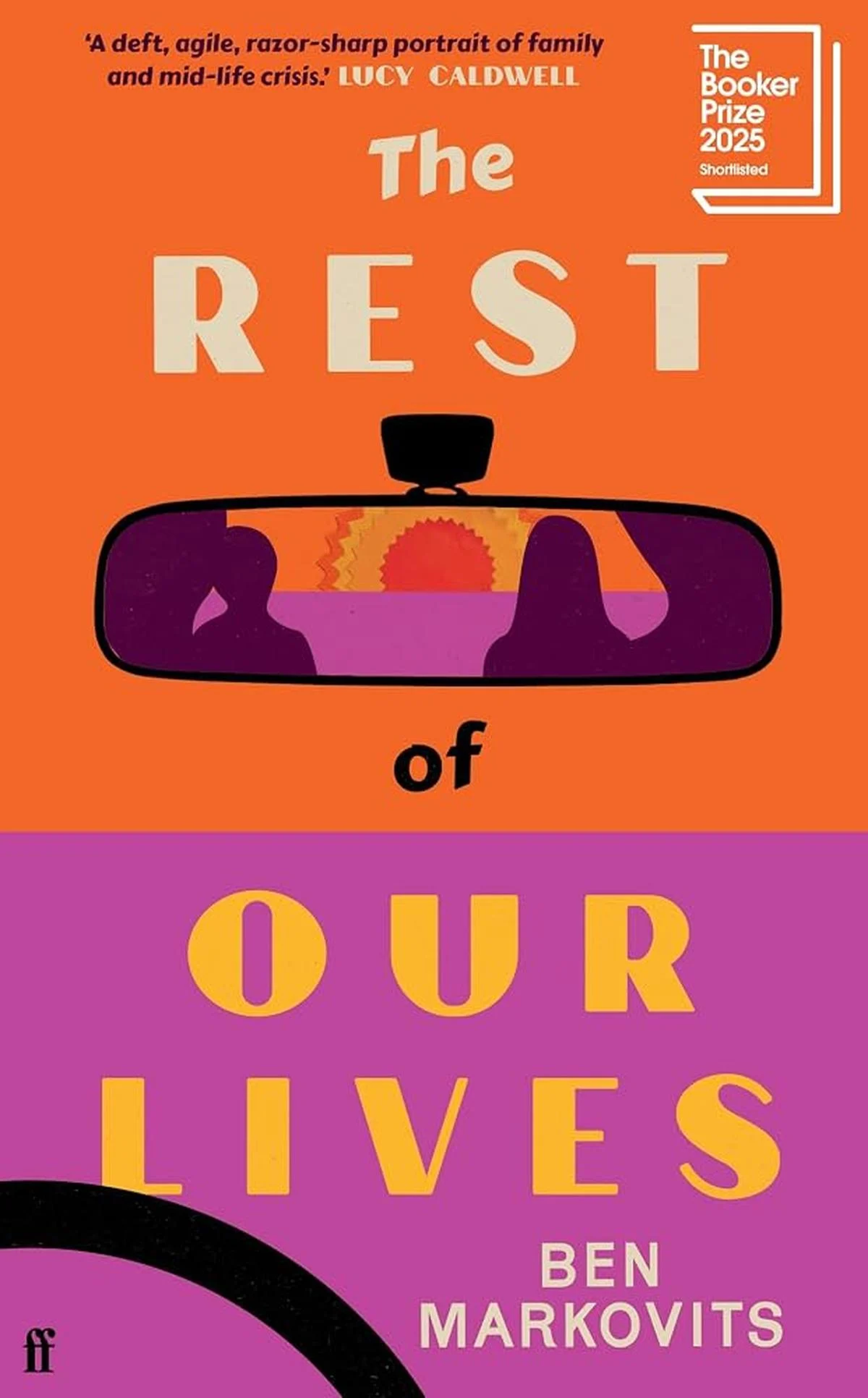
This theme is further explored in contemporary fiction, such as Benjamin Markovits’s 2025 Booker-shortlisted novel, The Rest of Our Lives. Markovits flips the gendered lens of the midlife crisis, centering on 55-year-old Tom Layward. Facing a marriage fractured by a decade-old betrayal and a career derailed by modern cultural shifts, Tom’s response is a literal and metaphorical "running away." His journey highlights that the male experience of midlife—often characterized by silence and stoicism—is equally fraught with questions about legacy, health, and the viability of the lives men have spent decades building.

Chronology of the "Primetime" Shift
| Period | Cultural Perception | Psychological Reality |
|---|---|---|
| Early Midlife (40-45) | The "Panic" Stage | Realization of physical limits and career plateau. |
| Mid-Transition (45-50) | The "Identity Gap" | The clash between social roles and personal desires. |
| Late Midlife (50-60) | The "Reframing" | Integration of experience; potential for "Primetime." |
Supporting Data and Evidence: Beyond the Stigma
Research from the University of California and similar institutions suggests that life satisfaction often follows a "U-shaped" curve. Satisfaction is typically high in early adulthood, dips during the 40s (the "crisis" period), and then climbs steadily as individuals move into their 60s and 70s.
This data supports Lachman’s assertion that the middle years are a crucible. The decline in satisfaction is not a permanent state; it is a transitionary phase. When researchers adjust for variables like socioeconomic status and health, they find that individuals who view their midlife as a "primetime" opportunity—rather than a "waiting room for old age"—report higher levels of psychological well-being.
The Implications: Embracing the "Second Act"
The implications of reframing midlife are significant for public health, corporate HR policies, and individual mental health. If we stop pathologizing this period as a "crisis," we can start viewing it as a period of necessary recalibration.
1. Room for Experimentation
Lachman emphasizes that midlife is the ideal stage to divest oneself of outdated responsibilities. It is a time when the pressure to "climb the ladder" often recedes, replaced by a desire for depth and meaning. This is the optimal window for career pivots, the pursuit of neglected hobbies, or the cultivation of new, more authentic social circles.
2. Mentorship and Legacy
The "Primetime" philosophy suggests that midlife is the point at which we are most equipped to balance our own needs with the needs of others. By learning from the mistakes of the previous generation and helping the younger generation navigate their own path, the middle-aged individual finds a new role as a bridge-builder, which fosters a sense of purpose that the "crisis" narrative usually obscures.

3. Contextual and Non-normative Influences
Lachman notes that we must account for "non-normative" influences—unexpected events like divorce, job loss, or illness—that disrupt the timeline. By acknowledging that these events are not failures, but rather catalysts for change, individuals can reclaim their agency.
Conclusion: A New Vision
The "midlife crisis" is not a mandatory stage of human decline; it is a symptom of a culture that fears aging. By embracing the flexibility of psychological age and recognizing that our social roles are not static, we can move away from the darkness of the "crisis" and toward the "primetime."
As Markovits suggests in The Rest of Our Lives, there is a literal "rest" of our lives waiting to be lived. This stage of life, far from being a period of endings, should be seen as an expansive space of transition. It is an opportunity to shed the skins of our younger selves and step into a version of our lives that is more authentic, more experienced, and ultimately, more fulfilling. The crisis, it seems, is not in the aging—it is in the refusal to let go of who we were, in order to become who we are capable of being.