Tamil literature has long served as a mirror to the societal fabric of South India, documenting the nuances of caste, class, and the human condition. Traditionally, the portrayal of health and healing in this canon was confined to the mystical—references to Siddha practitioners, traditional healers, and the shifting spectrum of faith and skepticism surrounding them. While the legendary Sujatha once pioneered the integration of technology and science into the Tamil narrative, the explicit exploration of medicine as a central plot device remained, for many years, a neglected corner of the genre.
However, a shift is underway. A new wave of Tamil authors is moving beyond treating illness as a mere plot contrivance or a melodramatic instrument of fate. Instead, they are dissecting the clinical, social, and political realities of healthcare, positioning medicine not just as a backdrop, but as a lens through which the systemic inequalities of the nation are brought into sharp, unflinching focus.
The Pioneers of the Medical Narrative
While medical themes have been sparse in the wider scope of popular Tamil fiction, the contributions that do exist are foundational. These works often serve as a bridge between the physical reality of the patient and the rigid social hierarchies of Tamil Nadu.
Muthumeenal’s Mul (Thorn) stands as a landmark in this niche. As an autobiographical account, it provides a raw, unflinching look at life with leprosy. The narrator, a young girl whose world collapses upon discovering the telltale patches of the disease, finds herself navigating the cold, sterile, yet life-saving environment of a state institution. Mul is more than a memoir; it is a public-health manifesto, dismantling the stigma of leprosy and advocating for the curative power of early medical intervention.

Simultaneously, the work of retired IAS officer Sivakami, particularly Pazhayana Kazhithalum (The Grip of Change), serves as a seminal Dalit feminist treatise. Sivakami does not treat health in a vacuum; she masterfully weaves the social determinants of health—caste-based violence, gender oppression, and the denial of bodily autonomy—into the very narrative of physical suffering. In her prose, the mental and physical toll of bigotry is as tangible as any clinical diagnosis.
Imayam: The Architect of the Clinical-Sociological Nexus
If there is a titan in the field of medical-sociological literature in Tamil, it is undoubtedly Imayam. A school teacher and seasoned political commentator, Imayam has transcended the role of the traditional novelist to become a chronicler of the infirm. His work is characterized by a rare synthesis: he possesses the clinical accuracy of a medical report and the searing empathy of a humanist.
Unlike authors who use disease as a generic catalyst for tragedy, Imayam treats medical conditions as structural elements of the human experience. His collaborator and translator, Justice Prabha Sridevan, notes his "astonishingly astute understanding of the feminine condition," a trait that allows him to write about pain, debility, and suffering with surgical precision.
A Chronology of the Sickbed
Imayam’s body of work provides a diagnostic history of the Tamil subaltern:

- The Early Period: In his debut masterpiece Koveru Kazhudaigal (Mules), written over thirty years ago, Imayam explored the traditional midwifery practices of the Vannar community, highlighting the divide between institutionalized medicine and ancestral survival.
- The Mid-Career Shift: With Ippothu Uyirodirukkiren (I’m Alive… For Now), Imayam brought the reader into the claustrophobic, high-stakes environment of a government nephrology ward. By focusing on a teenager’s decline, dialysis, and the eventual organ donation process, he provided an authentic, gritty look at the life-and-death bureaucracy of state healthcare.
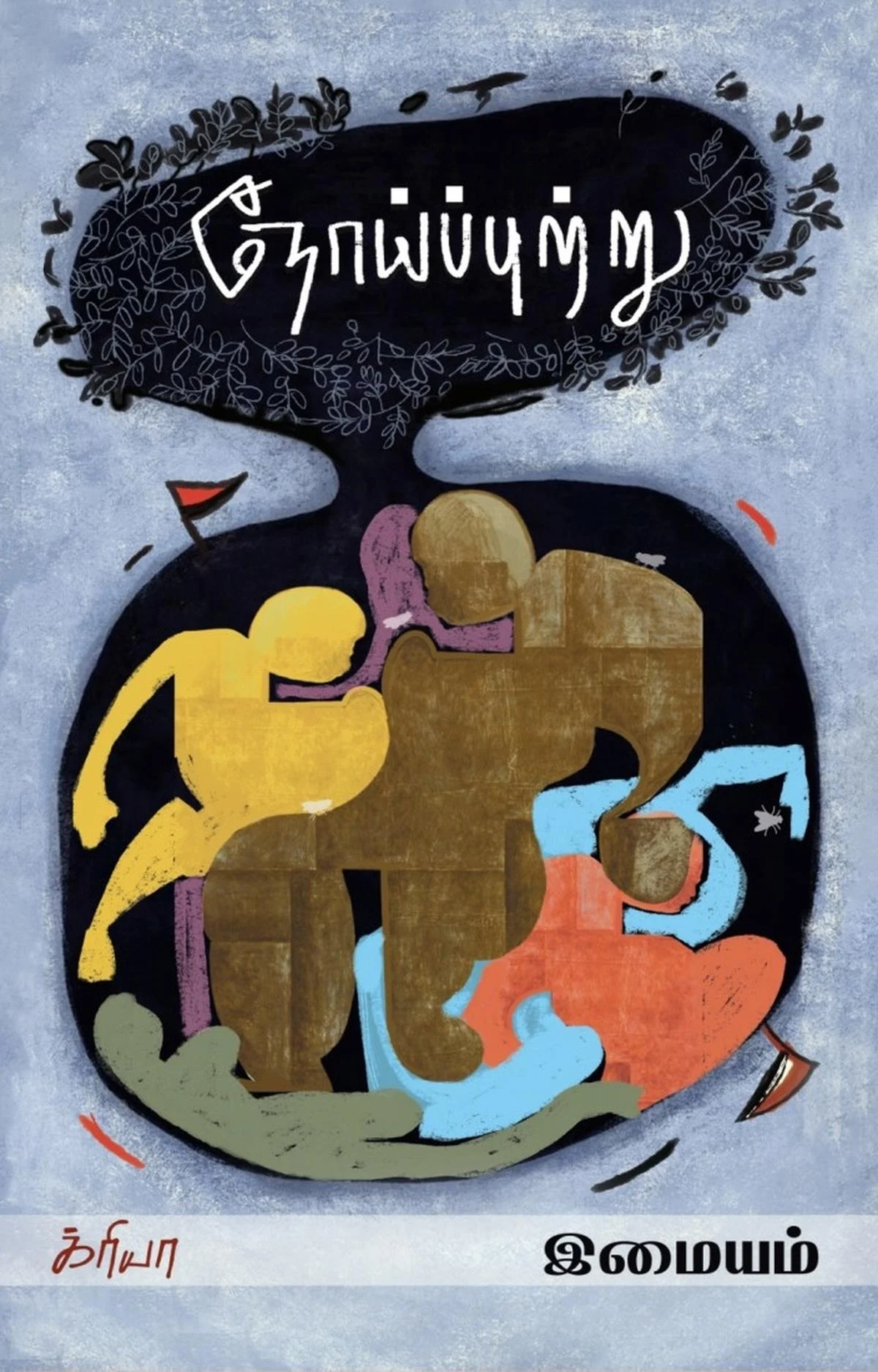
- The Recent Focus: His later works, such as Noiputtru (Disease), return to the theme of leprosy. Set in the 1960s, the novel documents the lived experiences of those ostracized by society and confined to state-run leprosaria. His descriptions are uncompromising, detailing the physiological ravages of the disease—the thickening ears, flattened noses, and disfigurement—with a prose that refuses to look away.
Social Realities and the Institutional Gaze
Perhaps the most visceral of Imayam’s critiques is found in Sellatha Panam (A Woman Burnt). The novel centers on Revathi, an upper-caste woman who, after an inter-caste marriage, finds herself in the harrowing environment of a burns ward. By spending time observing the JIPMER burns ward in Puducherry for his research, Imayam was able to strip away the "niceties" of middle-class existence, exposing the raw, brutal reality of trauma. In the waiting corridors of that ward, social hierarchies are not erased; they are merely reconfigured by the proximity of death.
Similarly, his recent work Uppu Vandikaran (The Salt Vendor) offers a harrowing look at the COVID-19 pandemic. The narrative follows Chellamuthu, a man caught in the bureaucratic nightmare of the lockdown, rejected by hospital after hospital due to the lack of documentation. It is a chilling reminder of the lacunae in the medical system—a failure of infrastructure that many in the early 2020s recognized all too well. This theme of institutional neglect is echoed in his short story Government Pinam (The Government Corpse), which captures the suffocating reality of a father and son quarantined in a government-sealed home.
The Gendered Burden of Health
Imayam’s focus often gravitates toward the intersection of biology and societal expectation. In Manamurivu (Divorce), he addresses the gendered nature of infertility. The novel acts as a guide through the labyrinthine experience of IVF clinics, the physical toll of hormone injections, and the immense, unfair societal pressure placed solely on the woman to bear children. It is a poignant exploration of how modern medical technology, while offering solutions, often exacerbates traditional patriarchal burdens.
Furthermore, in Pinathuku Sondhakkari (Owner of the Corpse), he tackles the "graying" of India. Through the character of Meenakshi, a live-in attendant left to deal with the death of her elderly employer, Imayam highlights the increasing reliance on migrant or hired care in a society where the traditional family structure is disintegrating.

Implications for the Future of Tamil Literature
The emergence of these narratives signals a crucial evolution in Tamil letters. The pandemic forced the world to bring science, virology, and medical ethics into the public discourse, turning the once-private pain of the patient into a matter of public policy and national debate.
As Tamil literature continues to grapple with these themes, the implications are profound:
- Democratization of Health Narratives: By moving the focus away from the "heroic doctor" trope to the lived experience of the patient, these authors are humanizing statistics.
- Public Health Awareness: Works like Mul and Ippothu Uyirodirukkiren act as conduits for medical information, potentially reducing stigma and increasing health literacy in ways that pamphlets and government campaigns often fail to do.
- Sociological Documentation: Future historians will likely view these novels not just as fiction, but as primary sources detailing the state of the Indian healthcare system at the turn of the 21st century.
Conclusion
Imayam and his contemporaries are not merely writing about illness; they are writing about the failures and the resilience of the systems that surround us. By grounding their stories in the harsh, antiseptic, and often indifferent reality of the hospital ward, they have transformed the Tamil novel into a potent instrument of social critique.
As the nation faces an aging population, the looming threat of future pandemics, and the persistent inequalities of caste and gender, the "medical turn" in Tamil literature is not just a trend—it is a necessity. It provides a mirror that shows us not just our physical ailments, but the deeper, more systemic wounds that require a different kind of healing. Whether through the lens of a leprosy ward in the 1960s or a dialysis machine in the present day, these authors remind us that to be ill in society is, in itself, a political act.