Introduction: A Legacy at a Crossroads
In the rapidly evolving landscape of digital media, few names carry the historical weight of Getty Images. As the world’s preeminent curator of visual storytelling, the company has long served as the backbone for global news organizations, advertising agencies, and creative enterprises. However, the company is now attempting to reframe its own financial future through a dramatic and painful pivot: a prepackaged Chapter 11 bankruptcy filing.
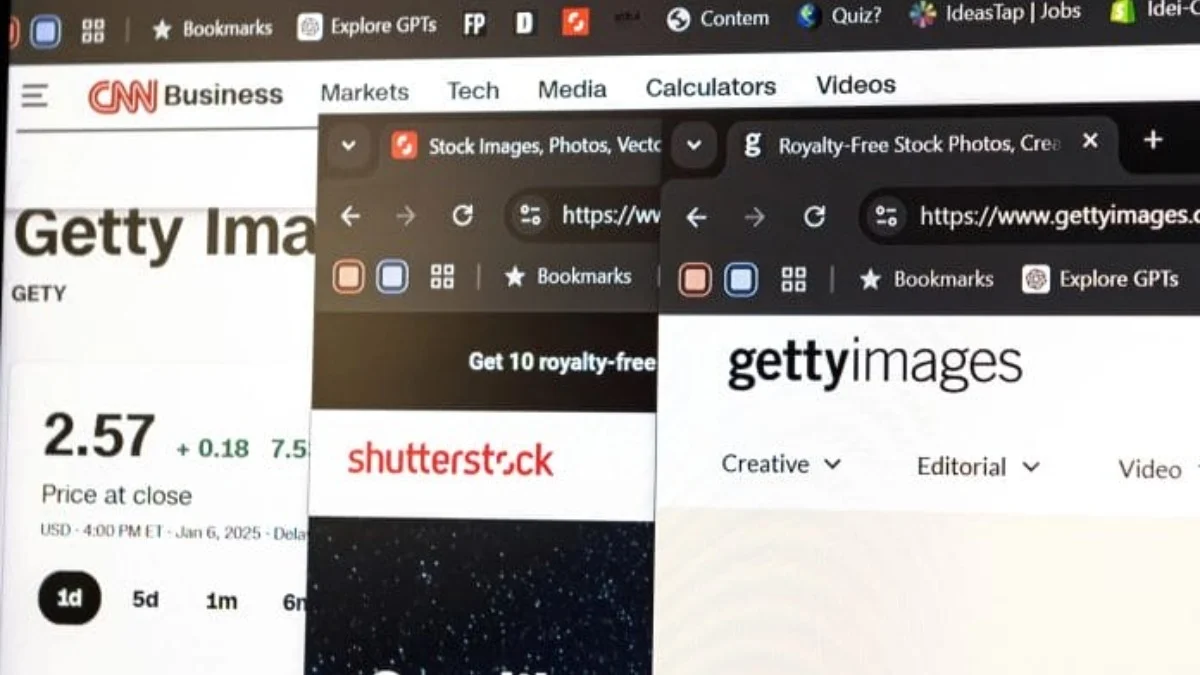
Buffeted by a staggering $2.1 billion debt load, the collapse of a transformative merger with rival Shutterstock, and the existential disruption posed by generative artificial intelligence, Getty Images is retreating from public markets. The move aims to wipe the slate clean, shifting the company back into private ownership under the stewardship of the Getty family and Koch Equity Development. This restructuring represents a desperate attempt to salvage a legacy institution that has seen its market value crater by 99% since its high-profile return to the public markets in 2022.
The Chronology of a Collapse
The path to this restructuring was not sudden, but rather the result of a compounding series of strategic missteps and shifting market tides.
2022: The SPAC Disappointment
Getty Images returned to the public markets in 2022 via a Special Purpose Acquisition Company (SPAC) transaction. At the time, the deal valued the company at a robust $4.8 billion. Optimism was high, fueled by the assumption that a public listing would provide the capital necessary to modernize the company’s vast archives and pivot toward a digital-first subscription model.
2026: The Failed Merger and Financial Tipping Point
By June 2026, the optimism had evaporated. The proposed merger between Getty Images and its primary rival, Shutterstock, was intended to create a monolithic entity capable of dominating the visual content market. The merger was ultimately abandoned due to insurmountable financial and strategic hurdles, leaving Getty exposed with a balance sheet that could no longer support its operations.
August–September 2026: The Freefall
In August, the company withdrew its financial guidance, a signal to the markets that its internal forecasts were no longer reliable. By late September, the New York Stock Exchange initiated delisting proceedings against the company as its stock price dipped into penny-stock territory. With a market valuation that had shriveled to roughly $20.74 million, the board realized that public-market confidence had been entirely extinguished.
Financial Restructuring: The Anatomy of the Deal
Getty Images’ plan to return to private ownership is predicated on a complex, prepackaged restructuring agreement designed to de-leverage the business while maintaining operational continuity.
The Debt Overhaul
The company’s debt, which stood at approximately $2.1 billion as of June 30, 2026, has been the primary driver of this insolvency. Under the terms of the agreement:
- Bondholder Concessions: Holders of Getty’s unsecured bonds have agreed to retire $270 million in notes, a significant sacrifice intended to reduce the overall liability.
- Secured Lender Relief: Secured lenders have agreed to reduce interest costs and extend debt maturities, providing the company with the necessary "breathing room" to manage its cash flow.
- New Capital Injection: Investors have committed up to $533 million in new equity to recapitalize the business. Additionally, Koch Equity Development has provided $143 million in financing specifically earmarked to fund the restructuring process itself.
A Return to Private Control
Upon the completion of the restructuring, which is expected by the end of 2026, the company will transition to 100% private ownership. The Getty family and Koch Equity Development will emerge as the primary stakeholders, ending the company’s brief and turbulent stint as a publicly traded entity.
The AI Disruptor: Why the Business Model is Strained
While the debt load is the most immediate threat, the long-term challenge facing Getty Images is the rapid democratization of image creation through generative AI.
The Decline of the Stock Photo
For decades, Getty Images thrived on a simple premise: professional photographers captured the world, and businesses paid to license those images. Today, that model is under siege. Generative AI tools like Midjourney, DALL-E, and Stable Diffusion allow users to synthesize high-quality, bespoke imagery in seconds for a fraction of the cost of a licensed archive photo.
The Value Proposition Crisis
The company is currently grappling with how to quantify the value of its editorial archives in a world where "synthetic" imagery is becoming indistinguishable from reality. While Getty’s historic archives remain a powerful asset, the company must convince clients that human-captured, verified visual history remains superior to AI-generated hallucinations. The struggle to monetize this distinction is at the heart of the company’s current identity crisis.
Implications for the Media and Creative Industries
The restructuring of Getty Images is not merely a corporate story; it is a bellwether for the broader creative services industry.
Operational Continuity
Getty has been quick to reassure its clients, vendors, and partners that operations will continue as normal during the Chapter 11 process. The company has explicitly stated that vendors will be paid in full in the ordinary course of business, a vital assurance for the thousands of freelance photographers and contributors who rely on Getty for their livelihood.
The Future of Editorial Integrity
Getty Images occupies a unique space in the media ecosystem, competing directly with major news wire services like Reuters and the Associated Press. The bankruptcy highlights a sobering reality: even institutions of great historical significance are not immune to the economic pressures of a digital-first, AI-augmented world. If Getty cannot successfully pivot, the quality and variety of visual journalism available to global news organizations could suffer, leading to a more homogenized and potentially less trustworthy media environment.
A Cautionary Tale for SPACs
The collapse of Getty’s valuation—from $4.8 billion to near-zero—serves as a cautionary tale for the SPAC boom of the early 2020s. Many companies that went public through these vehicles overestimated their growth potential and underestimated the rigors of public disclosure and market scrutiny. Getty’s experience is likely to influence investor sentiment toward media-tech companies for years to come.
Conclusion: The Long Road to Redemption
The road ahead for Getty Images is fraught with difficulty. While the financial restructuring will provide a cleaner balance sheet, it does not solve the fundamental problem of market relevance.
To survive in the next decade, Getty must move beyond its role as a repository of historical assets. It must integrate AI into its workflow in a way that respects copyright and authenticity, perhaps positioning its archives as the "ground truth" upon which reliable AI models can be built.
The company’s next chapter will be defined by its ability to pivot. It is moving from a high-stakes, public-market environment where it was punished for its debt and its lack of agility, to a private-equity-backed environment where it will be given time to experiment and evolve. Whether this transition will allow Getty Images to reclaim its status as an indispensable pillar of the visual world remains to be seen. For now, the company has bought itself time—but time is a currency that runs out quickly in the era of artificial intelligence.
Ultimately, the lesson of Getty Images is a stark one: in an age where the creation of imagery has become essentially free, the value of the "original" is undergoing a painful, volatile, and historic revaluation. The company that once owned the rights to the world’s most iconic moments must now find a way to own the future.