For decades, the marketing playbook has been written in stone. CMOs and growth leaders have relied on a predictable triad of channels: paid search, content marketing, and email. These channels offered a comfortable, data-rich landscape where customer acquisition costs (CAC) could be forecasted with surgical precision, and performance benchmarks were standardized across industries. However, a tectonic shift is currently underway, one that threatens to render these traditional frameworks obsolete.
The rise of generative AI and the integration of large language models into search experiences have transformed the way buyers discover, evaluate, and choose solutions. The era of the "ten blue links" is fading, replaced by the rise of "Answer Engines." For marketing leaders, this represents more than just a change in technology—it is a fundamental challenge to the way they allocate resources and measure success.
The Evolution of Discovery: From Search to Synthesis
The modern buyer journey has been compressed. In the past, a prospective customer would conduct a series of Google searches, visit multiple landing pages, download white papers, and compare vendor websites side-by-side. Today, that discovery process happens within the interface of an AI-powered answer engine.
When a user poses a question to an AI model, they are presented with a concise, synthesized summary—a curated "short list" of vendors that effectively frames the problem and dictates the solution. If your brand is absent from this summary or, worse, portrayed inaccurately, you have essentially been disqualified before the buyer ever reaches your website.
This shift has created a "visibility gap." Marketing teams are finding that their traditional SEO efforts, while still necessary, are no longer sufficient. They are now competing for "citations"—the equivalent of being named as a credible, authoritative solution within an AI-generated response.
Chronology of a Paradigm Shift
The transition to AEO (Answer Engine Optimization) did not happen overnight, but its acceleration has been staggering:

- The Search Era (2000–2022): The industry operated under the paradigm of "traffic acquisition." The primary goal was to rank for high-volume keywords to drive visitors to a owned web property.
- The Generative Inflection Point (Late 2022–2023): The public release of advanced LLMs signaled the end of the traditional search hegemony. Early adopters realized that the "featured snippet" was becoming the entire search experience.
- The Fragmentation of Traffic (2024): As AI tools like ChatGPT, Claude, and Perplexity gained mass adoption, organic traffic began to flatten or decline for many B2B categories. Buyers began "doing their research" inside the chat interface rather than on the vendor’s site.
- The Operationalization Phase (Present): Marketing leaders are now moving beyond experimental testing. They are shifting toward formalizing AEO as a core pillar of their growth strategy, treating AI visibility as a measurable KPI rather than a "nice-to-have" side project.
Supporting Data: Why Visibility is the New Currency
The skepticism surrounding AEO often stems from the lack of clear attribution. Because answer engines do not always provide a direct referral link in the same way a search engine does, leaders have struggled to justify the spend. However, data from early adopters suggests that the cost of inaction is far higher than the cost of investment.
HubSpot’s internal research has provided a compelling argument for this transition: AEO-optimized brands generate 2.7x more Marketing Qualified Leads (MQLs) compared to those that remain passive.
This is not merely a vanity metric. It represents a shift in the quality of the lead. A buyer who has been "pre-framed" by an AI answer is already informed about the problem and is aware of your brand as a viable solution. This reduces the sales cycle, as the prospect arrives with a higher degree of trust and intent.
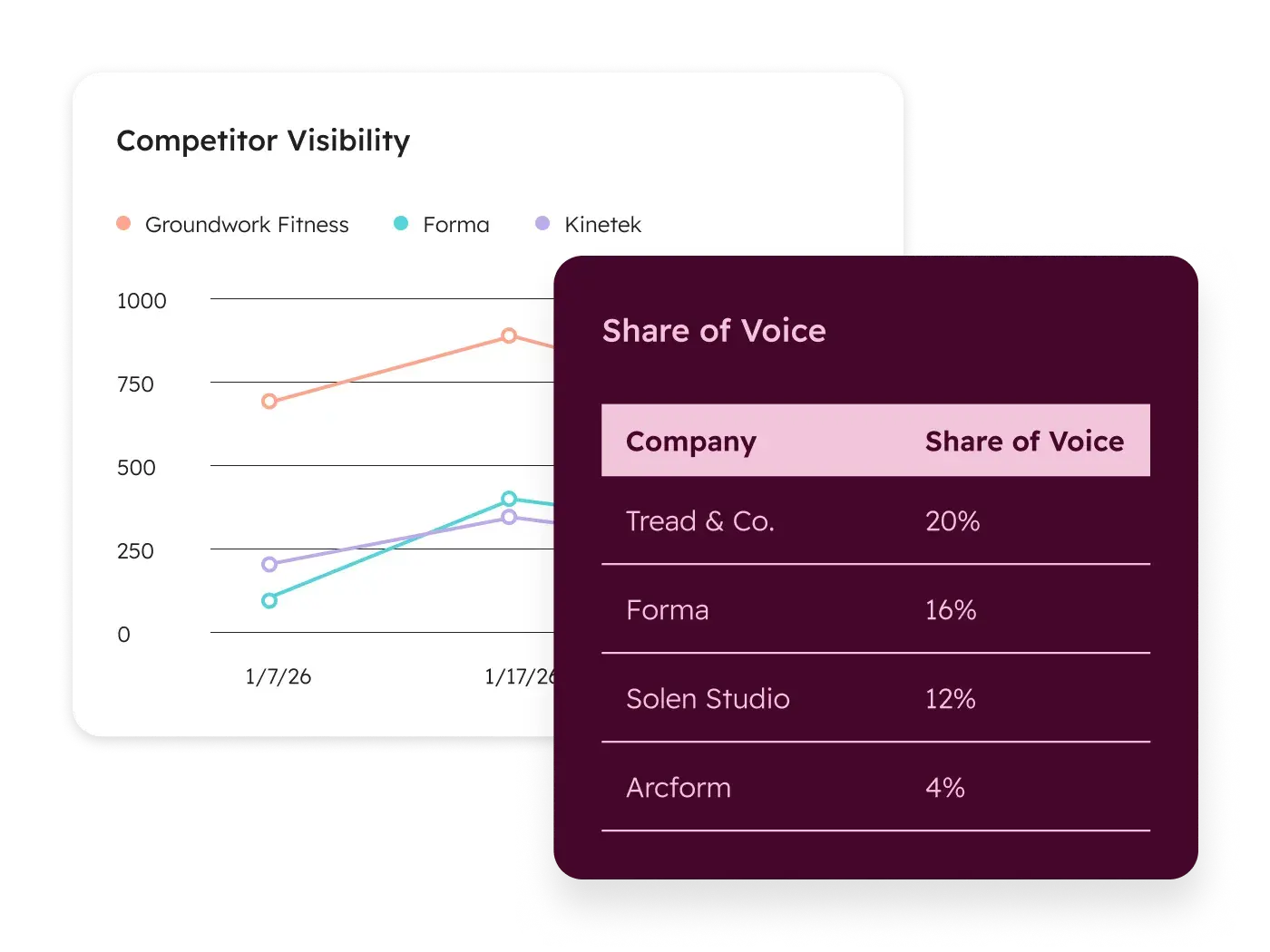
Furthermore, competitive analysis in this space is no longer about comparing domain authority or backlink profiles. It is about "Share of Voice" within AI models. By monitoring the frequency with which a brand is cited in response to category-specific prompts, organizations can gain a real-time pulse on their market standing. If a competitor is being cited in 8 out of 10 category queries while your brand appears in none, you are ceding market share without a fight.
Official Perspectives: Navigating the "Black Box"
The primary challenge voiced by marketing executives is the "black box" nature of AI algorithms. Unlike traditional search, which has a well-documented (if complex) set of rules, AI answer engines are dynamic and non-transparent.
Industry experts argue that the solution is not to "hack" the AI, but to build "Brand Authority" at scale. This means moving away from keyword-stuffed content and toward high-utility, authoritative content that answers the why and how behind a problem.

"AEO is about becoming the foundational knowledge source for your category," says a leading digital strategist. "If you are the brand that provides the data, the case studies, and the frameworks that the AI uses to construct its answers, you become the default choice."
HubSpot has responded to this need by introducing tools like their Brand Visibility Dashboard. This tool allows marketers to move beyond guesswork, providing:
- A Single Visibility Score: A quantifiable metric that tracks brand authority over time.
- Competitive Benchmarking: A clear view of how you stack up against rivals across core prompts.
- Gap Analysis: Specific recommendations on which content areas need bolstering to capture more citations.
Implications for the CMO’s Office
For marketing leaders, the implications of this shift are profound. The most immediate impact is on the budget.
The Business Case for Investment
Most new channels suffer from the "experimental trap"—small, inconsistent budgets that fail to produce significant results, leading to the eventual termination of the project. To avoid this, AEO must be treated as a strategic investment rather than an experimental one.
Leaders must present a business case that includes:
- The Cost of Invisibility: Quantifying the potential loss in pipeline due to being absent from AI conversations.
- The Compounding Authority Effect: Explaining that AEO is a long-term play. Just as SEO authority takes time to build, AI-cited authority compounds over time, creating a barrier to entry for competitors.
- Revenue Attribution: The ability to map AI-referred visits through the CRM. By tagging contacts who originate from AI-influenced discovery, marketers can finally draw a direct line between AEO activity and closed-won revenue.
The Structural Shift in Reporting
Leadership needs to see AEO data integrated into the existing reporting stack. When a CMO looks at their dashboard, they shouldn’t have to look at a separate, siloed tool to understand their AI presence. By connecting AEO metrics to pipeline velocity, MQL volume, and customer acquisition costs, the marketing organization can speak the language of the board.

The Window of Opportunity
The competitive landscape of the next three to five years will be defined by those who moved early to secure their position in the answer engine ecosystem. We are currently in a window of opportunity where brand authority is still fluid.
As search engines continue to prioritize AI-generated summaries, the "organic" pipeline will undergo a metamorphosis. Leaders who ignore this trend will find themselves facing a difficult conversation with their board when the organic pipeline begins to dry up. They will be asked why their brand was left behind, and "we didn’t see it coming" will not be a sufficient answer.
The transition to AEO is not just a tactical adjustment; it is a strategic imperative. By establishing competitive baselines today, investing in high-authority content, and aligning AI visibility with revenue outcomes, marketing leaders can ensure that their brand remains the answer—no matter how the question is asked.
The future of search is a conversation. It is time for brands to start participating in that conversation, or risk being silenced by the very technology that is meant to make them easier to find.