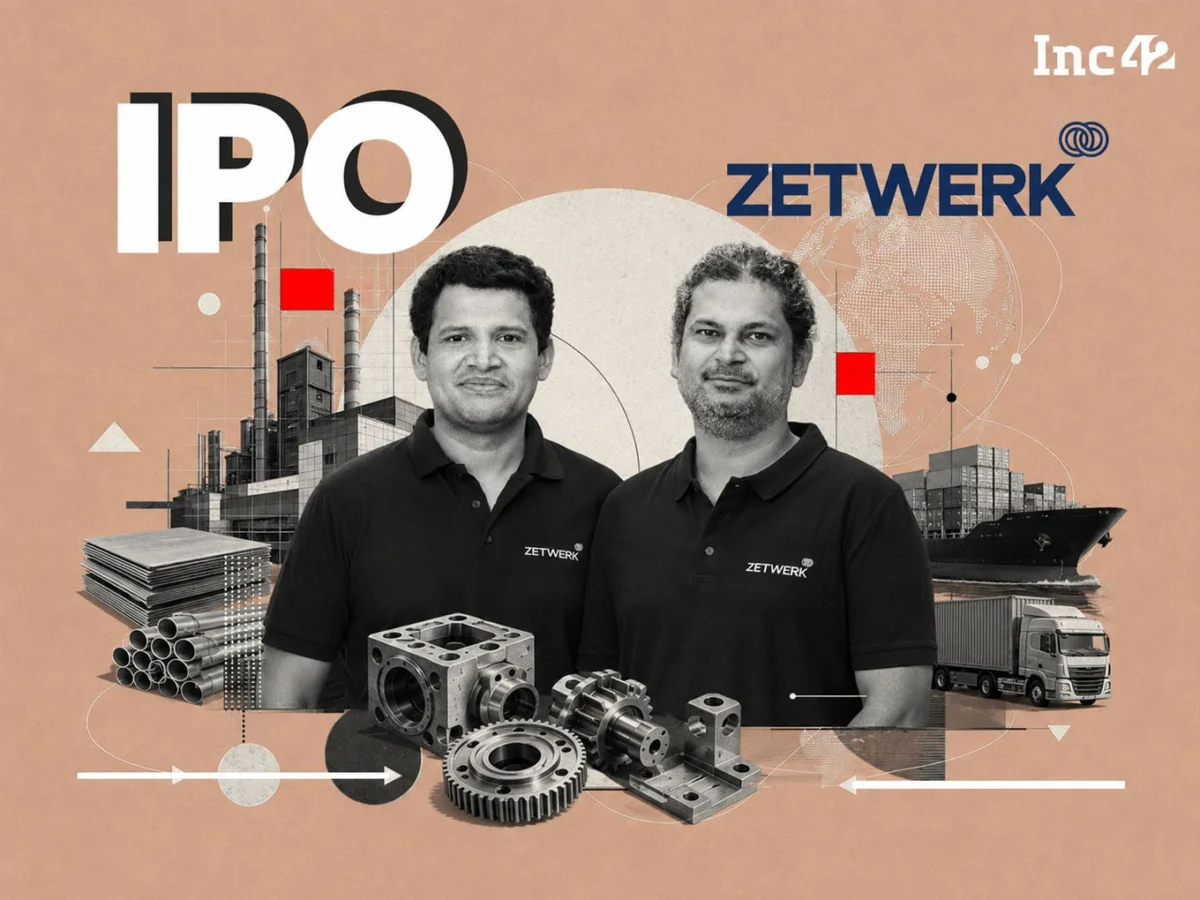
In a significant development for India’s burgeoning B2B manufacturing landscape, Zetwerk, the unicorn contract manufacturing platform, has officially unveiled the pricing details for its highly anticipated Initial Public Offering (IPO). The company, which has emerged as a cornerstone of the "Make in India" initiative by digitizing the fragmented manufacturing supply chain, is positioning itself for a landmark entry into the public markets.
The company has set a price band of ₹143–₹151 per share for its ₹5,012.3 crore IPO. At the upper end of this valuation, Zetwerk is targeting a post-issue market capitalization of approximately ₹25,583 crore (roughly $2.7 billion). This move signals a pivotal moment for the Bengaluru-based startup, marking its transition from a venture-backed growth engine to a publicly traded enterprise.
The Core Offering: A Breakdown of the Issue
The IPO structure is a combination of a fresh issue and an Offer for Sale (OFS), reflecting both the company’s need for capital and the exit strategies of its early-stage institutional backers.
The Financial Architecture
- Total Issue Size: ₹5,012.3 crore (at the upper price band).
- Fresh Issue: ₹2,830 crore.
- Offer for Sale (OFS): 14.45 crore shares, valued at approximately ₹2,182.3 crore at the upper end.
The fresh issue component has seen a notable increase from the ₹2,600 crore originally outlined in the company’s Updated Draft Red Herring Prospectus (UDRHP) filed in August. Similarly, the OFS component has expanded by 49.2% compared to the earlier figure of 9.7 crore shares, indicating strong appetite from existing investors to liquidate a portion of their holdings.
Subscription Timeline
Investors looking to participate in Zetwerk’s growth story should note the following key dates:
- Anchor Investor Bidding: October 14
- Subscription Opens: October 15
- Subscription Closes: October 19
Chronology: The Journey to the Public Markets
Zetwerk’s path to the IPO has been a masterclass in strategic maneuvering through the volatile global and domestic market environments.
Early Foundations and UDRHP Filing
After years of aggressive scaling and expanding its footprint across industrial and consumer electronics manufacturing, Zetwerk began its formal transition toward public markets by filing its draft papers confidentially in March 2024. This "confidential" route—a regulatory mechanism allowed by SEBI—enabled the company to iron out its financial disclosures and regulatory requirements without immediate public scrutiny.
The August Update
By August, the company moved to the UDRHP stage, providing the market with a clearer picture of its financials and the intended use of proceeds. The jump in the fresh issue size from ₹2,600 crore to ₹2,830 crore between the UDRHP and the final RHP suggests an increased focus on strengthening the balance sheet ahead of the listing.
Strategic Allocation of Capital: Deleveraging for Growth
A critical takeaway from Zetwerk’s RHP is its capital allocation strategy. The company has designated ₹2,160 crore—a staggering 76% of the fresh issue proceeds—to the repayment or prepayment of borrowings.
Debt Reduction as a Priority
For a company operating in the capital-intensive manufacturing sector, maintaining a lean balance sheet is paramount. By allocating the vast majority of its fresh capital to debt reduction, Zetwerk is signaling to investors that it intends to lower its interest burden, thereby improving its bottom line and creating a more attractive earnings profile for public shareholders.
Growth and Future Acquisitions
The remaining proceeds from the fresh issue are earmarked for general corporate purposes and, crucially, for funding potential acquisitions. As Zetwerk continues to consolidate the fragmented manufacturing ecosystem, inorganic growth remains a key pillar of its strategy. Whether through vertical integration or the acquisition of specialized technical capabilities, these funds will provide the company with the "dry powder" needed to execute its M&A agenda over the coming fiscal years.
Stakeholder Dynamics: Who is Cashing Out?
The OFS portion of the IPO reveals the exit trajectory of some of the most prominent venture capital firms in the Indian ecosystem.
- Promoter Participation: Founders Amrit Pratik Acharya and Srinath Ramakkrushnan are each offloading up to 1.42 crore shares. Despite this partial exit, they remain firmly in the driver’s seat of the company’s long-term vision.
- Institutional Exits: The list of selling shareholders reads like a "who’s who" of the venture capital world. Funds associated with Peak XV Partners, Accel India, Lightspeed Venture Partners, and Kae Capital are among those selling shares. Additionally, the promoter group entity, Creovate Innovation, is participating in the OFS.
This wide-scale institutional participation is standard for a late-stage IPO, providing necessary liquidity for investors who entered the company in its early, high-risk phases.
Market Implications: What Zetwerk’s Listing Means for Manufacturing
Zetwerk’s arrival on the stock exchange is more than just a financial event; it is a barometer for the health of India’s manufacturing sector.
The "Make in India" Multiplier
Zetwerk operates as a B2B platform that connects large industrial clients with a network of manufacturing partners. By digitizing the supply chain, they have effectively reduced the inefficiencies inherent in traditional manufacturing. Its public listing will likely invite increased analyst coverage of the "Manufacturing-as-a-Service" (MaaS) model, potentially paving the way for other companies in the sector to explore the public route.
Valuation and Peer Comparison
With a valuation of approximately $2.7 billion, Zetwerk is setting a high bar. Investors will be scrutinizing the company’s operating margins and its ability to scale without linear growth in costs. As a technology-first manufacturing player, Zetwerk occupies a unique space, sitting at the intersection of traditional heavy industry and modern software-driven operations.
Addressing Investor Concerns: Risk and Reward
While the prospects for Zetwerk are bright, the company, like any manufacturing entity, faces inherent risks:
- Supply Chain Volatility: As a platform, Zetwerk is dependent on the stability of its manufacturing partners. Any disruption at the vendor level impacts its ability to fulfill orders.
- Macroeconomic Sensitivity: Manufacturing demand is cyclical. A global or domestic slowdown in industrial output could impact revenue growth.
- Debt Management: While the IPO proceeds will significantly lower debt, the company’s ability to remain cash-flow positive will be a primary metric monitored by institutional investors post-listing.
Conclusion: The Road Ahead
As the October 15 opening date approaches, the market is bracing for what is expected to be a high-energy subscription period. Zetwerk’s decision to prioritize debt reduction suggests a mature approach to capital management, while its expansion into strategic acquisitions points toward a company that is still in its high-growth phase.
For the retail investor, the Zetwerk IPO represents an opportunity to participate in the formalization and digitization of one of India’s most critical economic sectors. For the broader market, it is a test of whether the tech-manufacturing hybrid model can command the premium valuations typically reserved for pure-play software companies.
The next few weeks will be crucial. As the anchor book fills up on October 14, the market will gain a clearer indication of institutional sentiment. If the response to the price band is positive, Zetwerk’s entry into the public markets could well define the manufacturing investment thesis for the decade to come.
(Disclaimer: This article is for informational purposes only and does not constitute financial advice. Investors should consult with a qualified financial advisor before making any investment decisions.)